Jacket Electric Heater
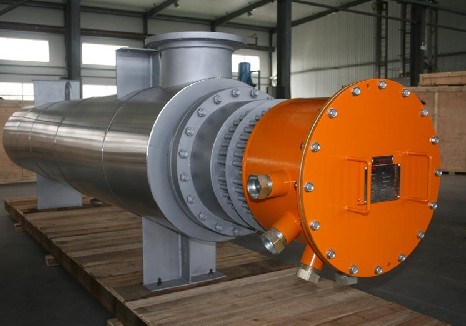
A jacket-type electric heater is an industrial heating device that efficiently and safely converts electrical energy into thermal energy. Its core design lies in the separated structure of "core + jacket," which is installed on oil tanks or containers via flanges, specifically used for heating hydraulic oil, lubricating oil, and other non-corrosive liquid media.
This design not only enhances safety but also brings great convenience in maintenance, making it a key device for temperature control in hydraulic and lubrication systems.
Core Structure and Working Principle
The structure of a jacket-type electric heater is simple and efficient, mainly consisting of the following parts:
Heating core: The core heat source, internally containing high-temperature resistant alloy heating wires, filled with insulating and thermally conductive media such as magnesium oxide powder, ensuring efficient conversion of electrical energy into heat and safe isolation of electric current.
Metal jacket: Usually made of stainless steel or seamless steel tubes, wrapped around the heating core. It serves to isolate, protect, and transfer heat, evenly transferring heat to the surrounding oil while preventing the heating core from directly contacting the medium, which could cause damage or oil carbonization.
Wiring device: Available in ordinary and explosion-proof types. The explosion-proof type uses a bolted flameproof enclosure seal, achieving dIICT4 explosion-proof rating and IP65 protection standard, suitable for potentially explosive environments.
Flange connection: Used to securely and sealingly install the heater on oil tanks or containers.
Working principle: After power is applied, the heating core generates heat, which is conducted through the insulating filler to the metal jacket, and then transferred from the jacket surface to the oil being heated. With a temperature control system, precise and stable control of oil temperature can be achieved.
Core Advantages
Extremely convenient maintenance: This is its most prominent advantage. Since the jacket isolates the heating core from the oil, when maintenance or replacement is needed, there is no need to drain the oil from the tank; simply remove the old heating core and insert a new one, greatly saving maintenance time and cost, and reducing downtime losses.
Safe and reliable: The jacket structure effectively prevents direct contact between the heating element and the medium, avoiding oil carbonization caused by electric sparks and local overheating, enhancing system safety. Explosion-proof models can meet special working condition requirements.
Uniform heating: The large heat dissipation area and reasonable surface power design ensure even heat transfer, avoiding local overheating of the oil, and extending the life of the oil and equipment.
Strong adaptability: Can be adapted to various power supply specifications such as single-phase 220V and three-phase 380V, with power and dimensions customizable according to requirements, offering good versatility.
Main Technical Parameters
Product parameters may vary slightly among different manufacturers; the following are typical ranges. Please refer to the equipment nameplate when selecting.
Table
Download as table
Export as image
Parameter Item Typical Range/Requirement Description
Rated Voltage Single-phase 220V / Three-phase 380V Working voltage should not exceed 1.1 times the rated value
Surface Heat Power Preferred ≤ 0.7 W/cm² Key indicator! Too high will cause oil carbonization and shorten lifespan
Operating Temperature ≤ 300℃ Must be strictly controlled to avoid overtemperature operation
Working Pressure ≤ 0.8 MPa Must match system pressure requirements
Working Medium Mineral oil, hydraulic oil, lubricating oil, etc. Should be non-corrosive liquid or gas
Insulation Resistance Cold state ≥ 50 MΩ Regularly test; if lower than this value, drying treatment is needed
Selection and Usage Pitfall Avoidance Guide
Surface power is the lifeline: Do not blindly pursue high power. Be sure to select a model with surface heat power ≤ 0.7 W/cm² based on the medium type and container size; this is key to preventing oil carbonization.
Strictly prohibit dry burning: During installation, ensure that the effective heating area of the jacket is fully immersed in the liquid. Dry burning will quickly burn out the heating core and may even cause safety accidents.
Regularly clean carbon deposits: If oil fouling or scale is found on the jacket surface, clean it promptly. Carbon deposits will seriously affect heat dissipation, causing internal temperatures to rise and shortening service life.
Standard wiring and grounding: The wiring part should be placed outside the insulation layer to avoid contact with corrosive media or moisture. High-temperature resistant wires must be used, and the shell must be effectively grounded to prevent leakage.
Pay attention to storage environment: Heaters not used for a long time should be stored in a dry place. If insulation resistance falls below the standard value due to moisture, dry it in an oven at about 200℃, or apply reduced voltage to heat it until insulation performance is restored.