Sheathed Electric Heaters
A sheathed electric heater (also known as a sheathed heater or tubular electric heater) is a structured electric heating element in which a resistive heating core wire is completely enclosed within a metal sheath and isolated from the sheath by a high-temperature inorganic insulating material (such as magnesium oxide powder).
It adopts a three-layer coaxial structure of "core wire–insulation–sheath":
Heating core wire: high-temperature-resistant alloy heating wires such as nickel-chromium alloy (NiCr) and iron-chromium-aluminum alloy (FeCrAl)
Insulating and thermally conductive layer: high-purity crystalline magnesium oxide powder (MgO), combining high insulation and high thermal conductivity
Metal sheath: 304/316L stainless steel, Incoloy 800/840, titanium alloy, Hastelloy, etc., isolating the external medium
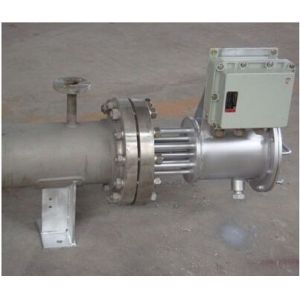
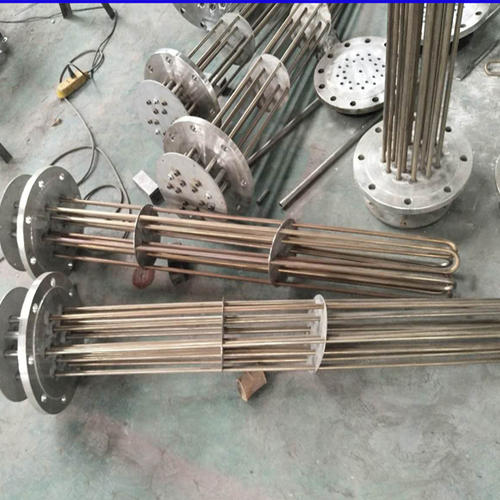
The shape can be made into straight rod type, U type, W type, flange type, finned type, and many other forms to suit different installation scenarios.
Current passes through the resistive core wire to generate Joule heat. The heat is conducted radially through the highly thermally conductive insulating layer to the inner wall of the metal sheath, and then transferred from the outer surface of the sheath to the heated medium by convection, radiation, or contact conduction. The heating wire does not come into direct contact with the outside, providing good safety.
High thermal efficiency: electrical-to-thermal conversion efficiency can reach ≥98%
Sturdy structure: the metal shell can withstand mechanical impact and pressure
Wide temperature range: continuous operating temperature covers 300°C to over 2000°C
Corrosion resistance: the metal sheath can resist acids, alkalis, salts, and process gas corrosion
Bendable and formable: can be made into complex shapes such as spiral, U-shaped, and ring-shaped
Long service life: can reach 10,000–50,000 hours
Convenient maintenance (split type): replacing the core does not require draining the medium, greatly reducing downtime costs
The common sheathed electric heaters in industry are represented by the HRY/SRY6 series, including:
Table
Download as table
Export as image
Model Voltage Power Features
HRY1/SRY6-1 220V/380V 1–8kW Basic type
HRY2/SRY6-2 220V/380V 1–8kW General type
HRY3/SRY6-3 220V/380V 1–8kW Dedicated for hydraulic lubrication
HRY5/SRY6-5 220V/380V 1–8kW Dedicated for light oil stations
HRY6/SRY6-6 380V 3–6kW Double-layer split structure
HRY8/SRY6-8 380V 6–8kW Finned tube type (air heating)
In addition, there are special models such as explosion-proof type (BGY series) and top-mounted angle-square type (SRY5 series).
Hydraulic lubrication systems: constant-temperature heating for hydraulic stations, lubricating oil tanks, and light oil stations
Petrochemical industry: reactor jackets and coils, heavy oil/diesel preheating, pipeline heat tracing
New energy: lithium battery material sintering furnaces, hydrogen electrolyzer preheating
Semiconductor manufacturing: vacuum CVD/PVD reaction chambers, lithography machine heating plates
Food and pharmaceuticals: high-pressure steam sterilizers, tunnel drying, aseptic packaging heat sealing
Heating and civil use: hot water circulation in high-rise buildings, solar pipeline freeze protection
Dry burning is strictly prohibited: the heating section must be fully immersed in the medium; otherwise, heat cannot dissipate and will cause burnout
Power density must match the medium: water heating 5–10W/cm², oil 1–3W/cm², air heating 1–2W/cm² (fins required)
Material must match corrosiveness: choose 316L stainless steel for weak corrosion, and titanium tubes or PTFE sleeves for strong corrosion
Regular maintenance: remove oil stains and coking on the sheath surface, check wiring terminals every 3–6 months, and perform an insulation test once a year. Key factors for selection
Clarify the heating medium (water/oil/gas/corrosive liquid) → determines sheath material and power density
Calculate the required power: comprehensively calculate based on medium mass, specific heat capacity, target temperature rise, and heating time
Confirm the installation method: threaded connection, flange connection, or fixed bracket
Match the voltage specification: 220V and 380V are commonly used in industry; pay attention to three-phase load balance when multiple groups are connected in parallel