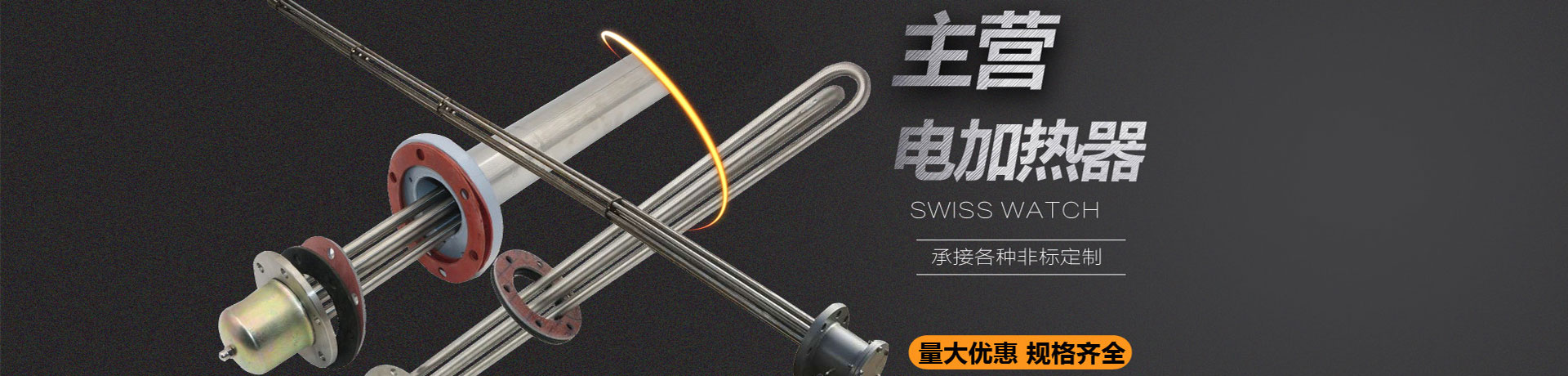
During on-site installation of sheathed electric heaters, technicians often raise several specific questions: How does the sheath material affect service life? Why must surface power density be strictly controlled? How should wiring methods match temperature control? The following explains common questions one by one from the perspective of heat transfer oil electric heater equipment.
The sheath is the isolation layer between the heating element and the medium, and the material selection depends on the chemical properties of the heated medium and the operating temperature. For common media such as heat transfer oil, hydraulic oil, and lubricating oil, the sheath is usually made of stainless steel or carbon steel. If the medium contains corrosive components, a corrosion-resistant alloy sheath must be selected. Local carbon buildup or scaling on the sheath surface should be avoided; otherwise, it will hinder heat transfer, causing the sheath temperature to be higher than the medium temperature and shortening the element's service life.
Surface power density refers to the electrical power carried per unit heating area. Taking the SRY6/SRY9 series as an example, when used for heat transfer oil and temperature-controlled heating, the surface power density is recommended not to exceed 0.7W/cm², while for hydraulic and lubricating oil heating scenarios it can be relaxed to within 1.8W/cm². Excessive density will cause the sheath surface temperature to exceed the allowable range of the medium, leading to oil cracking, coking, and even damage to the heating element. During design, calculations must be made based on the medium type, flow rate, and temperature requirements; power density must not be increased solely for the purpose of shortening heating time.
Common rated voltages are 220V and 380V. For 380V, star or delta connection can be used, and multi-core elements can extend service life by reducing the load per core. When wiring, ensure that terminal connections are secure to avoid local overheating caused by excessive contact resistance. For occasions where multiple heaters are connected in parallel, it is recommended that the load of each branch be balanced and that independent overload protection be configured.
Temperature control accuracy depends on the matching of sensor position, control instrument, and heater power. The sensor should be installed at a position that reflects the mainstream temperature of the medium, avoiding proximity to the heater surface. For heat transfer oil systems, over-temperature protection should be provided to prevent the oil temperature from exceeding its allowable upper limit. During startup, it is recommended to circulate the medium first and then energize; during shutdown, cut off the power first and stop the pump after the temperature drops, so as to extend the heater's service life.
Regularly check the sheath surface for carbon buildup, scaling, or mechanical damage; measure insulation resistance to ensure it is not lower than the specified value; check whether the wiring terminals are loose or oxidized. If slow heating or abnormal current is found, stop the machine promptly for troubleshooting. When replacing the heater, choose a model with matching specifications, and avoid simply pursuing high power.