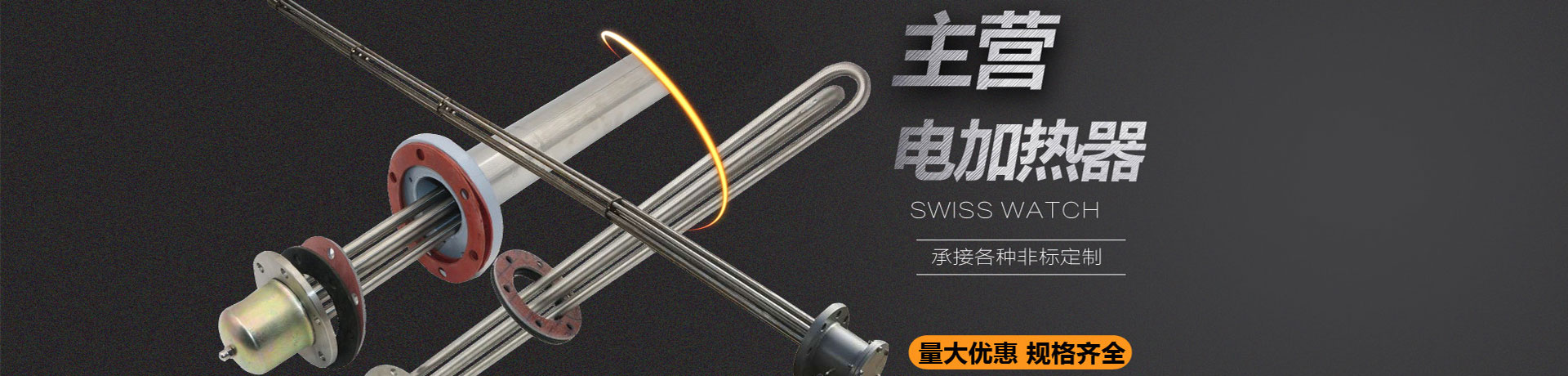
Before installing the JRH-220 tubular electric heater, inspect its appearance to confirm that the heating zone has no dents or scratches and that the terminal connections are secure. Measure the cold insulation resistance, which should be no less than 50MΩ. Based on the characteristics of the medium being heated, confirm that the heater material (such as 304 stainless steel) is compatible with the medium to avoid corrosion. During installation, the heating zone must be fully immersed in the medium to prevent dry burning. When wiring, the power supply voltage should match the nameplate (220V), and reliable grounding must be ensured.
This heater has a power of 6kW. By using a voltage regulator to change the input voltage and current, the heat output can be adjusted linearly. During operation, monitor the medium temperature and heater surface temperature to avoid local overheating that can cause coking or aging. It is recommended to install over-temperature protection and leakage protection devices in the circuit. If the medium is heat transfer oil, regularly check the oil quality to prevent carbon buildup from affecting heat transfer.
Regularly disconnect power to check whether the terminal connections are loose or oxidized, and promptly clean surface dirt. If heating efficiency decreases, measure the resistance value; if the deviation exceeds ±10%, replacement is required. Common faults include short circuits, open circuits, and insulation degradation, often caused by mechanical damage or medium corrosion. When replacing, use products of the same specifications.
The JRH-220 tubular electric heater is suitable for static or flowing medium heating in industrial sectors such as aviation, shipping, petroleum, chemical, and machinery manufacturing, such as oil tanks, water tanks, and heat transfer oil systems. Its structure is simple and installation is flexible, meeting the heating needs of different containers and pipelines.