Bolt Electric Heating Rods
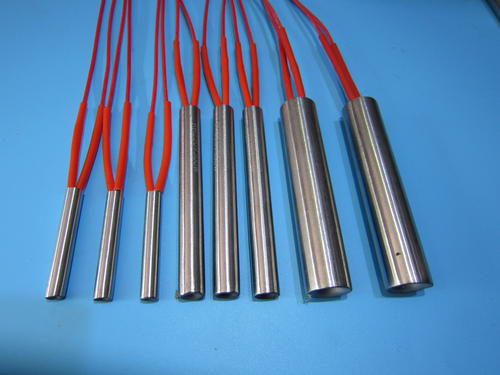
Bolt Electric Heating Rods (Bolt Heater) are specialized thermal disassembly and assembly tools for the maintenance of heavy equipment such as steam turbines, boilers, and large pressure vessels. They are inserted into the center hole of bolts and generate heat when energized, utilizing the principle of thermal expansion to elongate the bolt, thereby easily achieving nut removal or pre-tightening. They are essential high-efficiency tools at power and chemical maintenance sites.
Working Principle and Core Structure
Based on the Joule heating effect, current passes through a built-in high-resistance electric heating alloy wire to generate heat, which is conducted through an insulation layer to a metal sheath, and then heats the wall of the bolt center hole. Its signature structure is "slender rod shape + aviation plug connection":
Table
Heating Core 0Cr27Al7Mo2 high-resistance electric heating alloy wire Converts electrical energy into heat energy, working temperature 400℃
Insulation Layer High-purity magnesium oxide powder (MgO), must be dried before use Electrical insulation + efficient thermal conduction
Metal Sheath 1Cr18Ni9Ti heat-resistant stainless steel tube Mechanical protection + heat transfer + corrosion resistance
Terminal Aviation plug (standard) Quick plug and unplug, prevents misconnection
Executive Standards and Technical Parameters
Executive Standards
ZBK54019-88: Industry standard for steam turbine bolt electric heaters (implemented on July 1, 1989)
Rated Voltage 220V±20V / DC 100V / Low Voltage 50V
Surface Power Density 8~11W/cm² (strictly controlled to prevent local overheating)
Working Temperature ≤400℃
Insulation Resistance Cold state ≥50MΩ (DC500V)
Withstand Voltage Strength AC2000V/1min without breakdown
Cumulative Life Intermittent heating ≥50 hours
Matching Clearance Total clearance between heater outer diameter and bolt center hole 0.8~1.3mm
Straightness ≤φ0.3mm when ≤1m; ≤φ0.4mm when 1~2m
Diameter Deviation Insertion part -0.20mm/-0.50mm
Structural Form Classification
Hard Tube Type Rigid straight rod, high dimensional accuracy Bolt center hole is straight and without bending
Soft Tube Type Can be moderately bent, good adaptability Long bolts, slight deformation in the hole passage
Semi-Soft Type Between the two Medium-length bolts
Explosion-Proof Type ExdⅡBT4 grade flameproof structure Petrochemical, natural gas and other flammable and explosive environments
Core Selection Points
1. Bolt Specification Matching (Most Critical)
The following parameters must be provided to the manufacturer for customization:
Bolt outer diameter (e.g., M56×4, M85, etc.)
Bolt center hole diameter (standard type adapts to d=22.6±0.2mm)
Total bolt length
Nut length
Supporting control cabinet situation
2. Power and Heating Rate
Single unit power commonly 1.5~10kW, customized according to bolt size
Typical working condition: rise to 450℃ within 30 minutes
Needs to be checked against on-site power supply capacity (380V/50Hz three-phase or 220V single-phase)
3. Temperature Control Method
Basic type: equipped with bimetallic strip temperature limiter
Mid-to-high end: integrated K-type thermocouple + digital display temperature controller, supports RS485 communication and PLC linkage control
4. Insulation and Protection
Working insulation resistance ≥100MΩ (DC500V)
Housing protection recommended IP54 or above
Explosion-proof occasions must use ExdⅡBT4 grade products
Supporting Control Cabinet
Bolt heating rods must be used with DC adjustable control cabinets. Typical functions include:
Output DC voltage stable and adjustable (0~220V)
Can carry up to 12 loads
Three-phase load balancing design
Strictly prohibited to change voltage gears with load connected
Usage Precautions
Power must be disconnected during loading and unloading, strictly prohibited to plug and unplug with power on
The matching clearance between the heater and the bolt center hole should be controlled at 0.8~1.3mm. Too tight easily causes jamming, too loose results in low heat transfer efficiency
Heating must be uniform, local overheating that causes changes in the bolt metallographic structure is not allowed
The cold end seal must be tightly sealed to prevent moisture from entering and damaging insulation
The housing must have good grounding
After long-term storage, insulation resistance must be tested before use. If below standard, drying treatment is required
Jiangsu Local Manufacturer Resources
Based on past selection experience, Jiangsu (especially the Zhenjiang and Yangzhong area) is the core industrial belt for electric heating equipment in China, and the bolt heating rod field also gathers a large number of qualified manufacturers:
Yangzhou Huaneng Electric Heating Technology Co., Ltd. (Baoying County): Mainly produces bolt heating rods, track-type heaters, thermocouples, etc., with R&D, processing and maintenance capabilities
Baoying County Hengtai Electrical Equipment Factory: Supplies bolt heating rods with aviation plugs, steam turbine bolt heating rods, supports customization
Zhenjiang Yunlong Electrical Equipment Co., Ltd.: Produces bolt heating rods for steam turbines, passed ISO9000 certification
Yangzhong Shenzhou Chemical Power Equipment Co., Ltd.: Focuses on R&D and manufacturing of electric heating equipment, products cover chemical and power fields
Zhenjiang Huyang Electrical Complete Equipment Co., Ltd.: Forty years of experience, covers bolt, heat transfer oil, hot water, hot air electric heaters, possesses explosion-proof certification for large and small power dust explosion-proof
Yangzhong Dongsheng Power Equipment Co., Ltd.: Product line covers bolt heating rods, air heaters, etc., commonly used for power station auxiliary equipment
Yangzhong Changhe Electrical Equipment Factory: Focuses on electric heater R&D for over 28 years, bolt heaters support M24~M120 full series standard threaded interfaces, has been supplied to Huaneng Yuhuan Power Plant 1000MW units
When purchasing, prioritize connecting with local industrial belts, which have significant advantages in non-standard customization, after-sales response, and logistics costs.
If you have specific bolt specifications (such as M56×4, M85, etc.), center hole diameter, bolt length, or supporting control cabinet requirements, you can tell me, and I can help you further determine the model, power, and selection plan for bolt electric heating rods