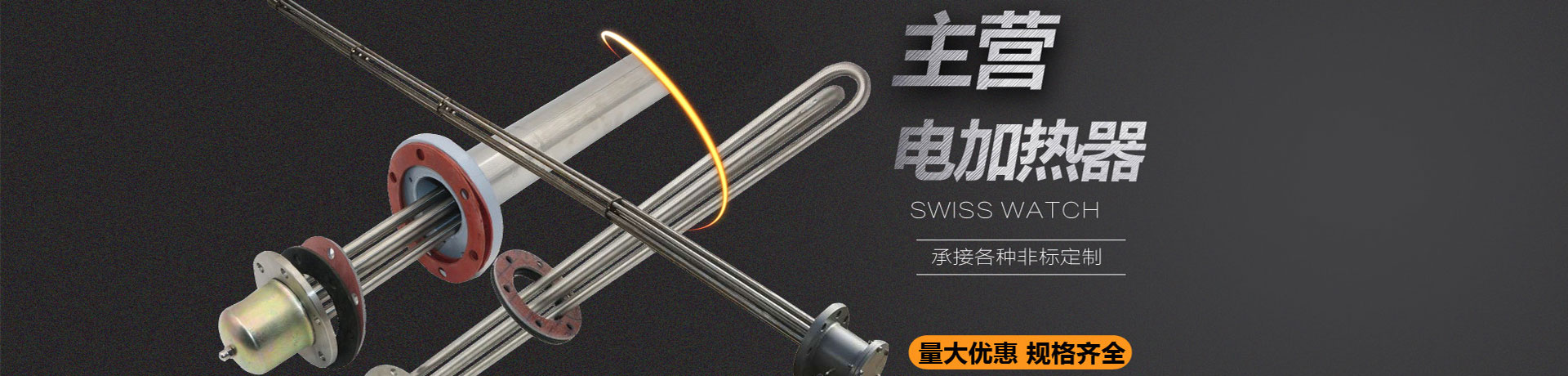
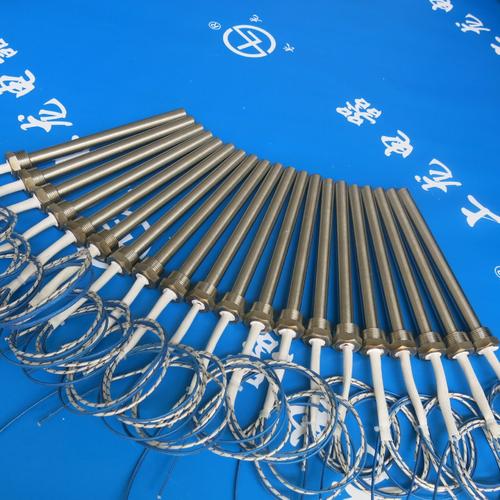
Electric Heating Furnace
An electric heating furnace (industrial electric furnace) is a specialized device that converts electrical energy into thermal energy to heat, melt, sinter, or heat-treat materials such as metals, ceramics, and composites. Its core principle is that current passes through resistive heating elements (such as resistance wire, silicon carbide rods, molybdenum disilicide rods) to generate Joule heat, or electromagnetic induction causes the workpiece itself to heat up, and then heat is transferred to the material through radiation, convection, and conduction.
I. Working Principle
1. Resistance Heating (Mainstream)
Current flows through high-resistivity heating elements (nickel-chromium alloy wire, iron-chromium-aluminum, silicon carbide rods, molybdenum disilicide rods, etc.), generating thermal energy due to the Joule effect (Q=I²Rt), and the heat is transferred to the workpiece through furnace radiation/convection/conduction.
Temperature and element matching:
≤1000℃: iron-chromium-aluminum/nickel-chromium alloy resistance wire
1000~1350℃: silicon carbide rods
1350~1800℃: molybdenum disilicide rods
1800℃ or vacuum/atmosphere environment: graphite/tungsten/molybdenum heating elements
2. Induction Heating
High-frequency alternating current passes through an induction coil to generate an alternating magnetic field, causing eddy currents inside the conductive workpiece so that it heats itself.
Fast heating speed and high thermal efficiency (72%~85%), but it has requirements for the conductivity of the workpiece, suitable for bar stock, pipes, rings, and other closed-loop workpieces.
II. Comparison of Mainstream Furnace Types
Furnace Type Application Scenario Temperature Range Typical Specifications Core Advantages
Box-type resistance furnace Small and medium batch standard parts, laboratory samples, tool heat treatment 100~1700℃ 100×100×100mm to 1500×800×800mm Compact structure, precise temperature control, strong versatility
Car-bottom resistance furnace Large forgings, castings, mold heat treatment 200~1200℃ 6000×3000×2500mm Easy loading and unloading, suitable for single heavy loads, good furnace door sealing
Pit-type resistance furnace Long shaft parts, rods, bolts and springs vertically suspended heating 200~950℃ Φ1200×4000mm Vertical uniform thermal field, small deformation, small footprint
Mesh belt/pusher-type continuous furnace Large-scale continuous production of small and medium standard parts (bearing rings, fasteners) 600~1150℃ Customized on demand High degree of automation, low energy consumption, suitable for assembly lines
Bell-type furnace Coils, steel strips, stainless steel bright annealing 600~1150℃ Φ2500×3000mm (bell body) Controllable atmosphere, no oxidation on surface, relatively low energy consumption
Tube-type resistance furnace Heating of long strip/tubular samples under specific atmospheres, material sintering Room temperature~1800℃ Customized on demand Can be filled with protective gas/vacuum, suitable for precision experiments
Vacuum heat treatment furnace Precision heat treatment of precision tools, titanium alloys, superalloys ≤1300℃ Customized on demand No oxidation or decarburization, smooth surface, controllable composition
Thermal oil electric heating furnace Scenarios requiring high-temperature and low-pressure thermal energy in chemical, printing and dyeing, food, etc. 0~350℃ Heating capacity 20,000~300,000 kcal/h Low pressure and high temperature, safe and efficient, can be integrated into skids
III. Core Points for Model Selection
1. Matching of Temperature Range and Heating Elements
The rated temperature of the equipment should be 100~200℃ higher than the actual working temperature, or a 10% margin should be reserved. The selection of heating elements directly determines the upper limit of the furnace:
Below 1200℃: resistance wire is preferred (iron-chromium-aluminum/nickel-chromium)
1400~1600℃: silicon carbide rods are selected
1600~1800℃: molybdenum disilicide rods are selected
Above 2000℃ or vacuum/atmosphere environment: graphite heating elements are selected
2. Power Matching — Bigger Is Not Better
Power needs to be comprehensively calculated based on workpiece mass, specific heat capacity, target temperature rise, and heating time. Excessive power leads to high energy consumption and uneven temperature; insufficient power leads to slow heating and affects the production rhythm.
Small experimental furnace: 1~4kW (220V single-phase)
Medium industrial furnace: 8~30kW (380V three-phase)
Large car-bottom furnace/continuous furnace: 30~110kW (380V three-phase)
3. Furnace Chamber Size and Loading Method
Avoid uneven heating caused by stacking workpieces; the furnace chamber size should reserve appropriate space.
Use a car-bottom furnace for single large shafts, a pit-type furnace for long shaft parts, a mesh belt type for continuous production of small hardware, and a box-type/tube-type for laboratories.
4. Temperature Control Accuracy and Uniformity
Conventional industrial heating: ��3~5℃ is sufficient
Precision heat treatment/laboratory: within ±1℃, even ±0.5℃ is required
Prefer models with PID closed-loop control + multi-point thermocouples, supporting programmed heating curves (heating → holding → cooling).
It is recommended to require suppliers to provide third-party temperature uniformity test reports (such as within ±5℃), rather than only looking at instrument displays.
5. Furnace Lining and Insulation Structure
The mainstream adopts a composite structure of lightweight high-alumina bricks + ceramic fiber modules, achieving a balance between insulation performance and response speed.
Too thick will prolong heating time and increase energy consumption; too thin will easily burn through.
6. Safety and Intelligence
Essential: over-temperature alarm, thermocouple break protection, leakage protection, furnace door safety interlock, air cooling system.
High-end configuration: support Modbus/Profinet communication, remote monitoring, data recording and export.
IV. Common Misconceptions
The greater the power, the better? Wrong! Power matching the workpiece size and heating rhythm is more critical; too much power instead leads to slow heating, high energy consumption, and uneven temperature.
Temperature display = real temperature inside the furnace? Not necessarily! The location of the temperature measurement point, the type of thermocouple, and the calibration status of the instrument all affect the reading.
The thicker the refractory material, the more durable? Not necessarily. Too thick prolongs heating time and increases energy consumption; too thin is easy to burn through.
Is electric heating definitely more environmentally friendly than gas furnaces? It needs to be judged comprehensively in combination with local electricity prices and carbon emission policies. Electric furnaces operating during off-peak electricity periods + waste heat recovery have lower carbon emissions.
Buying a furnace only by looking at price? Ignoring later operation and maintenance costs may mean "saving a little money and suffering a big loss." Heating elements, temperature control systems, furnace door seals, etc. are consumables, and the replacement cycles of different brands can differ by 2~3 times.
V. Typical Application Scenarios
Metal heat treatment: annealing, tempering, normalizing, quenching, carburizing, aging treatment (automotive parts, bearings, gears, tool steel)
New material research and development: ceramic sintering, sintering of lithium battery positive and negative electrode materials, graphene preparation, nanomaterial synthesis
Chemical and energy: catalyst activation, thermal oil heating, crude oil wellhead heating, cracking reactions
Laboratory analysis: ash content determination (muffle furnace), sample digestion/ashing, high-temperature performance testing of materials
Semiconductors and electronics: wafer annealing, component firing, packaging curing
As core equipment for industrial heat treatment, electric heating furnaces require comprehensive consideration of six major dimensions during model selection: temperature range, power matching, furnace type structure, temperature control accuracy, furnace lining material, and safety configuration. If you have specific process parameters (such as workpiece size, target temperature, batch size, atmosphere requirements), I can help you further refine the model selection recommendations or generate a model selection calculation template.