
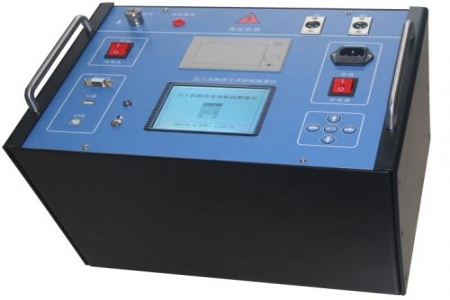
During on-site commissioning, periodic fluctuations in the secondary-side outlet temperature of a hot and cold heat exchanger are often related to the delayed thermal response of seals when the medium temperature changes frequently. The HDX-920 hot and cold heat exchanger is parametrically matched in structural design and seal selection for such operating conditions. The following compares it with conventional shell-and-tube solutions from the perspective of engineering parameters.
In liquid-liquid heat exchange scenarios, the HDX-920 hot and cold heat exchanger has a design flow range of 12–45 m³/h, with pressure drop on one side controlled at 30–80 kPa (depending on medium viscosity and flow velocity). Compared with conventional shell-and-tube heat exchangers of the same diameter, under the same heat transfer requirement, its compact plate channels increase the heat transfer coefficient by approximately 15%–25% while reducing liquid holdup by approximately 30%, which helps lower thermal inertia when the medium temperature fluctuates frequently. The equipment has an applicable temperature range of -20°C to 150°C and a design pressure of 1.6 MPa, covering most hot and cold exchange needs in medium-flow conditions.
When the medium temperature fluctuates frequently, the thermal expansion and contraction and aging rate of sealing materials accelerate. The HDX-920 hot and cold heat exchanger offers three seal options: nitrile rubber (NBR), ethylene propylene diene monomer (EPDM), and fluororubber (FKM), corresponding to temperature ranges of -20–110°C, -20–130°C, and -20–150°C, respectively. During selection, it is recommended to calculate the compression set of the seals based on the actual temperature cycle amplitude and frequency. If the medium temperature fluctuates frequently, the seal replacement cycle should be shortened to 60%–70% of that under normal operating conditions, and the number of temperature cycles should be recorded in the maintenance log to facilitate the establishment of replacement warnings.
Plate materials can be 304 stainless steel, 316L stainless steel, or titanium. 304 stainless steel is suitable for general industrial water and low-corrosivity media; 316L stainless steel has better pitting corrosion resistance than 304 in media containing chloride ions; titanium is suitable for seawater or high-chloride conditions. Compared with plate-and-frame heat exchangers, the HDX-920 hot and cold heat exchanger consumes less metal per unit heat transfer area under the same material configuration, but care should be taken that the particle size of particulate matter in the medium is less than 1/3 of the channel gap, and filters should be installed at the inlet if necessary.
In the selection stage, in addition to confirming flow rate, inlet and outlet temperatures, and allowable pressure drop, it is recommended to provide technical engineers with medium temperature fluctuation curves or cycle frequency data to verify seal life and plate thermal stress. Compared with selection based only on steady-state parameters, introducing dynamic temperature parameters can reduce unplanned seal replacements after commissioning. During equipment installation, reserve sufficient maintenance space to facilitate periodic inspection of seal compression and plate fouling.

