Electric Heating Plate
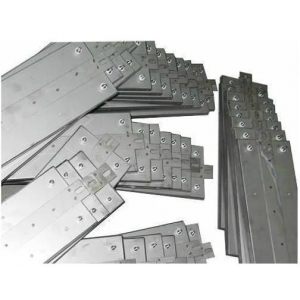
An electric heating plate (also known as an electric hot plate or heating plate) is an electric heating device that converts electrical energy into thermal energy and uniformly conducts heat through a large flat plate surface. Its core structure usually consists of heating elements (resistance wire, ceramic sheet, graphite, etc.), insulation materials (mica, ceramic, silicone rubber, etc.), and metal/non-metal support panels. It is widely used in industrial equipment, laboratory analysis, household appliances, and new energy fields.
Working Principle
Electric heating plates mainly achieve energy conversion through resistance heating, while some high-end models use electromagnetic induction heating or infrared radiation heating:
Resistance heating: When current passes through resistance wire (such as nickel-chromium alloy, iron-chromium-aluminum alloy) or conductive graphite layer, heat is generated due to the Joule effect. The heat is conducted through the insulation layer to the panel surface, and then heats the object through convection, conduction, or radiation.
Electromagnetic induction heating: High-frequency current passes through a coil to generate an alternating magnetic field, causing eddy currents inside a ferromagnetic container to generate heat itself, with thermal efficiency reaching over 90%.
Infrared radiation heating: Infrared rays are emitted through specific materials (such as silicon carbide, ceramics) to directly heat the surface of objects, suitable for drying, curing, and other scenarios.
Mainstream Types and Selection Comparison
Type Maximum Operating Temperature Core Advantages Typical Application Scenarios Precautions
Stainless Steel Electric Heating Plate ≤500℃ High mechanical strength, corrosion resistant, cost-effective Industrial mold heating, conventional laboratory heating, chemical equipment Easily corroded by strong acids, average temperature uniformity
Ceramic/Glass-ceramic Electric Heating Plate 400~600℃ High temperature resistance, good insulation, smooth and easy-to-clean surface Laboratory digestion, semiconductor manufacturing, precision temperature control Easily cracks under rapid cooling/heating, not impact resistant
Graphite Electric Heating Plate ≤800℃ Extremely fast heat conduction, excellent temperature uniformity, resistant to strong acids and alkalis High-temperature digestion, strongly corrosive environments, rapid heating processes Brittle texture, handle with care
Cast Aluminum/Cast Copper Electric Heating Plate ≤450℃ (aluminum)/≤600℃ (copper) Fast heat conduction, high mechanical strength, adaptable to complex shapes Injection molding machine die heads, extruders, die-casting molds Moisture-proof needed in humid environments, easily deformed when overheated
Silicone Rubber Electric Heating Plate ≤250℃ Good flexibility, can fit curved surfaces, waterproof and moisture-proof Irregular tank insulation, pipeline heat tracing, medical equipment Not oil resistant, hardens easily under long-term high temperature
Graphene/Carbon Crystal Electric Heating Plate ≤120℃ Ultra-thin, fast heating, far-infrared radiation Building heating, new energy vehicle battery thermal management, smart wearables Low power density, not suitable for high-temperature scenarios
Core Selection Points
Temperature and Power Matching
Clarify the maximum process temperature, and it is recommended to reserve a 50~100℃ safety margin.
Power calculation reference: For small laboratory areas (below 30cm×20cm), choose 500~1500W; for medium and large areas (above 40cm×30cm), choose 1500~3000W; for industrial scenarios, calculate according to a surface load of 2.5~8W/cm², with specific consideration of the medium's heat dissipation conditions.
Material Determines Lifespan and Application
Strong acid and alkali environments: Prioritize graphite or ceramic panels, avoid stainless steel corrosion.
Heavy load or vibration environments: Choose cast plate type or tubular element cast plate metal plates.
Precision temperature control (such as semiconductors, trace analysis): Choose glass-ceramic + thick film heating elements, with temperature control accuracy up to ±0.1℃.
Temperature Control Accuracy and Uniformity
Ordinary industrial heating: ±3~5℃ is sufficient; laboratory or precision processes require within ±1℃, or even ±0.5℃.
Prioritize models with PID closed-loop control + Pt100 sensor, avoid simple on-off temperature control causing temperature fluctuations.
Safety and Protection
Explosion-proof environments must comply with GB3836 standards and obtain Ex certification.
Features such as automatic over-temperature power-off, leakage protection, and thermal warning (surface flashing when above 50℃).
Structure and Installation
Thin shell type: Simple structure and inexpensive, but easily deformed, suitable for low power (≤800W).
Cast plate type/tubular element cast plate type: High strength, long lifespan, suitable for industrial heavy-load scenarios.
Split design: The controller is away from the heating zone, facilitating maintenance and preventing acid mist corrosion.
Typical Application Scenarios
Industrial manufacturing: Injection molding machine/extruder die head heating, chemical reactor outer wall heating, metal heat treatment, mold temperature control.
Laboratory analysis: Sample digestion, acid removal, drying, constant temperature cultivation (choose graphite plates for strong acid digestion, stainless steel plates for conventional heating).
New energy: Lithium battery pole piece ovens, battery module thermal management, hydrogen storage tank heating.
Household appliances: Rice cookers, electric irons, coffee machines, food warming plates.
Construction and transportation: Underfloor heating systems, new energy vehicle seat heating, pipeline antifreeze heat tracing.
Usage and Maintenance Precautions
Dry burning is strictly prohibited (except for specially designed models), ensure full contact between the heating surface and the object being heated.
Avoid liquid spilling into the body, especially corrosive liquids, to prevent damage to internal components.
Regularly check insulation resistance. If it is below 1MΩ after long-term storage, dry it before use.
Wait for the equipment to cool completely before cleaning, and avoid scratching the panel surface with hard objects.