
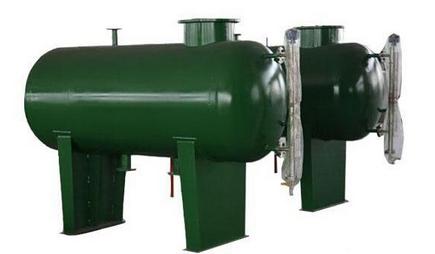
In on-site operation and maintenance, heat exchangers often fail prematurely due to mismatches between gasket or plate materials and the medium. The BR-65 plate-and-frame heat exchanger addresses this by offering adjustable plate spacing and multiple gasket options, making it easy to configure according to the actual medium and temperature.
Compared with shell-and-tube heat exchangers, the BR-65 is more compact at the same heat transfer area, and disassembly and cleaning require no special tools. Its single-plate heat transfer area is 0.45 square meters, maximum handling capacity is about 120 cubic meters per hour, and design pressure is 1.0 MPa. For sites that need frequent inspection of plate fouling, it can shorten downtime for maintenance.
Nitrile gaskets are suitable for media such as water and mineral oil, with a normal operating temperature of about -20°C to 100°C; EPDM has good resistance to hot water and steam, with an upper temperature limit of about 150°C; fluoroelastomer resists acids, alkalis, and organic solvents, covering -20°C to 200°C. If the medium's ignition temperature is 200°C, group T3 or above should be selected, and T2 or below must not be used.
This model is commonly used in HVAC water systems, hydraulic oil cooling, boiler feedwater preheating, and similar scenarios. O&M personnel can check gasket groups and plate materials against medium characteristics, temperature range, and pressure requirements to reduce unplanned downtime.

