
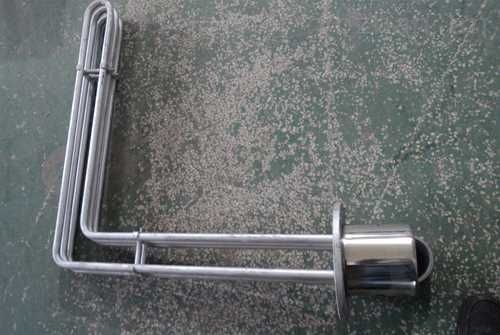
In dust-laden flue gas waste heat recovery or gas-liquid heat exchange applications, ash accumulation and fouling on the fin side are common operational problems. Compared with plate heat exchangers, finned tube heat exchangers have wider flow channels, but if the fin spacing is improperly selected, it can still cause increased pressure drop and decreased heat transfer coefficient. Technical engineers need to pay attention to: whether the fin-side medium contains dust, whether it is prone to fouling, and whether regular blowing is allowed. The KFS-780 finned tube heat exchanger adopts a detachable structural design, which facilitates inspection and cleaning of the finned tube bundle. It is suitable for waste heat recovery conditions with medium dust content on the flue gas side, and is not recommended for liquid media prone to fouling on the fin side.
During selection, it is recommended to first calculate the required number of finned tube rows based on flue gas flow rate, inlet temperature, and allowable pressure drop, and then check whether the base tube wall temperature exceeds the allowable range of the material. The base tube material of the KFS-780 finned tube heat exchanger can be carbon steel or stainless steel, the fin material matches the base tube, and the fin spacing can be adjusted between 4 mm and 8 mm according to dust characteristics. Under design conditions, the allowable pressure drop on the flue gas side is recommended to be controlled within 800 Pa, and the deviation between the medium outlet temperature and the design value should not exceed 5%. During routine inspections, record the medium inlet and outlet temperatures, flow rate, and pressure drop, and compare them with the design conditions to promptly detect signs of ash blockage or leakage.
Compared with plate-frame heat exchangers, the KFS-780 finned tube heat exchanger has stronger adaptability in gas-gas and gas-liquid heat exchange applications, especially when the flue gas dust content is relatively high, and is less prone to flow channel blockage. However, its heat transfer area per unit volume is lower than that of plate heat exchangers, and the equipment footprint is relatively larger. This type of heat exchanger is suitable for air heating or cooling, dust-laden flue gas waste heat recovery, and other applications, and the fin side is not suitable for liquid media prone to fouling.

