
In chemical, pharmaceutical, and HVAC systems, some procurement personnel only provide connection sizes during inquiries without specifying medium composition, temperature, pressure, and flow rate, which easily causes deviations in plate quantity calculation and affects later heat transfer performance and operating pressure drop.
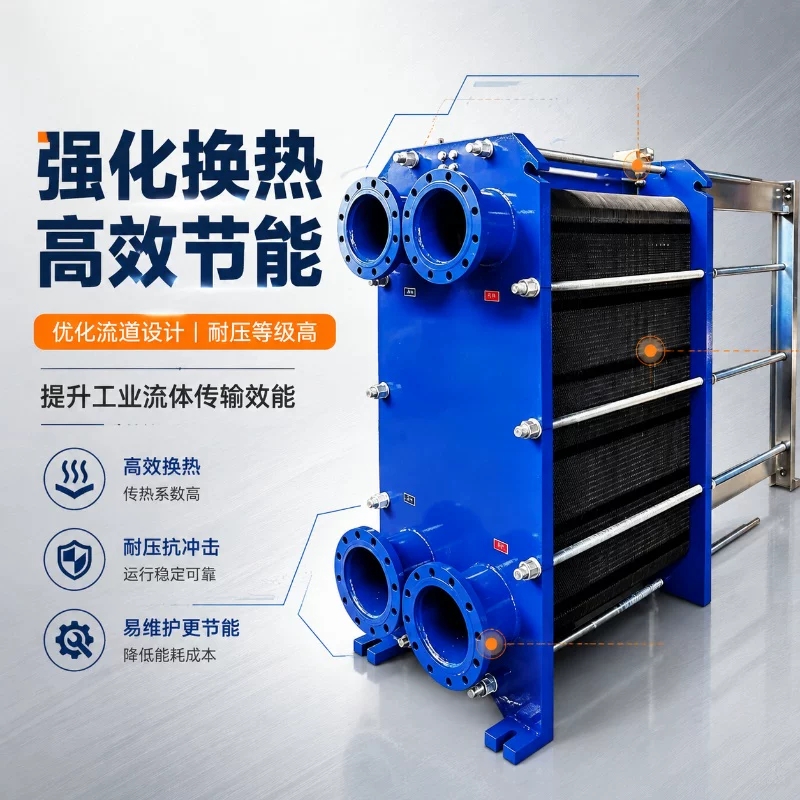
The BRQ-42 plate-and-shell heat exchanger uses a combined structure of plate bundle and shell, with channels formed between plates, and hot and cold media flowing in reverse in adjacent channels. The shell side can withstand higher pressure, while the plate side is suitable for clean media or media containing a small amount of particles. When procuring, providing medium composition, inlet and outlet temperatures, design pressure, and flow rate allows calculation of the required number of plates and pass combination, so that the heat transfer area and pressure drop match the actual working conditions. Plate materials can be 304, 316L stainless steel, or titanium. Gaskets are selected from nitrile, EPDM, or fluororubber according to medium temperature. The design temperature range is -20°C to 200°C, the design pressure does not exceed 2.5 MPa, and the heat transfer area per unit is 2 to 120 square meters.
This model is suitable for scenarios such as secondary networks of central heating, pharmaceutical process cooling water, and jacket water cooling of chemical reactors. In renovation projects with limited space, multi-pass combinations can be used to reduce floor space. If the medium contains fibers or large particles, a filter device should be installed at the inlet to avoid blockage of plate channels.

