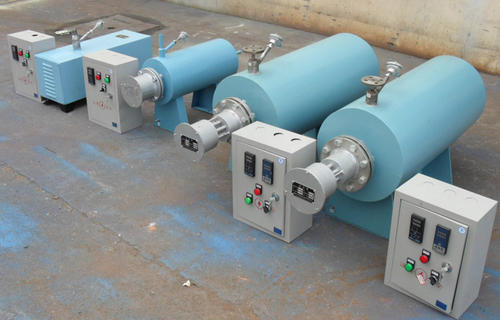
A hydrochloric acid strong acid heater is a device specifically designed for heating strong acid liquids such as hydrochloric acid. This type of heater is widely used in the chemical industry due to its unique corrosion resistance and efficient heat transfer performance. Below is an article summary about the hydrochloric acid strong acid heater:
Hydrochloric Acid Strong Acid Heater: Principle, Structure and Application
In chemical production processes, hydrochloric acid, as a common strong acid, is often used in various processes such as cleaning, reaction, and preparation. To improve the reaction efficiency of hydrochloric acid or accelerate chemical processes, it is often necessary to heat it. The hydrochloric acid strong acid heater is a device specially designed for heating hydrochloric acid, capable of effectively coping with the strong corrosiveness of hydrochloric acid.
Heating Principle
The hydrochloric acid strong acid heater mainly relies on the following principles for heating
Indirect heating: By isolating the heating medium (usually steam or hot water) from hydrochloric acid, heat is transferred to the hydrochloric acid through a heat exchanger, thereby achieving the heating purpose.
Direct heating: In some cases, heating can also be achieved by directly immersing the heating element in hydrochloric acid, but this requires the heating element to have extremely high corrosion resistance.
Structural Features
The hydrochloric acid strong acid heater has the following structural features:
Corrosion-resistant materials: Use of corrosion-resistant materials such as polytetrafluoroethylene (PTFE), fluoroplastics, etc., to ensure long-term stable operation of the equipment in hydrochloric acid environments.
Anti-scaling design: F4 tubes (PTFE tubes) have good chemical inertness and surface smoothness, reducing the possibility of scaling during hydrochloric acid heating, thus ensuring high heat transfer efficiency.
Diverse shapes: The heater can be made into W-type, L-type, U-type, O-type, flat plate type, and spiral type immersion heat exchangers, as well as tower heat exchangers and shell-and-tube heat exchangers, to adapt to different usage requirements.
Application Scenarios
Hydrochloric acid strong acid heaters are widely used in chemical, electroplating, pharmaceutical, and other industries, especially in the following scenarios:
Pickling process: In metal surface treatment processes, heated hydrochloric acid is needed to remove oxides and dirt from metal surfaces.
Chemical reactions: Some chemical reactions need to be carried out at specific temperatures; heating hydrochloric acid can help accelerate these reactions.
Hydrochloric acid regeneration: In some processes where hydrochloric acid is recycled, heating hydrochloric acid helps improve regeneration efficiency.
Usage Cases
Case 1: A steel processing plant used a hydrochloric acid strong acid heater to heat hydrochloric acid to a certain temperature during the pickling of steel plates to improve pickling efficiency. In this way, not only was production efficiency improved, but the consumption of hydrochloric acid was also reduced.
Case 2: In a pharmaceutical company, to promote a chemical reaction, hydrochloric acid needed to be heated to a specific temperature. After using a hydrochloric acid strong acid heater, the reaction rate significantly increased, and product quality also improved.
Conclusion
The hydrochloric acid strong acid heater plays an important role in the chemical industry due to its excellent corrosion resistance and efficient heat transfer performance. By reasonably selecting and using this equipment, not only can production efficiency be improved, but also the service life of the equipment can be extended and maintenance costs reduced.
The above content provides a basic overview of the hydrochloric acid strong acid heater. It should be noted that different models and brands of equipment may have different characteristics and usage methods. Before actual operation, please refer to the specific user manual and technical documentation.