Regular Maintenance and Care Methods for Thermal Oil Heaters - Yangzhou Darui
Regular Maintenance and Care Methods for Thermal Oil Heaters - Yangzhou Darui
Darui Electric recommends for you
1. Water can corrode the thermal oil pump, so materials containing water are prohibited from using the oil pump for vacuum; use a water pump for vacuum.
2. For materials containing a large amount of solvent, first remove most of the solvent in an oven, then use the thermal oil pump for vacuum.
3. Use the vacuum pump in the correct order to prevent back-suction.
4. After using the vacuum oven, be sure to clean it and wipe the glass window of the vacuum oven.
5. Wipe off the anti-rust oil on the surface.
6. Remove the anti-rust oil from the inner cavity of the governor and the injection pump, and add the specified grade of lubricating oil.
7. Choose fuel reasonably.
8. The anti-rust oil in the fuel line should also be removed before use. Connect the fuel to the injection pump line and continuously rotate the injection pump camshaft until clean fuel sprays from the delivery valve holder.
9. Must use fuel of appropriate grade. Generally, use No. 0 diesel in summer and No. -10 light diesel in winter.
10. The fuel used in the thermal oil pump must be clean and free of any impurities and moisture.
The main products of electric heating appliances include: electric heating boilers, high-density single-end heating tubes, electric heating tubes for boilers, electric heating tubes for ovens, finned electric heating tubes, automotive electric heating appliances, electric heating tubes, power electric heating appliances, explosion-proof electric heating appliances, synthetic electric heating appliances, storage tank electric heating appliances, high-temperature ceramic electric heating appliances, molecular sieve electric heating appliances, circulating electric heating appliances, half-type electric heating appliances, crawler-type electric heating appliances, hot water electric heating appliances, and fluid circulating electric heating appliances.
1. Performance of electric heating appliances
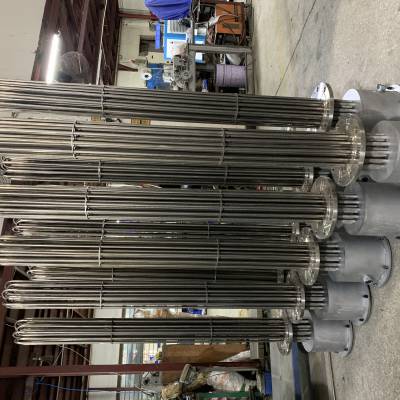
Electric heating appliances (electric heating tubes) use a metal tube as the shell, with spiral electric heating alloy wires (nickel-chromium, iron-chromium alloy) uniformly distributed along the central axis inside the tube. The gaps are filled and compacted with magnesium oxide sand that has good insulation and thermal conductivity. Both ends of the tube are sealed with silicone or ceramics. This metal-sheathed heating element can heat air, metal molds, and various liquids.
2. Structure of electric heating appliances
Electric heating appliances (electric heating tubes) use a metal tube as the shell, with spiral electric heating alloy wires (nickel-chromium, iron-chromium alloy) uniformly distributed along the central axis inside the tube. The gaps are filled and compacted with magnesium oxide sand that has good insulation and thermal conductivity. Both ends of the tube are sealed with silicone or ceramics. This metal-sheathed heating element can heat air, metal molds, and various liquids.
3. Usage of electric heating appliances
Electric heating appliances are components that specifically convert electrical energy into heat energy. Due to their low price, easy use, easy installation, and no pollution, they are widely used in various heating applications. Electric heating tubes have a long service life, generally designed for more than 10,000 hours.
4. Uses of electric heating tubes
Classification of electric heating appliances: finned electric heating appliances for ovens, sauna electric heating appliances, electric heating appliances for rice steamer water tanks, electric heating appliances for electric heating boilers with fastener installation, electric heating appliances for electric heating boilers with flange installation, air electric heating appliances, liquid electric heating appliances, boiler electric heating appliances, etc.
The above is the maintenance method for thermal oil heaters introduced by flange electric heating tubes. Operators should do necessary preparatory inspections before running the equipment. In addition, regular maintenance of the thermal oil heater is also required.