
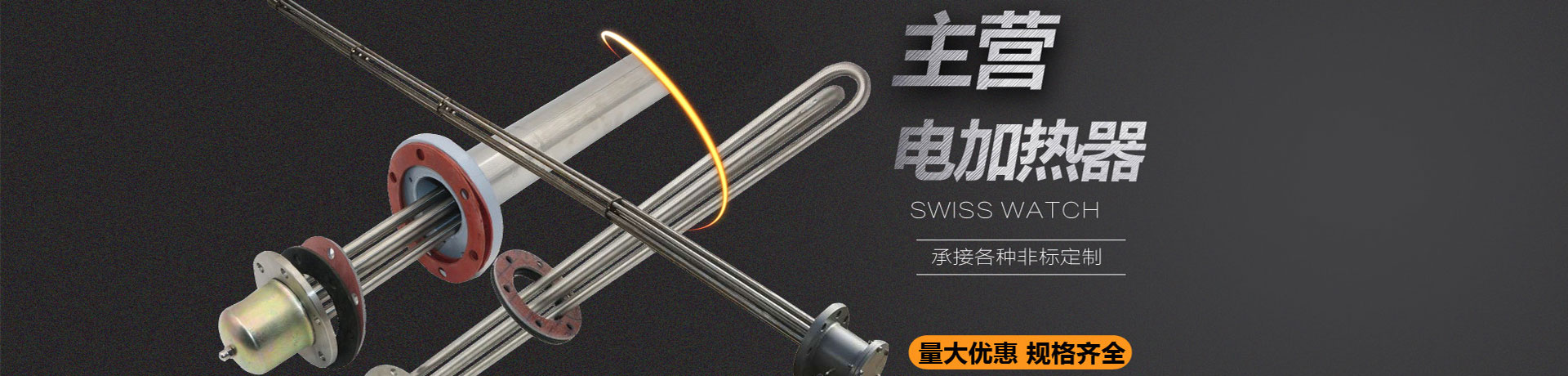
Tubular electric heaters, as heating equipment widely used in industrial and commercial environments, play an indispensable role in many industries due to their high efficiency and reliability. With the advancement of technology, the application of new materials and the integration of intelligent control systems have not only improved energy efficiency but also enhanced safety and controllability. This article will delve into the technological innovations, key characteristics, and application scenarios of tubular electric heaters, aiming to provide valuable references for related industries.
Overview of Tubular Electric Heaters
Definition and Structure: A tubular electric heater typically consists of one or more heating elements enclosed in a metal tube, generating heat through electric current. The metal tube can be straight or bent to accommodate different installation spaces and heating requirements.
Working Principle: When electric current passes through the heating element, resistance heating raises the temperature of the heating element inside the tube, thereby transferring heat to the medium being heated.
Technological Innovations and Features
High Efficiency and Energy Saving: Advanced materials and designs are adopted to improve thermal conversion efficiency and reduce energy consumption.
Intelligent Control: Integrated temperature control systems and intelligent adjustment technologies ensure precise temperature control and response speed.
Long Lifespan: Through optimized design and the selection of high-temperature-resistant and corrosion-resistant materials, the service life is significantly extended.
Safety: Built-in overheat protection devices effectively prevent safety accidents caused by temperature runaway.
Flexibility: Supports multiple voltage levels and power ranges, and can be customized according to different application needs.
Key Technologies
Heating Element Materials: Such as nickel-chromium alloy (NiCr), iron-chromium-aluminum alloy (FeCrAl), etc., which have high melting points and low resistivity.
Insulation Materials: High-quality ceramics or mica are used as insulation layers to improve electrical insulation performance.
Shell Materials: Stainless steel or other special alloy materials are used to enhance corrosion resistance and mechanical strength.
Intelligent Control Systems: Microprocessors or PLCs (Programmable Logic Controllers) are used to achieve temperature control and fault diagnosis.
Application Scenarios
Chemical Industry: Used for heating reactors, pipelines, etc.
Food Processing: Such as baking equipment, beverage heating, etc.
Oil and Gas: Used for oil well heating, pipeline insulation, etc.
Pharmaceutical Industry: Used for heating and drying processes in drug production.
Aerospace: Provides heating sources for aircraft wing de-icing systems.
Case Studies
Case 1: A chemical plant used tubular electric heaters to heat reactors, significantly improving product quality and production efficiency through precise control of reaction temperature.
Case 2: A food processing enterprise adopted customized tubular electric heaters to retrofit the ovens on its production line, achieving efficient energy utilization and reducing operating costs.
Challenges and Future Trends
Challenges: Improving heating efficiency while reducing energy consumption, extending service life, and enhancing safety.
Trends: Developing higher-performance materials, intelligent control technologies, remote monitoring systems, etc.
Conclusion
Tubular electric heaters play an important role in various industries due to their high efficiency and reliability. With continuous technological innovation, tubular electric heaters will play a greater role in improving energy efficiency and ensuring production safety, bringing more convenience to industrial production and daily life.
The above content provides a comprehensive overview of tubular electric heaters, including their technical features, application fields, and future development. We hope this article can provide you with valuable information.