
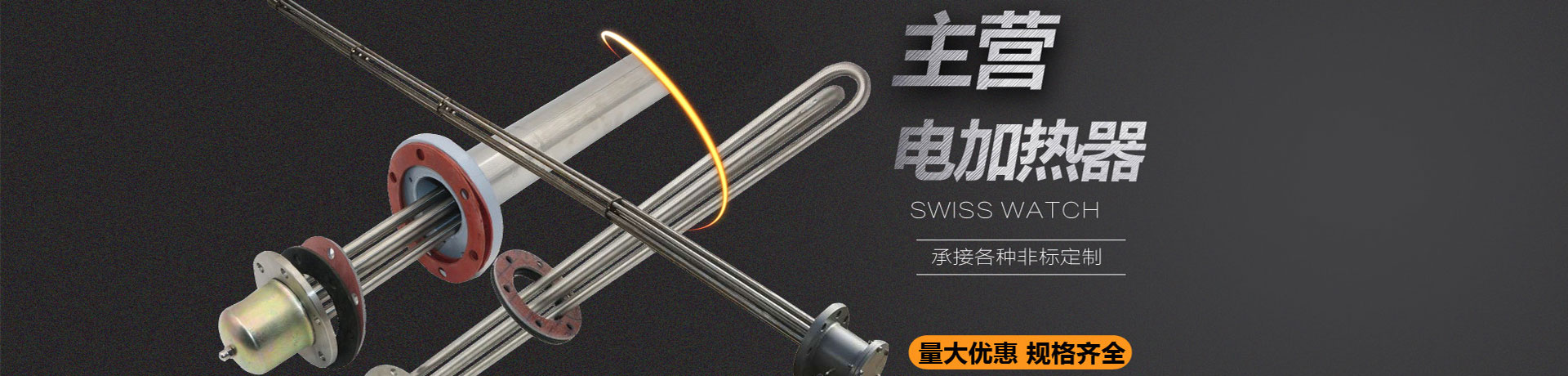
They are mainly used for heating liquids or gases. This type of heater typically consists of a metal tube (usually stainless steel or other heat-resistant materials) with resistance wire or other forms of heating elements inside. When current passes through these elements, they generate heat and transfer it to the medium flowing through the metal tube.
Here is some basic information about tubular electric heaters:
Working Principle
Tubular electric heaters work based on the principle of resistance heating. Current passes through high-resistance materials (such as nickel-chromium alloy) to generate heat. This heat is then transferred through the well-conductive metal tube wall to the medium that needs heating, such as water, oil, or air.
Structural Features
Shell Material: The shell is usually made of stainless steel or other corrosion-resistant materials to ensure the heater's durability in different environments.
Heating Element: The internal heating element can be resistance wire, strip, or spiral, depending on the application requirements.
Insulation Material: To prevent heat loss and protect the heating element from fluid erosion, insulation material is filled between the heating element and the shell.
Connection Method: The heater can be installed into the system by threading, flanging, or welding.
Application Fields
Tubular electric heaters are widely used in various industries such as chemical, petroleum, plastics, and food processing for various heating processes, such as heating water in water tanks, heating molds, and heating chemicals in reactors.
Safety and Maintenance
Due to high-temperature operation, safety issues must be considered when designing and using tubular electric heaters. Regularly check the condition of the heater to ensure there is no risk of electric leakage, and perform proper maintenance according to the manufacturer's instructions to extend service life and ensure efficiency.
Energy Saving and Environmental Protection
With the increasing demand for energy saving and environmental protection, new tubular electric heaters are developing towards higher efficiency and lower energy consumption. Some designs adopt more advanced control technologies to achieve precise temperature control and energy-saving effects.
The above is a basic overview of tubular electric heaters. If you need specific application cases or more detailed technical specifications, please provide more information for further discussion.