
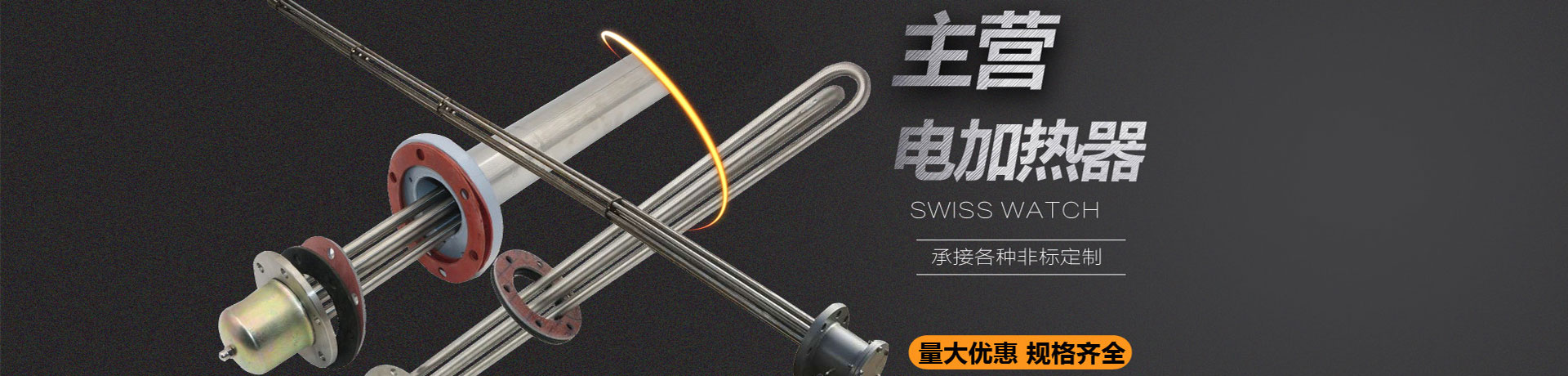
widely used in industrial, commercial, and household environments. They heat various media such as air, water, or oil by converting electrical energy into thermal energy. Below is an article summary about tubular electric heaters, including their working principle, types, application areas, and usage precautions.
Overview of Tubular Electric Heaters
Working Principle
Basic Structure: A tubular electric heater typically consists of a resistance wire (heating element), insulating material (such as magnesium oxide powder), and a metal shell.
Working Method: When current passes through the resistance wire, heat is generated according to Joule's law. This heat is transferred through the metal shell to the medium to be heated. The insulating material not only provides electrical isolation but also helps distribute heat evenly, improving thermal efficiency.
Types
Dry-burning type: Works directly exposed to air, suitable for space heating, ovens, etc.
Immersion type: Works fully or partially submerged in liquid, suitable for water tanks, oil baths, etc.
Air-cooled type: Uses a fan to force air flow for heat dissipation, suitable for applications requiring rapid heating.
Fin type: Equipped with heat dissipation fins on the outer surface to increase surface area and improve heat exchange efficiency, commonly used for air heating.
Application Areas
Industrial production: Mold preheating in plastic processing, material heating in chemical processes, food processing equipment, etc.
Domestic hot water supply: Household water heaters, swimming pool heating systems, etc.
Agricultural greenhouse cultivation: Maintaining suitable temperatures to promote plant growth.
Laboratory equipment: Distillation apparatus, constant temperature baths, and other precision instruments.
Medical equipment: Disinfection cabinets, incubators, etc.
Advantages
High efficiency and energy saving: Can quickly reach the set temperature, reducing energy waste.
Easy control: Output power can be precisely adjusted through temperature control devices.
Simple maintenance: Compact design, easy to clean and replace parts.
Wide applicability: Suitable for almost all non-explosive gas environments.
Usage Precautions
Correct installation: Ensure the heater matches the power supply voltage and install it correctly according to the instructions.
Regular inspection: Regularly clean surface dust and dirt to avoid affecting heat dissipation.
Avoid overload: Do not operate beyond the rated power for extended periods to prevent damage to the heating element.
Safety measures: For applications in flammable or explosive environments, additional safety measures such as explosion-proof design are required.
Temperature monitoring: Use temperature control devices to monitor and control heating temperature to prevent overheating.
Protective measures: Wear appropriate personal protective equipment such as gloves and goggles during operation.
Conclusion
Tubular electric heaters are widely used in multiple fields due to their simple structure, easy installation, and high efficiency and energy saving. With technological development, future tubular electric heaters will become more intelligent and environmentally friendly, providing users with more convenience. Choosing the correct model and following safety guidelines are crucial to ensure heating efficiency while extending service life.
I hope this article provides you with a comprehensive understanding of the basic knowledge and importance of tubular electric heaters. If you have any specific questions or want to learn more details, please feel free to let me know!