
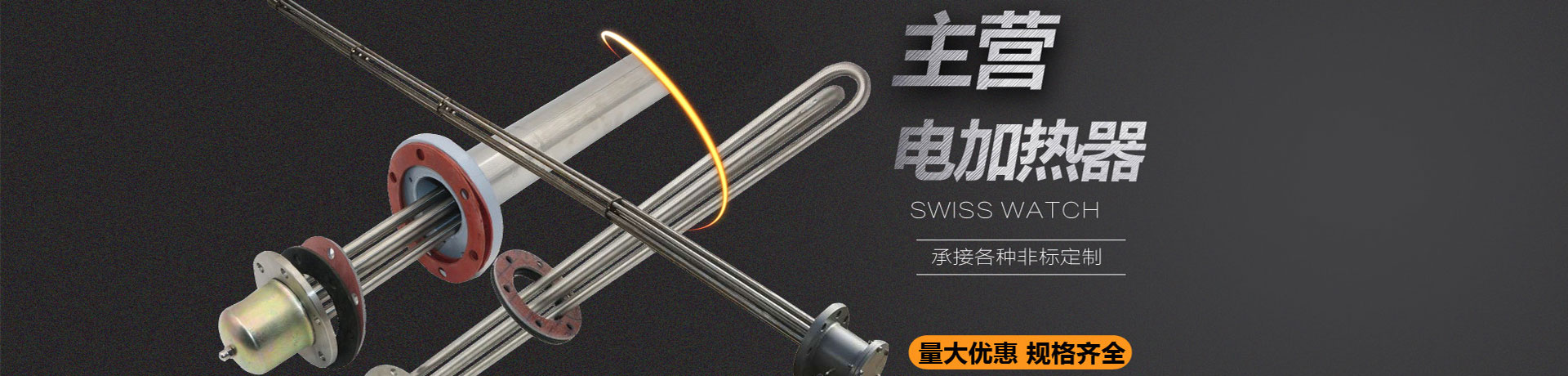
Tubular electric heater, also known as tubular heater or heating tube, is a widely used electric heating device. With its compact design, efficient heating capability, and diverse application range, it plays an important role in various fields of industrial production and daily life. This article will introduce in detail the characteristics, working principle, application scenarios, and future development trends of tubular electric heaters.
Structure and Working Principle
A tubular electric heater typically consists of a metal tube (such as stainless steel), an internal resistance wire (such as nickel-chromium alloy), and insulating material (such as magnesium oxide powder) filled between the two. When current passes through the resistance wire, it generates heat, which is then transferred through the metal tube wall to the medium that needs heating. This design not only provides efficient heat transfer but also ensures electrical safety, preventing leakage accidents.
Metal tube: As the outer shell, it protects internal components and directly contacts the heated medium, achieving effective heat transfer.
Resistance wire: It is the core component that generates heat; its power density and material determine heating efficiency and service life.
Insulating material: It is used to fix the position of the resistance wire and prevent short circuits, while also having good thermal conductivity to ensure uniform heat distribution.
Main Features
High efficiency and energy saving: Using high-quality electric heating elements, it can heat up quickly and maintain a stable working temperature, reducing energy loss.
Strong durability: Made of corrosion-resistant and oxidation-resistant materials, suitable for long-term use in harsh environments.
High flexibility: Heating tubes of different sizes, shapes, and power can be customized according to specific needs, adapting to various application scenarios.
Good safety: Equipped with multiple safety measures such as overheat protection and grounding protection, ensuring safe and reliable use.
Easy maintenance: Simple structure, easy to disassemble, clean, and replace damaged parts, reducing maintenance costs.
Application Scenarios
Household appliances: Including water heaters, coffee machines, ovens, and other small appliances, used for heating water or other liquids.
Industrial production: In industries such as chemical, petroleum, and food processing, used for heating fluids; also used for mold heating to improve molding efficiency.
Laboratory equipment: Provides precise temperature control environment for experiments, supporting scientific research activities.
Medical equipment: Used in certain medical instruments to maintain specific temperature conditions, ensuring treatment effectiveness.
Development Trends
With technological advancement, tubular electric heaters are also continuously innovating and developing:
Intelligent control: Integrating intelligent temperature control systems to achieve automatic adjustment and remote monitoring functions, enhancing user experience.
Energy saving and environmental protection: Optimizing design to improve energy utilization efficiency, reduce carbon emissions, and align with green development concepts.
New material applications: Exploring new high-temperature-resistant and corrosion-resistant materials to extend service life and broaden application scope.
Personalized customization: Providing tailor-made products and services according to customers' special needs to meet diverse market demands.
In summary, tubular electric heaters have played an important role in promoting industrial upgrading and improving personal quality of life due to their excellent performance and wide applicability. In the future, with further development of related technologies, tubular electric heaters will continue to move towards more efficient, environmentally friendly, and intelligent directions, providing users with more economical and reliable heating options. Whether for professional technicians or ordinary users, understanding and correctly using tubular electric heaters is crucial.