
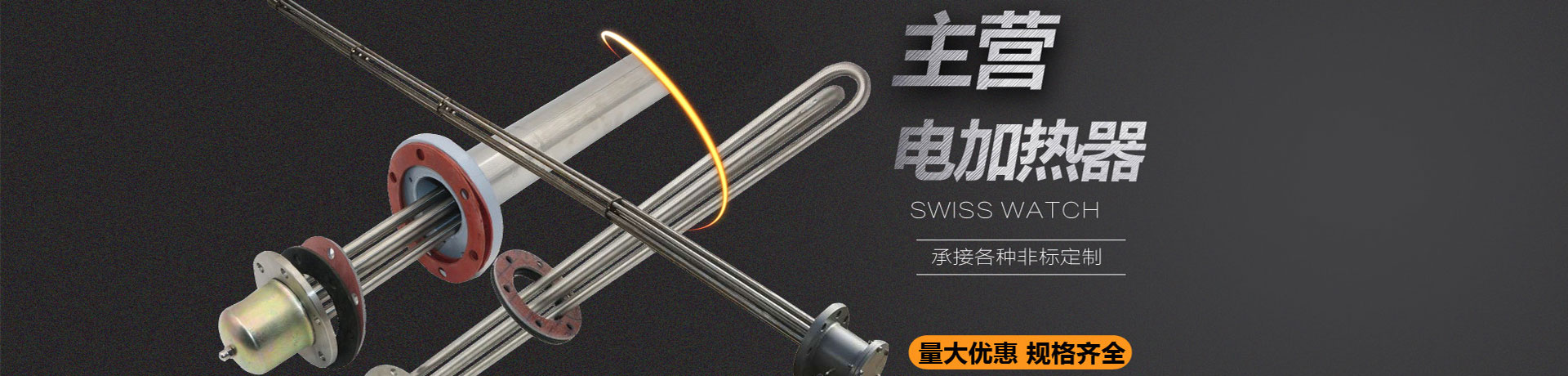
Tubular electric heaters, also known as tubular heaters or heating rods, are a common type of electric heating element widely used in industrial and commercial environments for heating liquids, gases, and solid materials. They are known for their compact structure, high heating efficiency, and long service life.
Working Principle
The basic working principle of a tubular electric heater is based on the heat generated when current passes through a resistive material (Joule effect). When current flows through the resistance wire inside the heater (usually made of nickel-chromium alloy), the wire generates heat and transfers it to the surrounding medium. Depending on the application requirements, the heater can be designed for direct contact heating of the medium or indirect heating of the target object through radiation, convection, etc.
Structural Features
Shell: Typically made of stainless steel, copper, or other corrosion-resistant materials to protect the internal heating elements and adapt to various harsh working environments.
Heating Element: Located inside the tubular shell, usually made of high-resistivity metal (such as nickel-chromium alloy).
Insulation Filler: To ensure electrical safety, insulating materials such as magnesium oxide are filled between the heating element and the shell. This material not only has good insulating properties but also excellent thermal conductivity.
Terminals: Used for connecting the power supply, usually set at one or both ends of the heater.
Application Fields
Chemical Industry: Used for heating materials in equipment such as reactors and distillation towers.
Food Processing: Involved in processes such as pasteurization and evaporation concentration to ensure food safety and hygiene.
Oil and Gas: Suitable for crude oil heating, pipeline anti-freezing, and other fields.
Home Appliances: Used in household appliances such as water heaters and coffee machines to heat water or other liquids.
Laboratory Equipment: Used for preheating experimental apparatus, dissolving samples, etc.
Selection and Maintenance Considerations
Power Selection: Choose the heater power reasonably based on the type of medium to be heated, volume, and desired temperature.
Size Matching: Ensure the heater's dimensions fit the installation space and effectively cover the area to be heated.
Regular Inspection: Due to long-term use, issues such as scaling and corrosion may occur. It is recommended to clean and inspect regularly, and replace parts when necessary to maintain heating efficiency.
Protective Measures: For environments with moisture or corrosive gases, select products with appropriate protection levels and take additional anti-corrosion measures.
Conclusion
Tubular electric heaters, with their high efficiency, stability, and ease of integration, have shown broad application prospects in many fields. With technological development, the application of new materials and manufacturing processes will further enhance their performance to meet more diverse heating needs. Understanding and correctly selecting the appropriate tubular electric heater for your application can not only improve production efficiency but also extend equipment service life and reduce maintenance costs.