
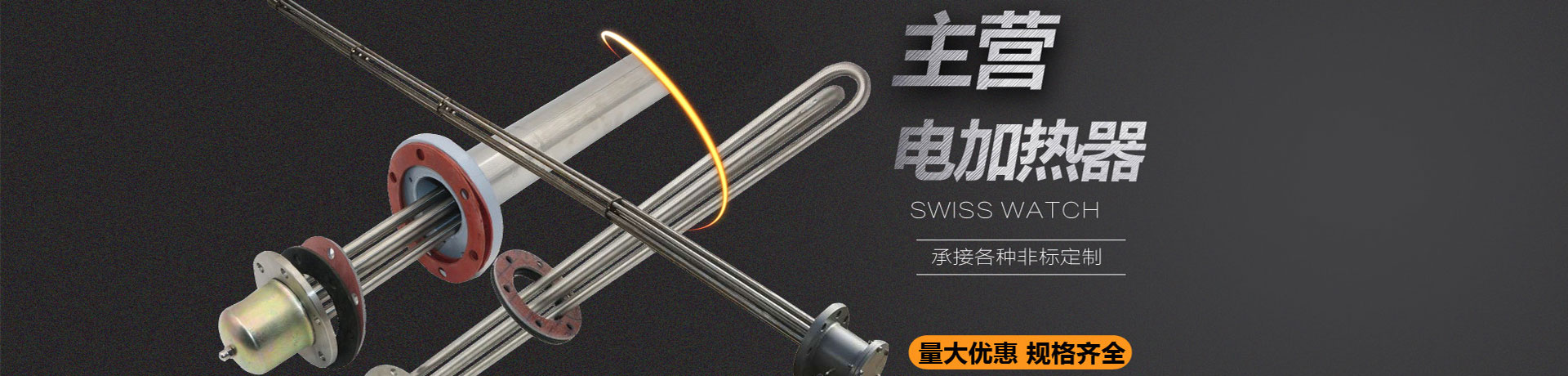
Tubular Electric Heaters, also known as sheathed electric heaters, are a widely used type of electric heating element. They convert electrical energy into heat to warm liquids, gases, or solids, playing an important role in both industrial and civil applications. This type of heater is favored for its high efficiency, durability, and ease of customization.
I. Structure and Composition
Tubular electric heaters typically consist of the following main parts:
Resistance wire: Usually made of nickel-chromium alloy, it is the core component that generates heat.
Insulation material: Wrapped around the resistance wire, commonly using materials such as magnesium oxide powder, which both insulates and effectively conducts heat.
Metal sheath: The outermost layer is usually stainless steel or other corrosion-resistant metal, protecting the internal structure while also serving as a medium for heat transfer.
Terminal connections: Used to connect to the power supply, ensuring that current can be safely transmitted to the resistance wire.
II. Working Principle
When current passes through the resistance wire, heat is generated due to the resistance effect. This heat is first absorbed by the insulation layer and evenly distributed, then transferred outward through the metal sheath to the medium that needs heating. Depending on the specific application, tubular electric heaters can be designed for direct immersion in liquids, embedding in solid materials, or for air heating.
III. Application Scenarios
Liquid heating: Such as heating water or other liquids in equipment like water heaters, boilers, and tanks.
Air heating: Commonly used in air conditioning systems, drying equipment, and air preheating in industrial furnaces.
Mold heating: Used in industries such as plastic processing and rubber vulcanization for rapid and uniform heating of molds.
Surface treatment: For example, preheating workpieces in painting production lines or serving as a heat source in chemical reaction vessels.
IV. Features and Advantages
High efficiency and energy saving: Directly converts electrical energy into heat, with high energy conversion efficiency and fast response.
Diverse configurations: Can be customized in length, power, voltage level, and terminal types according to actual needs, offering strong adaptability.
Safe and reliable: Good sealing performance allows stable operation even in humid or underwater conditions, reducing safety hazards.
Long lifespan: The selection of high-quality materials combined with reasonable design gives tubular electric heaters a long service life.
Easy installation and maintenance: Compact size facilitates integration into various systems, and maintenance costs are low.
V. Usage Precautions
Choose appropriate power: Determine the proper power level based on the characteristics of the heated medium and the required temperature.
Pay attention to heat dissipation conditions: Ensure sufficient space around the heater for heat dissipation to avoid damage due to overheating.
Regular inspection and maintenance: Although tubular electric heaters are relatively durable, it is recommended to perform regular performance checks and necessary cleaning and maintenance to ensure long-term stable operation.
VI. Summary
Tubular electric heaters have been widely applied in many fields due to their excellent heating performance, broad applicability, and high safety. Whether in small household appliances or key components in large industrial facilities, they can be found. Correct selection and reasonable use of tubular electric heaters not only improve work efficiency but also extend equipment lifespan and reduce operating costs. For users, understanding their basic principles and precautions helps to better utilize this tool. With technological development, tubular electric heaters will continue to be optimized and upgraded to meet more diverse market demands.
Through continuous innovation and improvement, tubular electric heaters are becoming more intelligent and efficient, providing users with more convenient and reliable heating solutions, while also contributing to energy conservation and emission reduction across various industries.