
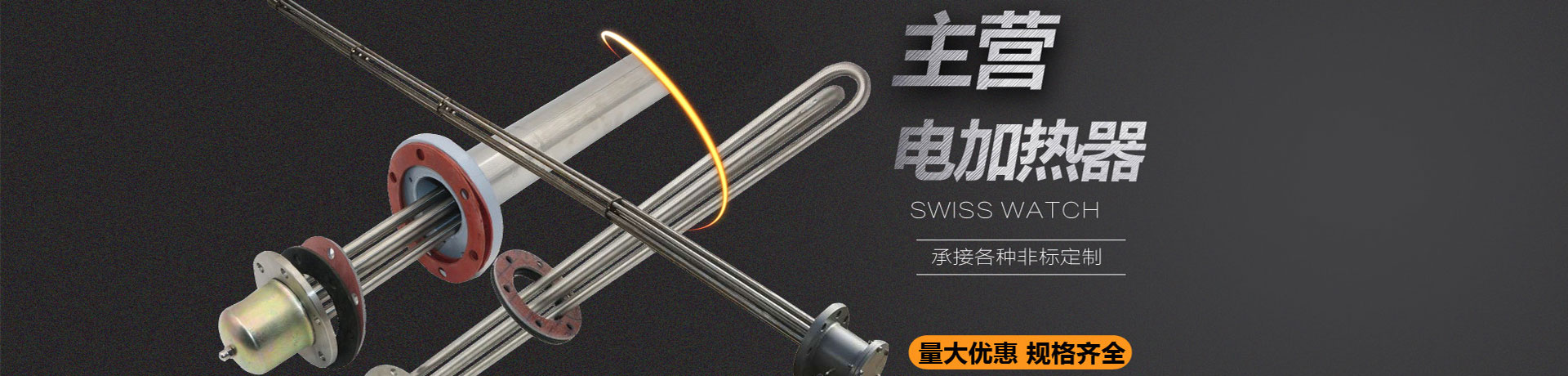
Tubular Electric Heater, also known as sheathed electric heater or armored heater
is an industrial and civil core component that converts electrical energy into thermal energy.
Simply put, it is like a "metal electric heating rod" with an internal structure similar to a "sandwich": the center is a resistance wire (heat source), the middle is filled with magnesium oxide powder (insulating and thermally conductive), and the outer layer is a metal sheath (protection and heat transfer). Due to its robust structure, high thermal efficiency, and ease of customizing shapes, it is widely used for heating liquids, air, and solid molds.
⚙️ Core Structure and Working Principle
The working principle of the tubular electric heater is based on Joule's law. When current passes through the central nickel-chromium alloy resistance wire, heat is generated. The heat is rapidly conducted through the tightly compacted magnesium oxide (MgO) insulation layer to the outer metal sheath, and then heats the surrounding medium (such as water, oil, air, or metal molds) through conduction, convection, or radiation.
Resistance wire: Usually made of high-temperature resistant nickel-chromium alloy (Cr20Ni80) or iron-chromium-aluminum alloy.
Insulation layer: High-purity magnesium oxide powder, with high temperature resistance (above 1000°C), high insulation, and high thermal conductivity, ensuring electrical safety.
Metal sheath: Depending on the heating medium, materials such as stainless steel (304/316L), copper, titanium, or carbon steel are selected to protect internal components and provide corrosion resistance.