
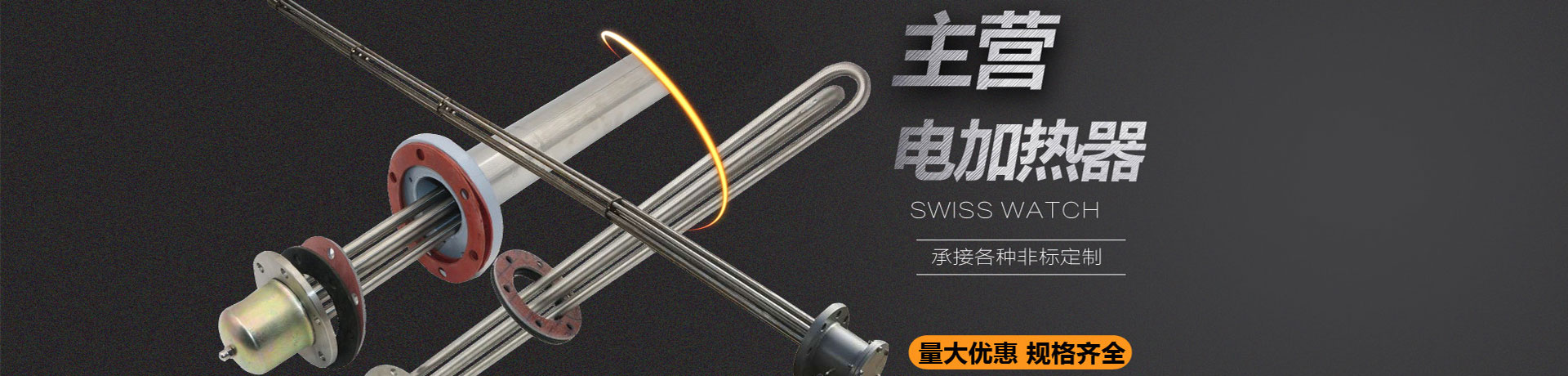
The internal core of the sheath electric heater is a tubular electric heating element
The sheath electric heater (also known as sheath-type tubular electric heater or immersion electric heater) is an industrial heating device specifically designed for heating hydraulic oil, lubricating oil, thermal oil, and various liquids or gases.
Its core design highlight lies in the "core-sheath separation" structure. The heating core and the external sheath are independent of each other, connected to the oil tank or container via flanges. This design allows for maintenance or replacement without draining the liquid in the tank; only the internal heating core needs to be extracted for replacement, greatly improving maintenance efficiency and safety in industrial settings.
The following is a detailed introduction to the core principles, technical features, and parameters of the sheath electric heater:
⚡ Core Working Principle
Joule heating effect and heat conduction: Its internal core is a tubular electric heating element, which generates heat through the Joule heating effect when current passes through alloy resistance wires with high resistivity (such as nickel-chromium alloy).
Efficient heat transfer and anti-carbonization: The generated heat is conducted to the outer wall of the sheath through the insulating and thermally conductive medium (usually crystalline magnesium oxide powder) tightly filled inside the metal sheath tube, and then the sheath uniformly transfers the heat to the flowing liquid or gas. Due to the large contact area between the sheath and the heated medium and the low surface heating power, it effectively prevents the oil from carbonizing or coking due to local high temperatures.