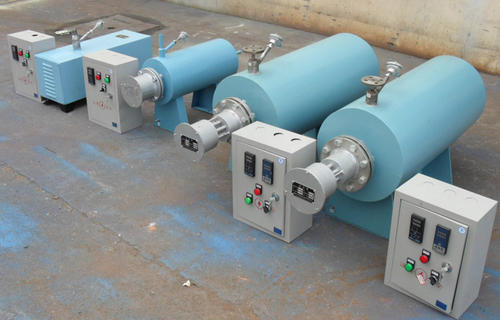
1. Small size, high power: The heater mainly uses clustered tubular electric heating elements.
2. Fast thermal response, high temperature control accuracy, and high overall thermal efficiency.
3. High heating temperature: The maximum working temperature of the heater design can reach 850°C.
4. Uniform medium outlet temperature and high temperature control accuracy.
5. Wide application range and strong adaptability: This heater can be used in explosion-proof or ordinary occasions, with explosion-proof levels up to dIIB and C, and pressure resistance up to 20MPa.
6. Long lifespan and high reliability: This heater is made of special electric heating materials, with low design surface power load and multiple protections, greatly increasing the safety and lifespan of the electric heater.
7. Fully automated control: According to requirements, through the heater circuit design, automatic control of outlet temperature, flow, pressure and other parameters can be easily achieved, and it can be networked with computers.
8. Significant energy-saving effect: The heat generated by electricity is almost entirely transferred to the heating medium.
1. In the dimension drawing, dimension "B" must be fully immersed in oil to avoid burning out the components. The heated oil should be non-corrosive.
2. When melting solid oils such as asphalt and paraffin, the voltage should be reduced, and then raised to the rated voltage after melting, to prevent heat concentration and reduce the service life of the components.
3. If carbon deposits are found on the tube surface, they must be removed before use to avoid reducing efficiency or even burning out the components.
4. Components should be stored in a dry place. If the insulation resistance drops below 1 megohm due to long-term storage, they can be dried in an oven at about 200°C for several hours (or powered at low voltage for several hours) to restore insulation resistance.
Nonwoven Fabric Heater
Product materials:
Common materials for the outer tube include In800, In840, 304, 316L, 310S, aluminum, copper, low carbon steel, etc.
Magnesium oxide powder is selected in different specifications according to different usage requirements, including high-temperature powder, medium-temperature powder, etc.
The resistance wire is the heating element, with two common materials: Ni-Cr wire and Fe-Cr-Al.
Lead wire terminal materials generally have two types: stainless steel and free-cutting iron.
Sealing materials include: epoxy, silicone, glass, etc.
Function description:
Working voltage allowable error: not greater than 1.1 times its rated value, and the shell should be effectively grounded.
Working environment: relative humidity not greater than 95%, no explosive or corrosive gases.
Dimension "B" in the dimension drawing must be fully immersed in oil (and checked regularly) to avoid burning out, and the heated oil should be non-corrosive. When melting solid oils such as asphalt and paraffin, the voltage should be reduced, and then raised to the rated voltage after melting, to prevent heat concentration and reduce the service life of the components. The outlet end must be kept dry and clean to avoid surface flashing or short circuits. Components should be stored in a dry place. If the insulation resistance drops below 1MΩ due to long-term storage, they can be dried in an oven at about 200°C for several hours (or powered at low voltage for several hours) to restore insulation resistance.
Precautions: