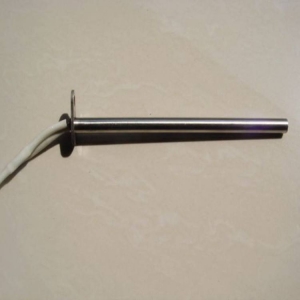
In industrial production, heating tubes and heating rods, as two important heating elements, are widely used in fields such as plastic molding, chemical engineering, food processing, and laboratory equipment. They provide precise and efficient thermal energy, ensuring temperature control during the production process. This article will delve into the working principles, types, application fields, and maintenance points of heating tubes and heating rods, helping readers better understand and apply these key heating technologies.
Working Principle
The working principle of heating tubes and heating rods is based on resistance heating theory. They contain resistance wires inside; when current passes through the resistance wire, according to Joule's Law, the resistance wire generates heat. This heat is then transferred to the surrounding medium through the tube wall or rod body, achieving the purpose of heating. Heating tubes typically adopt a tubular design with magnesium oxide powder filled inside as insulation material, while heating rods are mostly straight rod shapes that directly contact the object to be heated.
Types and Characteristics
Heating Tubes:
Quartz Heating Tubes: Transparent quartz glass tubes as the outer shell, capable of directly radiating heat, suitable for applications requiring direct radiant heating.
Stainless Steel Heating Tubes: Using stainless steel as the outer shell, they have good corrosion resistance and mechanical strength, suitable for chemical, food, and other industries.
Ceramic Heating Tubes: Using ceramic as the outer shell, they have high heat resistance and insulation, suitable for high-temperature heating environments.
Heating Rods:
Cast Aluminum Heating Rods: Embedding heating elements into aluminum material, utilizing aluminum's good thermal conductivity to quickly transfer heat, suitable for applications requiring rapid heating and cooling.
Ceramic Heating Rods: Using ceramic as the outer shell, they have excellent insulation and high-temperature resistance, suitable for laboratory and precision heating equipment.
Application Fields
Heating tubes and heating rods play an important role in multiple fields due to their efficient and precise heating performance:
Plastic Molding: Used in injection molding machines, blow molding machines, and other equipment to ensure temperature control during the plastic melting process.
Chemical Industry: Providing heat in reactors, distillation towers, and other equipment to promote chemical reactions.
Food Processing: Providing a stable heating environment in baking and cooking equipment to ensure food quality and safety.
Laboratory Equipment: Used in incubators, ovens, and others to provide precise temperature control, meeting scientific research needs.
Maintenance and Precautions
The key to maintaining heating tubes and heating rods lies in:
Regular Inspection: Check the insulation performance and connection points of heating elements to ensure there is no damage or looseness.
Cleaning and Maintenance: Regularly clean dust and dirt on the surface of heating elements to avoid affecting heat transfer efficiency.
Temperature Monitoring: Use temperature sensors to monitor the temperature of the heating area to prevent overheating that could cause equipment damage.
Precautions:
Overheat Protection: Ensure the heating system has an overheat protection mechanism to prevent temperature runaway.
Correct Selection: Choose the appropriate type of heating tube or heating rod based on specific application needs to match the working environment and heating requirements.
Conclusion
Heating tubes and heating rods, as core components of industrial heating technology, provide reliable thermal energy solutions for multiple industries with their efficient and precise heating performance. Through reasonable selection, use, and maintenance, these heating elements can maintain stable and efficient operation in various complex working environments, bringing higher efficiency and safety to industrial production. With continuous technological advancement, future heating tubes and heating rods will become more intelligent, better adapting to the diverse needs of industrial production and promoting the sustainable development of industrial heating technology.