
Voltage and Power: e.g., 220V/3kW, 380V/9kW; Need to confirm whether the on-site power supply is single-phase or three-phase
Classified by tube material (determines corrosion resistance and temperature resistance)
Table
| Material | Applicable Scenarios | Maximum Operating Temperature (Surface) | Features |
|---|---|---|---|
| Stainless Steel 304 | Ordinary water, weak acids, air | ~600°C | Most common, cost-effective, average corrosion resistance. |
| Stainless Steel 316/316L | Seawater, strong acids, food-grade liquids | ~600°C | Strong corrosion resistance, commonly used in chemical and food processing. |
| Titanium Tube | Strong acids (e.g., electroplating solutions), seawater | ~300°C | Excellent resistance to strong acid corrosion, but expensive and not resistant to dry burning. |
| Quartz Tube | High-temperature radiant heating, clean environments | ~800°C+ | Fast heating, high thermal efficiency, but fragile. |
| Incoloy 84/800 | Extreme high temperatures, harsh environments | ~900°C+ | Resistant to high-temperature oxidation, long lifespan, used in high-end industrial applications. |
| Carbon Steel/Teflon Coated | Specific corrosive liquids | Limited | Teflon coating resists strong acids and alkalis, but has lower temperature resistance (<250°C). |
C. Classification by Shape
- Straight Tube Type: Most common, used for water tank and pipeline heating.
- U-type/W-type/S-type: Adapt to container space, increase heating length.
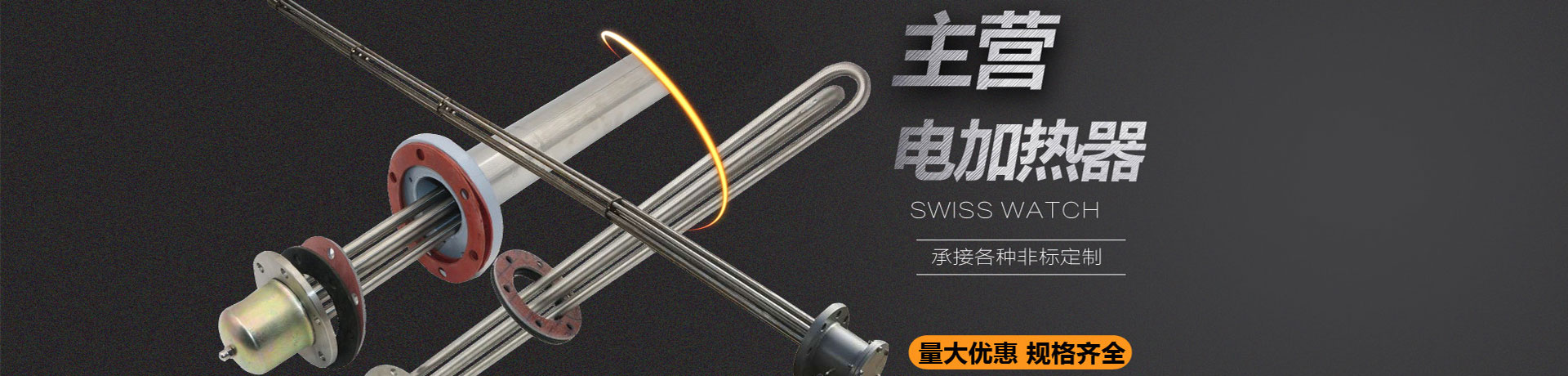
- Flange Type: Fixed on large-diameter containers or pipelines via flange, easy to disassemble and replace.
- Threaded Type: Directly screwed into water tanks or pre-drilled holes in equipment.
- Single-Head Heating Tube (Single-Head Tube): One end leads out, commonly used for mold heating, inserted into holes.
3. Key Selection Parameters
When purchasing or designing, the following parameters must be clearly defined:
- Voltage and Power: e.g., 220V/3kW, 380V/9kW. Need to confirm whether the on-site power supply is single-phase or three-phase.
- Dimensions: Total length, heating zone length (very important; non-heating zone cannot be immersed in liquid or placed in heating area), tube diameter (common φ10, φ12, φ14, φ16, etc.).
- Surface Load (W/cm²):
- Heating static water: ~10-15 W/cm²
- Heating flowing water: ~15-25 W/cm²
- Heating air (natural convection): ~2-4 W/cm²
- Heating air (forced air cooling): ~5-8 W/cm²
- Note: Excessive surface load can drastically shorten the lifespan of the heating tube or even cause burnout.
- Operating Environment: Medium composition (corrosiveness), temperature requirements, pressure requirements.
- Wiring Method: Star (Y) or Delta (Δ) connection (for 380V three-phase power).
4. Common Faults and Maintenance
- Electric Leakage: Usually caused by moisture in the seal, hygroscopic insulation powder, or tube rupture. Countermeasure: Keep the junction box dry, regularly check insulation resistance (cold state should be >50MΩ).
- No Heating: Heating wire burned out or loose wiring. Countermeasure: Use a multimeter to check continuity.
- Short Lifespan:
- Dry Burning: Liquid-type heating tubes used above the liquid level.
- Scaling: In areas with hard water, scale on the tube surface causes poor heat dissipation and local overheating. Countermeasure: Regular descaling or use anti-scaling heating tubes.
- Incorrect Selection: Surface load designed too high.
5. Safety Precautions
- Strictly No Dry Burning: Unless specifically designed as dry-burning type, liquid heating tubes must be powered only when fully immersed.
- Grounding Protection: Metal shell must be reliably grounded to prevent electric shock.
- Temperature Control Protection: It is recommended to use with temperature controllers, thermocouples, and overheat protectors to prevent temperature runaway.
- Installation Direction: When heating liquids, it is recommended to install horizontally or vertically with the heating zone fully immersed, to avoid air bubbles accumulating at the top causing local overheating.
If you need selection advice or power calculation formulas for specific application scenarios (such as "injection molding machine mold heating", "large water tank heating", or "corrosive chemical liquid heating"), please let me know your specific requirements!