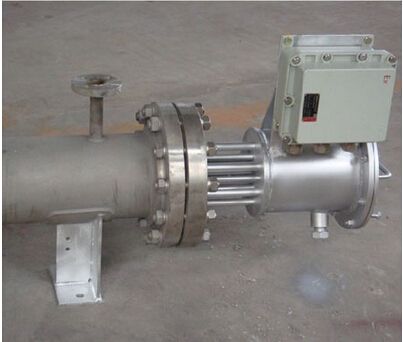
technologically mature electric heating element in industrial and civil fields. It heats liquids, gases, or solids directly by converting electrical energy into thermal energy.
Given that you have asked about this topic again, I will provide you with a more practical guide, focusing on core formulas for selection and calculation, a quick reference table for material matching, and a 2026 industry pitfall avoidance guide.
1. Core Structure Decryption: Why is it durable?
The core of a tubular electric heater lies in its "sandwich" structure, which determines its lifespan and safety:
Central heating wire: Usually nickel-chromium alloy (Cr20Ni80), responsible for generating heat.
Insulating filling layer: High-purity magnesium oxide powder (MgO). This is the soul! It is both insulating and thermally conductive, rapidly transferring the heat generated by the heating wire to the outer tube, while fixing the heating wire to prevent vibration and breakage.
Metal protective sheath tube: Directly contacts the medium, determining corrosion resistance and temperature resistance.
Sealing: Uses silicone, epoxy resin, or laser welding to prevent moisture ingress that could cause short circuits.
2. Selection Core: Material and Medium Matching Table (2026 Edition)
Choosing the wrong material is the main cause of heating tube burnout or leakage. Please refer to the table below for selection:
Table
Heating Medium Recommended Sheath Material Key Reason Taboo/Note
Pure Water / Drinking Water SUS304 Stainless Steel High cost-effectiveness, resistant to weak corrosion Avoid excessive chloride ions
Seawater / Saline Water SUS316L or Titanium Tube (Ti) 316L resists pitting; titanium tube resists strong chloride ion corrosion Strictly prohibit using 304, it will quickly perforate
Thermal Oil (<300℃) SUS304 / SUS321 Good oil resistance Need to control surface load to prevent coking
Thermal Oil (>300℃) SUS310S or Incoloy 800 Resistant to high-temperature oxidation, anti-creep Ordinary 304 is prone to deformation and rupture at high temperatures
Strong Acids (Sulfuric/Hydrochloric Acid) Titanium tube, Hastelloy, or Teflon coating Extremely strong acid and alkali corrosion resistance Stainless steel will rapidly dissolve in strong acids
Strong Alkalis (Caustic Soda) Pure Nickel or 316L Resistant to alkali corrosion Aluminum material is absolutely prohibited
Air (Static) Stainless Steel + Fins Increases heat dissipation area Surface load must be low, otherwise it will glow red and burn out
Mold/Solid Contact Stainless Steel or Cast Aluminum/Copper Tight fit, fast heat conduction Installation holes need to fit tightly; gaps will cause overheating
3. Key Calculation: Surface Load
This is the most overlooked parameter in design and use. Excessive surface load = tube glows red = lifespan drastically reduced = tube rupture.
Formula:
Surface Load
(Too high will cause oil coking and carbonization, forming an insulating layer on the tube wall, leading to a vicious cycle)
Case: A tube with a diameter of 14mm (1.4cm), heating length of 50cm, and power of 3000W placed in static water.
Surface Load =
Conclusion: Absolutely not! This will instantly burn out. In static water, the same size should not exceed 400-500W, or significantly increase the heating length.
4. Common Fault Diagnosis and Solutions
Table
Fault Phenomenon Possible Cause Solution
Tripping/Leakage upon Power-On 1. Seal moisture ingress
2. Insulating powder moisture absorption
3. Sheath tube rupture 1. Drying treatment (if minor)
2. Replace with new tube, check installation sealing
3. Check if medium is corrosive causing perforation
Tube Surface Glowing Red 1. Excessive surface load
2. Medium not submerged (dry burning)
3. Scale/oil coke too thick 1. Recalculate power or increase tube length/quantity
2. Install liquid level protection switch (forced interlock)
3. Regular descaling and cleaning
Heating Speed Slows Down 1. Severe surface scaling (insulation)
2. Insufficient voltage
3. Partial heating wire break 1. Acid washing or mechanical descaling
2. Check power supply lines
3. Measure resistance, replace damaged element
Terminal Block Burned Black 1. Loose screws, poor contact
2. Wire gauge too thin
3. Ambient temperature too high 1. Regularly tighten screws, use spring washers
2. Replace with high-temperature, larger gauge wires
3. Improve junction box ventilation or add heat sinks
5. 2026 Industry New Trends and Pitfall Avoidance Guide
New Technology Highlights
Nano anti-corrosion coating: Spraying nano-ceramic or Teflon layer on stainless steel surface not only prevents corrosion but also prevents scaling (scale does not adhere easily), improving energy efficiency by 10%-15%.
Built-in intelligent temperature control: High-end heating tubes directly embed PT100 sensors or K-type thermocouples inside to monitor the tube temperature directly rather than the medium temperature, enabling more precise prevention of dry burning and overheating.
3D printed special-shaped tubes: For complex molds or special flow channels, 3D printing technology is used to manufacture integrally formed special-shaped heating tubes without welds, offering stronger pressure resistance.
Procurement Pitfall Avoidance Guide
Beware of "non-standard diameter reduction": Some manufacturers, to save material, make tubes with a nominal diameter of 14mm actually 13mm, leading to falsely high power density and extremely short lifespan. Always measure the outer diameter with calipers upon acceptance.
Beware of "recycled materials": Low-priced heating tubes often use recycled nickel-chromium wire or magnesium oxide powder with many impurities, resulting in poor insulation performance and easy leakage. Only recognize reputable large manufacturers (such as those in the Yancheng, Jiangsu industrial belt).
Terminal post material: Confirm that the terminal screw is copper-nickel plated or pure copper, not iron zinc-plated. Iron screws are prone to oxidation and heat generation under high current, leading to burnout.
Explosion-proof certification: For use in chemical, oil, and gas environments, you must verify the genuine Ex explosion-proof certificate. Do not use ordinary tubes with an added explosion-proof box to fake compliance.
6. Safety Operation Iron Rules
Strictly prohibit dry burning: Unless it is a dedicated dry-burning type (such as air heating tubes), liquid heating tubes must be submerged in the liquid before powering on; after power-off, wait for cooling before lifting out of the liquid.
Reliable grounding: The metal shell must be effectively grounded to prevent electric shock accidents.
Regular insulation testing: It is recommended to measure the cold insulation resistance with a megohmmeter once a month, which should be greater than 50 MΩ.
Tighten connections: After 24 hours of new installation operation, be sure to retighten the terminal nuts (thermal expansion and contraction can cause loosening).
If you need custom calculations for specific power, voltage, dimensions, or specific interpretation of explosion-proof levels, please provide detailed parameters, and I can create a specific solution for you!