
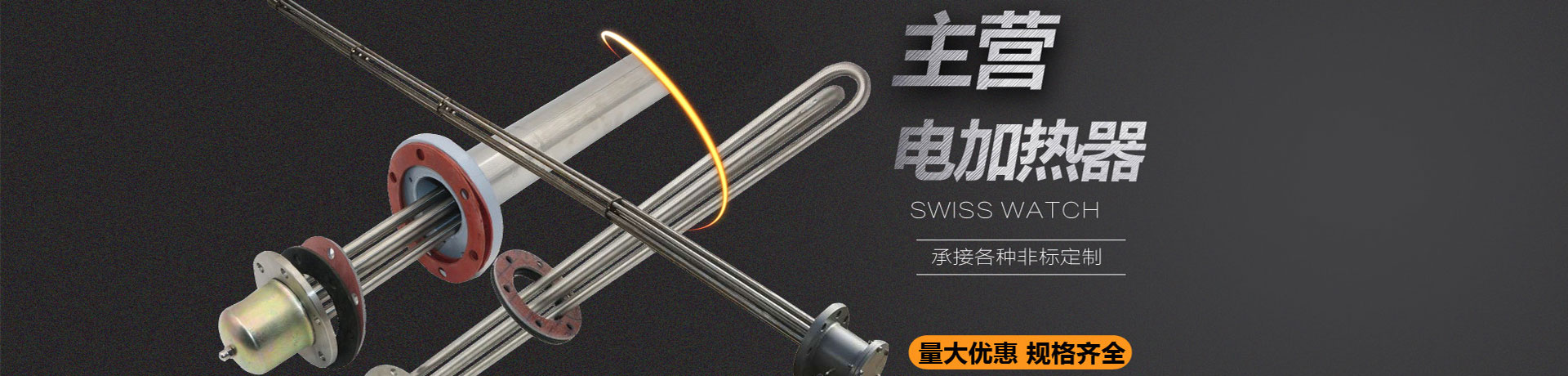
Tubular Electric Heater for Electric Water Heaters, Ovens, Coffee Makers, Disinfection Cabinets and Other Household Appliances
Tubular Heater, also commonly referred to as "tubular electric heating element" in the industrial field, is actually the most standard and universal scientific name for the "sheathed electric heater" you just learned about.
This is one of the most common and widely used resistive electric heating devices, whose core function is to efficiently convert electrical energy into thermal energy, widely used for heating various liquids, gases, and solids.
⚡ Core Structure and Working Principle
The structure of a tubular electric heater is very robust, mainly composed of the following parts:
Metal sheath tube: The outermost layer, usually made of stainless steel (such as 304, 316L), carbon steel, copper, titanium, or Incoloy alloy, etc., serving to protect the interior and transfer heat.
Resistance heating wire: Located in the center, usually made of high-temperature resistant nickel-chromium (Ni-Cr) or iron-chromium-aluminum (Fe-Cr-Al) alloy wire.
Magnesium oxide powder (MgO): Filled in the gap between the resistance wire and the metal tube. It is a crystalline powder that has both excellent insulation and extremely high thermal conductivity.
Sealing and lead-out rods: Both ends are sealed with materials such as silicone or epoxy resin to prevent moisture and impurities from entering, and the connection terminals are led out through metal rods.
The working principle is based on the Joule heating effect: when energized, the internal resistance wire generates heat, which is rapidly conducted to the surface of the metal tube through the tightly compacted magnesium oxide powder, and then the tube wall radiates or convects the heat to the surrounding medium being heated (such as water, oil, air, etc.).