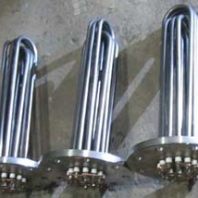
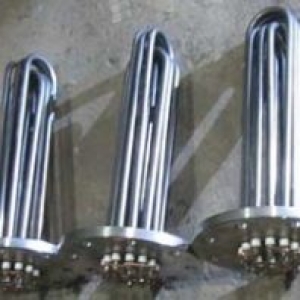
SRY2-380V/1KW Tubular Electric Heater??? Applications
Used for heating oil in open or closed oil tanks, for heating flowing or circulating oil. Therefore, this type of heater has a high surface load and is only suitable for use in oil with good heat transfer effects.
SRY2-380V/1KW Tubular Electric Heater???Specifications and Technical Parameters:
1. Specifications and dimensions:
| Model | Voltage (V) | Power (KW) | Dimensions and Installation Size (mm) | ||
| A | B (Length immersed in oil) | Surface Load (w/cm²) | |||
| SRY2-220(380)/1 | 220V/380V | 1 | 307 | 230 | 2.9 |
SRY2-220(380)/2 | 220V/380V | 2 | 507 | 430 | 3.1 |
SRY2-220(380)/3 | 220V/380V | 3 | 707 | 630 | 3.2 |
SRY2-220(380)/4 | 220V/380V | 4 | 922 | 845 | 3.1 |
SRY4-220(380)/5 | 220V/380V | 5 | 697 | 620 | 5.3 |
SRY4-220(380)/6 | 220V/380V | 6 | 807 | 730 | 5.5 |
SRY4-220(380)/8 | 220V/380V | 8 | 1007 | 930 | 5.7 |
2. Working voltage tolerance: not greater than 1.1 times its rated value. The shell should be effectively grounded.
3. Working environment: relative humidity not greater than 95%, no explosive, flammable, and corrosive gases.
4. Metal tube material: 10# steel
5. Maximum working temperature: 100℃
6. Working pressure: <0.6MPa
7. Oil tank opening: ≥Ø65
After the equipment passes normal operation acceptance, our company will assign professional engineers to provide on-site maintenance and operation training for your unit without restrictions on the number of personnel. The company organizes training twice a year. The training content includes: correct operation and usage knowledge of the equipment; identifying primary faults and necessary recovery methods; common troubleshooting methods.
???Usage, Maintenance, and Precautions:
1. Dimension "B" in the dimension drawing must be fully immersed in oil to avoid burning the components. The heated oil should be non-corrosive.
2. When melting solid oils such as asphalt and paraffin, reduce the voltage during use, and after melting, raise to the rated voltage to prevent heat concentration and reduce the service life of the components.
3. If carbon deposits are found on the surface of the tube, they must be completely removed before use to avoid reducing efficiency or even burning out the components.
4. It should be stored in a dry place. If the insulation resistance drops below 1MW due to long-term storage, it can be dried in an oven at about 200℃ for several hours (or apply low voltage to the components for several hours) to restore the insulation resistance.