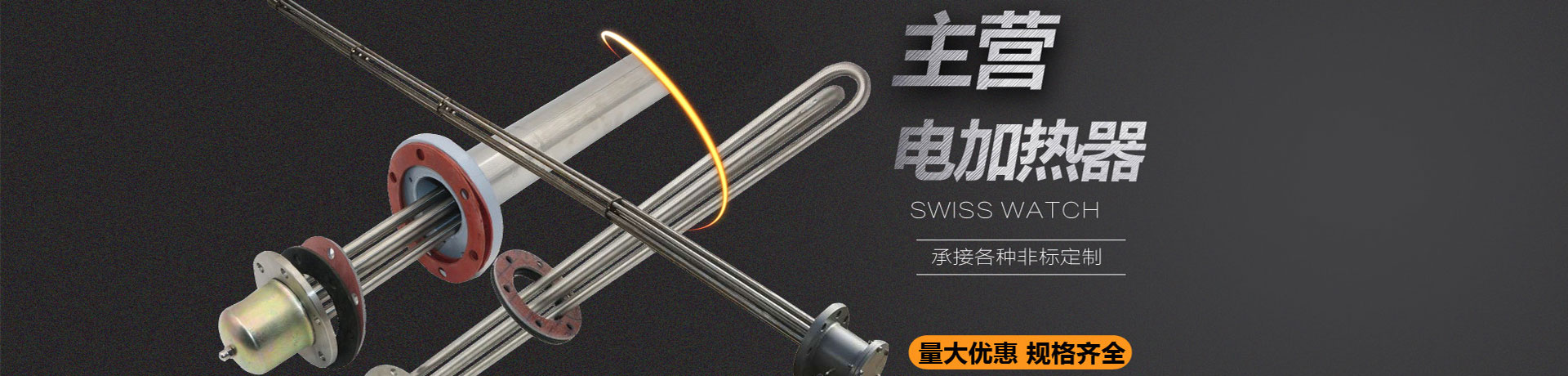

Single-ended Electric Heating Rod - Yangzhou Darui
Darui Electric recommends for you
You can select one or more of the following keywords to search for relevant information. You can also directly click "Search Information" to search the entire problem.
A large comprehensive publishing house directly under the Ministry of Agriculture and Rural Affairs 2019-03-01 China Agriculture Press (subsidiary: Rural Reading Press) was established in 1958 and is a central-level large comprehensive publishing house in the field of agriculture in China. The cumulative number of book titles contributed to society has exceeded 20,000, with a total print run of over 400 million copies. Ask TA to expand all
The plate heat exchanger is made by brazing numerous stainless steel heat transfer plates and front and rear casings in a vacuum and heating furnace, as shown in Figure 4-18.
The four holes on the plate in the figure are the inlet and outlet of the hot and cold fluids. Within the welding lines around the plate, channels for cold and hot fluids are formed. During flow, the fluids exchange heat through the plate wall. The support shapes of the plates generally include point support, corrugated, herringbone, etc., which help disrupt the laminar flow of the fluid, single-ended electric heating rod causing numerous vortices and enhancing heat transfer.
However, because the water-side channels of the plate heat exchanger are too narrow and prone to scaling at high temperatures, causing blockage, the requirements for cooling water quality are relatively high.
The four ports of the fully welded plate heat exchanger are located on the sides, top and bottom, left and right, because the welding process is used, so the frame itself cannot be opened with holes.
===Inside the fully welded heat exchanger=The sealing gasket component is omitted, and it is entirely welded from stainless steel plates, usually used for high temperature and high pressure conditions, so the plate thickness is 1mm. (Lihe Haide) This answer was adopted by netizens. Already liked, already disliked. What do you think of this answer? Comment and collapse
The plate heat exchanger is an efficient and compact heat exchange equipment. Due to its many advantages such as high heat transfer coefficient, low pressure loss, compact structure, and convenient maintenance, the application of plate heat exchangers has attracted increasing attention. However, the traditional detachable plate heat exchanger, single-ended electric heating rod due to the limitations of its own structure, the single-ended electric heating rod has a working pressure not exceeding 2.5MPa and a working temperature not exceeding 150°C. In addition, there are defects such as the rubber sealing gasket being prone to failure at high temperatures and application problems in certain specific media that have not been solved. Therefore, in order to increase the working temperature and pressure of the plate heat exchanger and expand its application range, Kangjinghui Thermal Equipment Co., Ltd. developed and manufactured the fully welded plate heat exchanger. This heat exchanger can work normally under working conditions of temperature 300°C and pressure 3.0MPa.
The fully welded plate heat exchanger expands the application range of gasketed heat exchangers and has the advantages of high temperature resistance (temperature 300 degrees), high pressure resistance (pressure 40 bar), corrosion resistance, and high heat transfer efficiency.
It belongs to the wall-type heat exchanger. The structural form of the heat exchanger is that between two adjacent plates, two flow channels are formed by welding. Two media with different temperatures flow through the channels on both sides of the same plate respectively. The flow area or flow length of each medium channel is controlled by partition plates, so that the high-temperature fluid transfers heat to the low-temperature fluid through the plate, thereby achieving the purpose of heat exchange.
Our country has always adhered to the energy development policy of "developing and saving energy equally, with energy conservation as the top priority." In industrial production, more than 60% of energy-using equipment are heat exchangers. Heat exchangers are not only common thermal equipment widely used in industrial sectors to ensure normal operation under certain working conditions, but also the main equipment for developing and utilizing industrial secondary energy, realizing waste heat recovery and energy conservation. The fully welded plate heat exchanger has higher heat transfer efficiency, reduces heat transfer area, lowers pressure drop, and improves the thermal intensity of the device. It can achieve normal working conditions with less investment, improving the energy-saving level of the entire heat exchange system and the resource-saving and environmental protection of industrial secondary industries.

Note: The above information and technical parameters are compiled and released by Yangzhou Darui Electric Co., Ltd.