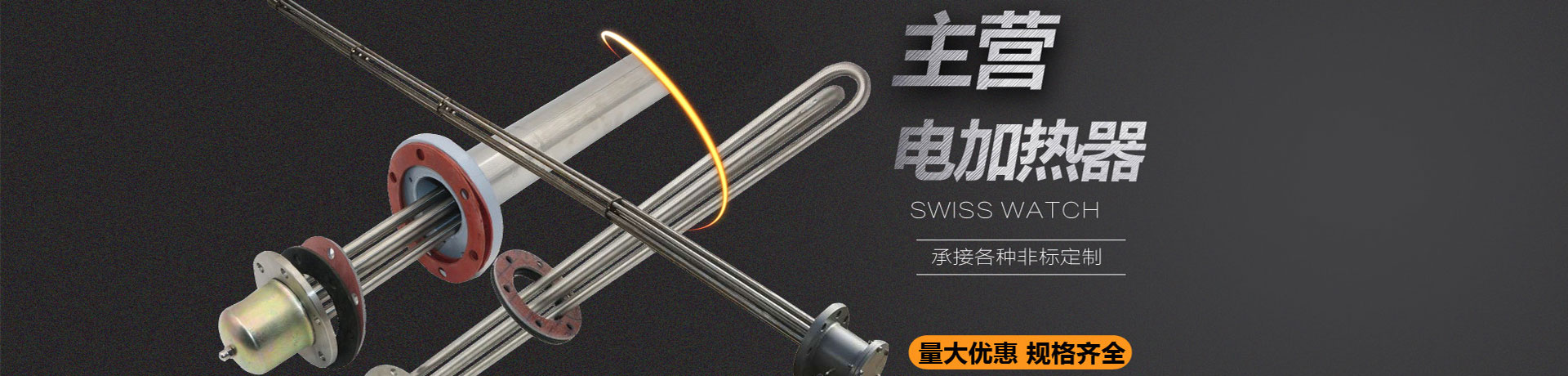

220V8kW Sheathed Electric Heater
Application Scope
When far-infrared radiation in a pipeline heater radiates onto an object, absorption, reflection, and transmission can occur in the pipeline heater. The material being heated and dried in the pipeline heater absorbs far-infrared radiant energy simultaneously at a certain depth inside the pipeline heater and on its surface molecules, causing the pipeline heater to generate a self-heating effect, evaporating solvents or water molecules in the pipeline heater. The heating of the pipeline heater is uniform, thereby avoiding deformation and quality changes caused by different degrees of thermal expansion, keeping the appearance, physical mechanical properties, fastness, and color of the material intact. Pipeline heaters are widely used in industries such as automotive, textiles, printing and dyeing, dyes, papermaking, bicycles, refrigerators, washing machines, chemical fibers, ceramics, electrostatic spraying, grain, food, pharmaceuticals, chemicals, and tobacco, achieving ultra-fast drying purposes. Pipeline heaters have advantages such as good radiation effects, significant electricity savings, and convenient use and maintenance. The heating of pipeline heaters is also particularly suitable for large drying rooms, ovens, and flow drying tunnels in leather machinery.
When far-infrared radiation in a pipeline heater radiates onto an object, absorption, reflection, and transmission can occur in the pipeline heater. The material being heated and dried in the pipeline heater absorbs far-infrared radiant energy simultaneously at a certain depth inside the pipeline heater and on its surface molecules, causing the pipeline heater to generate a self-heating effect, evaporating solvents or water molecules in the pipeline heater. The heating of the pipeline heater is uniform, thereby avoiding deformation and quality changes caused by different degrees of thermal expansion, keeping the appearance, physical mechanical properties, fastness, and color of the material intact. Pipeline heaters are widely used in industries such as automotive, textiles, printing and dyeing, dyes, papermaking, bicycles, refrigerators, washing machines, chemical fibers, ceramics, electrostatic spraying, grain, food, pharmaceuticals, chemicals, and tobacco, achieving ultra-fast drying purposes. Pipeline heaters have advantages such as good radiation effects, significant electricity savings, and convenient use and maintenance. The heating of pipeline heaters is also particularly suitable for large drying rooms, ovens, and flow drying tunnels in leather machinery.
220V8kW Sheathed Electric Heater
Application Scope
When far-infrared radiation in a pipeline heater radiates onto an object, absorption, reflection, and transmission can occur in the pipeline heater. The material being heated and dried in the pipeline heater absorbs far-infrared radiant energy simultaneously at a certain depth inside the pipeline heater and on its surface molecules, causing the pipeline heater to generate a self-heating effect, evaporating solvents or water molecules in the pipeline heater. The heating of the pipeline heater is uniform, thereby avoiding deformation and quality changes caused by different degrees of thermal expansion, keeping the appearance, physical mechanical properties, fastness, and color of the material intact. Pipeline heaters are widely used in industries such as automotive, textiles, printing and dyeing, dyes, papermaking, bicycles, refrigerators, washing machines, chemical fibers, ceramics, electrostatic spraying, grain, food, pharmaceuticals, chemicals, and tobacco, achieving ultra-fast drying purposes. Pipeline heaters have advantages such as good radiation effects, significant electricity savings, and convenient use and maintenance. The heating of pipeline heaters is also particularly suitable for large drying rooms, ovens, and flow drying tunnels in leather machinery.
220V8kW Sheathed Electric Heater
Application Scope
When far-infrared radiation in a pipeline heater radiates onto an object, absorption, reflection, and transmission can occur in the pipeline heater. The material being heated and dried in the pipeline heater absorbs far-infrared radiant energy simultaneously at a certain depth inside the pipeline heater and on its surface molecules, causing the pipeline heater to generate a self-heating effect, evaporating solvents or water molecules in the pipeline heater. The heating of the pipeline heater is uniform, thereby avoiding deformation and quality changes caused by different degrees of thermal expansion, keeping the appearance, physical mechanical properties, fastness, and color of the material intact. Pipeline heaters are widely used in industries such as automotive, textiles, printing and dyeing, dyes, papermaking, bicycles, refrigerators, washing machines, chemical fibers, ceramics, electrostatic spraying, grain, food, pharmaceuticals, chemicals, and tobacco, achieving ultra-fast drying purposes. Pipeline heaters have advantages such as good radiation effects, significant electricity savings, and convenient use and maintenance. The heating of pipeline heaters is also particularly suitable for large drying rooms, ovens, and flow drying tunnels in leather machinery.