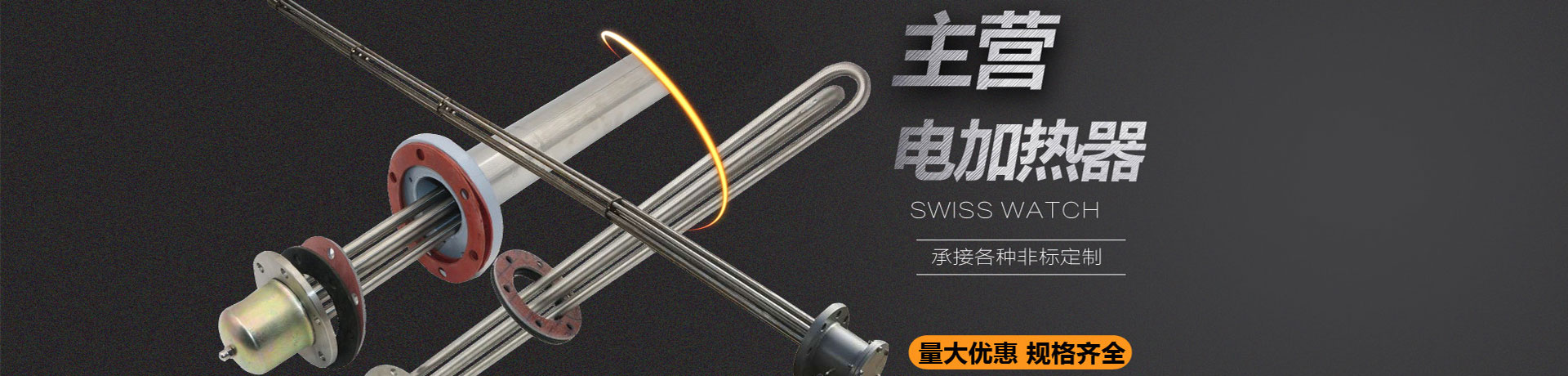
In heat transfer oil circulation systems or hydraulic stations, heaters often suffer from surface coking and localized overheating of the medium, while the tank temperature remains below the set value for a long time. This phenomenon is mostly related to excessive surface load of the heating element and mismatch between the sheath material and the medium. The HRY16 sheathed electric heater addresses such working conditions by adopting a structure in which a metal sheath isolates the heating element, with the terminal compartment separated from the heating zone, reducing the risk of medium penetration.
Ordinary bare wire heaters directly contact heat transfer oil or hydraulic oil and are prone to carbon buildup due to oil aging, resulting in reduced thermal efficiency. The HRY16 sheathed electric heater encloses the heating element within a metal sheath, controlling the surface load within a reasonable range and slowing down coking. When replacement is needed, only the flange or threaded connection must be removed and installed, without draining the entire tank of medium. Compared with cast aluminum heating rings, this structure is more suitable for direct insertion heating of liquid media, where heat transfer is mainly by convection, resulting in a more uniform temperature distribution in the tank.
This model is suitable for heat transfer oil furnaces, hydraulic oil tanks, asphalt tanks, and similar scenarios. The working temperature is usually ≤300°C, and the working pressure is ≤0.8MPa. The sheath material can be stainless steel 304 or 321, adjusted according to the corrosiveness of the medium. During design and selection, the installation interface size, insertion depth, and medium flow rate must be confirmed. In terms of electrical parameters, the power range of a single unit is 0.5–6kW, with conventional voltages of 220V or 380V. The wiring method is divided into star and delta configurations, which can be arranged according to on-site power supply conditions.
During installation, ensure that the heating zone is fully immersed in the medium to avoid dry burning. If used in a heat transfer oil system, it is recommended to energize only after the circulation pump starts, and when shutting down, cut off the power first and wait until the temperature drops to a safe range before stopping the pump. Regularly check the sheath surface for carbon buildup or corrosion, and avoid scratching the metal layer during cleaning. The terminal box should remain sealed to prevent oil mist from entering and causing a short circuit. When multiple units are used in parallel, the compatibility between the total power and the power supply line must be calculated.