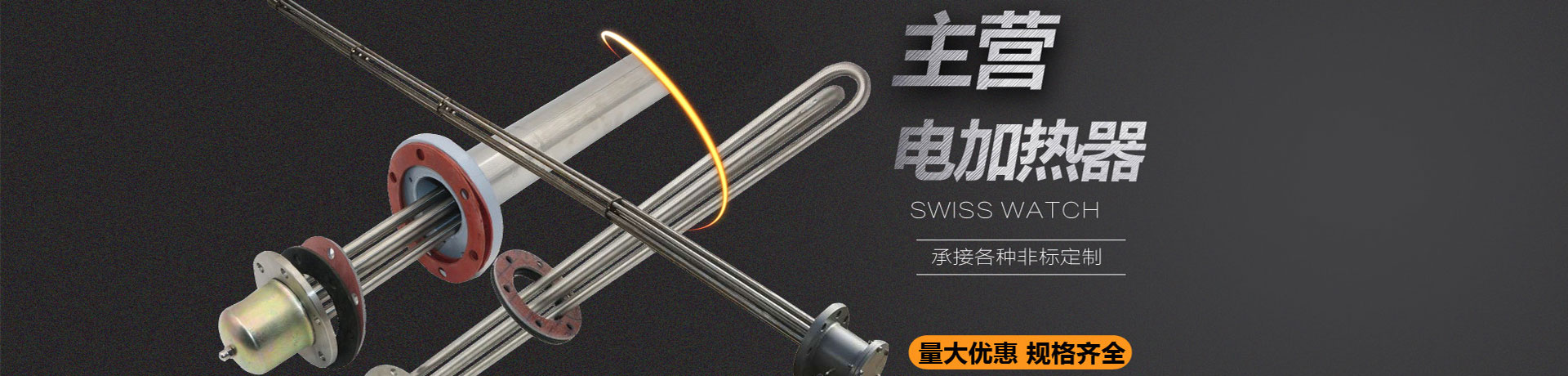
Field procurement personnel often encounter feedback like this: the sheathed electric heater passes insulation resistance tests at factory inspection, but after several months of operation, leakage alarms occur. Upon disassembly, the terminal box is found to be damp and the terminals oxidized. Such problems are mostly related to the installation environment, medium characteristics, and daily maintenance, rather than the parameters of the components themselves. When purchasing, in addition to verifying power and voltage, attention should also be paid to the protection rating, wiring method, and applicable medium descriptions, and confirm with the supplier whether they match the on-site working conditions.
After arrival, first check the nameplate parameters to confirm that the rated voltage and power are consistent with the design requirements. Check the metal sheath for impact deformation, whether the insulation layer of the lead wires is intact, and whether the terminals are loose. Measure the cold insulation resistance; for low-voltage products it is generally not less than 1MΩ. If the value is low, the cause should be identified before installation. For occasions heating easily fusible metals or solid media, the voltage should first be reduced to melt the medium, then raised to the rated voltage for operation, to avoid local overheating of the heating element.
During operation, attention should be paid to the matching of surface load and medium temperature. The sheathed electric heater is a dividing-wall heat exchange structure, where heat is transferred to the medium through the sheath wall. If the medium flow is poor or coking and scaling occur, the wall temperature will rise. Procurement personnel can learn from the user department whether the actual current is stable and whether there are over-temperature alarm records, so as to determine whether to adjust the power configuration or add temperature measurement points. Common specifications cover AC220V and AC380V, with power customized as needed.
After shutdown, it is not advisable to cut off power and leave immediately; wait until the medium temperature drops to a safe range before cutting off the power. For long-term shutdown, disconnect the wiring in the terminal box, apply moisture-proof treatment to the terminals, and store in a dry and ventilated place. Before restarting, re-measure the insulation resistance and check the outer wall of the sheath for corrosion thinning. It is recommended to establish a spare parts ledger, recording commissioning time and maintenance conditions, to facilitate procurement planning.