During design and selection, it is often necessary to answer: under given installation space and medium conditions, how should the power, voltage, and sheath material of a sheathed electric heater be matched? Improper selection may lead to insufficient heating, excessively high surface temperature, or premature sheath failure. The following provides reference from the aspects of structure, electrical parameters, material and length, and application matching.
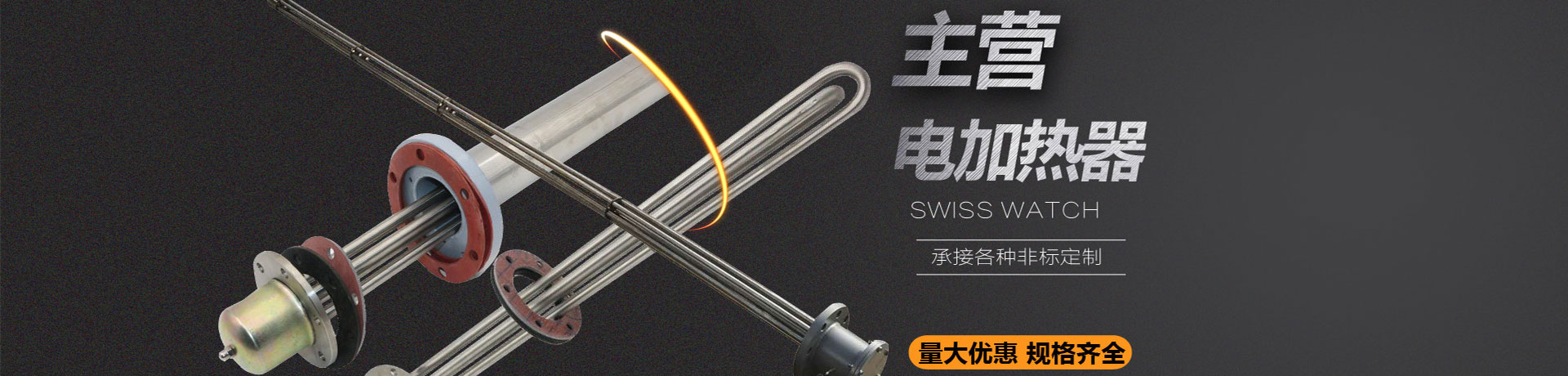
The sheathed electric heater internally uses a spiral heating wire, with the gaps densely filled with crystalline magnesium oxide powder. Through the tube shrinking process, the powder is compacted to ensure thermal conductivity and insulation performance. The outer sheath is usually a metal tube, and the ends adopt a sealed wiring structure. Heat is transferred from the heating wire through the magnesium oxide powder to the sheath surface, and then enters the medium by convection or conduction. During selection, attention should be paid to the surface heat load of the sheath to avoid local temperatures exceeding the allowable range of the medium.
Industrial scenarios commonly use two specifications: 220V single-phase and 380V three-phase. Power determination requires estimation based on medium mass, specific heat capacity, heating time, and heat loss, with an appropriate margin reserved. For high-power heaters, it is recommended to use multiple units in combination or stepped control to reduce impact on the power grid. The voltage must be consistent with the on-site power supply, and load balance should be noted when using three-phase power. The matching of power and voltage directly affects the operating current and wiring specifications, and should be calculated together during selection.
The sheath material should be determined based on the corrosiveness of the medium, operating temperature, and mechanical wear. Common options include stainless steel, carbon steel, and corrosion-resistant alloys. The length should be combined with the installation space and medium flow conditions to ensure effective heat exchange area. Power, voltage, sheath material, and length can be customized according to requirements. When customizing, the medium name, operating temperature, installation method, and interface dimensions need to be provided so that the manufacturer can calculate the surface heat load and process feasibility.
Sheathed electric heaters are commonly used for heating media such as heat transfer oil, water, and air, as well as for heat tracing and temperature raising of oil tanks, pipelines, and tanks. During installation, ensure that the heater is immersed in the medium or in a flowing air stream to avoid dry burning. The wiring terminals should be kept dry and reliably grounded. For occasions requiring explosion protection, an explosion-proof junction box can be optionally provided, but it is necessary to confirm that the overall explosion-proof rating matches the on-site area. Communicating with the manufacturer about medium parameters and installation conditions during the selection stage helps reduce later adjustments.