Tubular electric heater
Tubular electric heater, also often referred to as heating tube or electric heating tube, is a general-purpose heating equipment with tubular electric heating elements as its core. It is widely used in industrial and civil fields due to its simple structure, high thermal efficiency, good mechanical strength, easy installation, and safety and reliability.
Structure and working principle
The core structure of a tubular electric heater is to place a spiral resistance wire as the heating element inside a metal outer tube, and tightly fill the gaps with crystalline magnesium oxide powder that has good thermal conductivity and insulation, and finally form it through a tube shrinking process.
Metal outer tube: Different materials are selected according to the usage environment (such as temperature, corrosiveness), commonly including 304/316L stainless steel, Incoloy 800/840, copper, aluminum, low-carbon steel, etc.
Heating element: Usually nickel-chromium (Ni-Cr) wire or iron-chromium-aluminum (Fe-Cr-Al) wire.
Insulating and thermally conductive layer: High-purity magnesium oxide powder ensures electrical insulation between the heating wire and the outer tube while efficiently conducting heat.
Sealing and terminals: Sealed with materials such as silicone, epoxy, or glass, and the lead-out rods (terminals) are mostly made of stainless steel or free-cutting iron.
After power is applied, current flows through the resistance wire to generate heat, which is conducted through the magnesium oxide powder to the surface of the metal tube, and then dissipated to the heated medium.
Main classifications
According to shape and structure, tubular electric heaters can mainly be divided into the following categories:
Straight heating tubes: Divided into single-end lead-out and double-end lead-out, with simple structure and wide application.
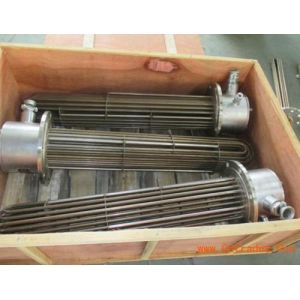
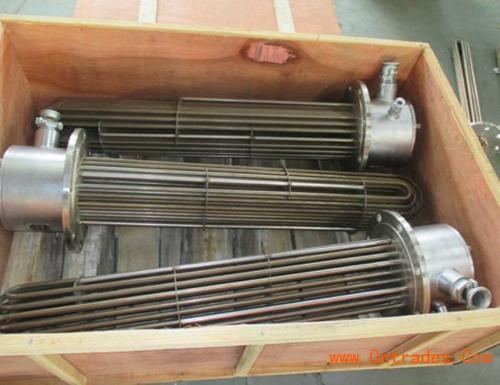
U-shaped/W-shaped heating tubes: Formed by bending, suitable for specific installation spaces, such as water tanks and oil tanks.
Spiral heating tubes: The heating tube is wound into a spiral shape to increase the heating area per unit volume, commonly used in showers, water boilers, drying ovens, etc.
Fin-type heating tubes: Metal fins are added to the surface of the tubular element to significantly increase the heat dissipation area, especially suitable for forced convection occasions such as air heating.
Sheathed electric heaters: The heating core is placed inside a larger sheath tube, and the core does not directly contact the medium. Its advantages are that the core can be replaced without draining the liquid in the container, making maintenance convenient, and it has low surface load, is not prone to carbon deposition, and is suitable for heating viscous or heat-sensitive liquids.
🏭 Application fields
The application of tubular electric heaters covers almost all scenarios that require heating:
Liquid heating: Water, oil (heat transfer oil, lubricating oil), acid, alkali, and salt solutions, chemical media, etc. Commonly found in water heaters, ovens, industrial oil tanks, reactors, electroplating tanks, etc.
Gas heating: Air, nitrogen, etc. Used in drying ovens, drying tunnels, air conditioning systems, air heating furnaces, etc.
Solid heating: Metal molds, hot pressing molds, packaging equipment cutters, injection molding machine barrels, etc.
Melting of low-melting-point metals: Such as melting furnaces for lead, tin, zinc, and their alloys.
Selection and usage points
Correct selection and standardized use are key to ensuring the performance and lifespan of the heater.
Key selection parameters
Heating medium: Clearly determine whether heating liquid, gas, or solid; the chemical properties of the medium determine the choice of outer tube material (e.g., corrosive liquids require 316L stainless steel or Incoloy alloy).
Working temperature: The maximum working temperature determines the grade of magnesium oxide powder (medium-temperature powder/high-temperature powder) and the material of the resistance wire.
Heating power and surface load: Calculate the required power based on the mass of the medium, specific heat capacity, and expected heating time. Surface load (power per unit area, W/cm²) is a core indicator; when heating oil, it is usually recommended to control it at ≤0.7 W/cm² to prevent local overheating and carbon deposition of the oil, which shortens lifespan.
Installation environment: Consider whether there are requirements for explosion-proof, corrosion-resistant, waterproof, etc., and select the corresponding protection level and explosion-proof structure.
Usage precautions
Strictly prohibit dry burning: The effective heating area must be fully immersed in liquid or tightly attached to the solid being heated; dry burning will quickly burn out the heating tube.
Regular cleaning: When scale or carbon deposits are found on the surface of the tube, they must be removed promptly to avoid overheating damage due to poor heat dissipation.
Melting solid media: When heating solid substances such as asphalt or paraffin, first reduce the voltage, and after melting, raise it to the rated voltage to prevent heat concentration.
Electrical safety: Ensure the shell is effectively grounded, the working environment humidity should not be too high, and avoid moisture or contact with corrosive gases at the wiring terminals.
Proper storage: For long-term storage, place in a dry place. If the insulation resistance is lower than 1MΩ due to moisture, it can be dried in an oven at 200°C or restored by low-voltage power-on for several hours.