Sheathed Electric Heater
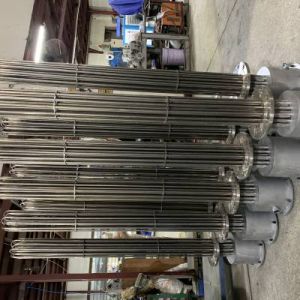
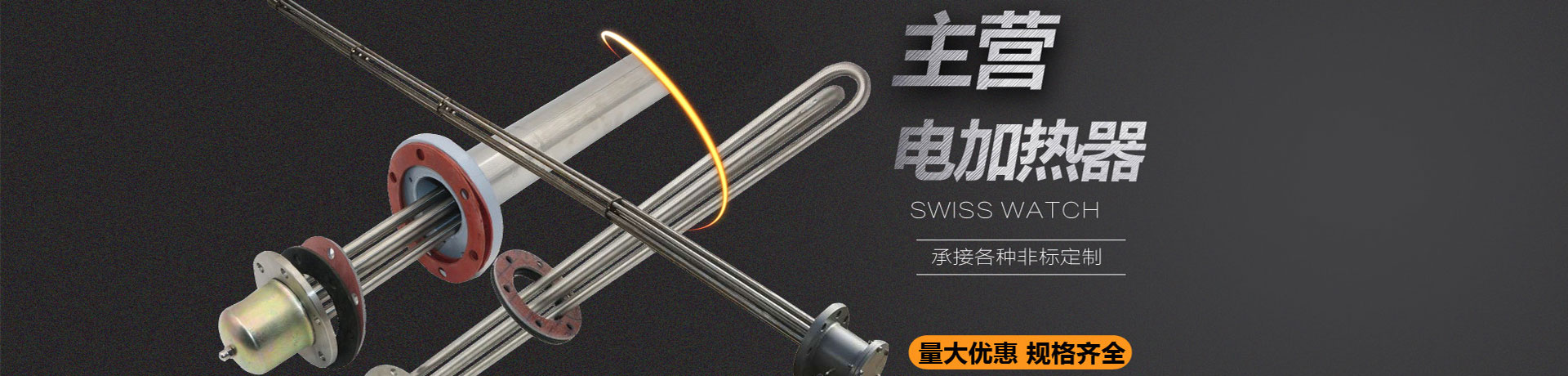
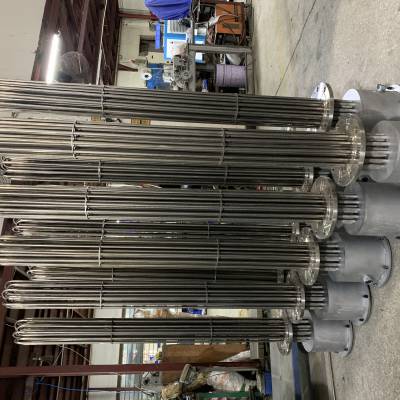
Sheathed electric heater (also known as armored heater, tubular electric heater) is a structured electric heating element that completely encloses the resistance heating wire core within a metal sheath, isolated from the sheath by high-temperature inorganic insulating material.
Core Structure
Adopts a three-layer coaxial structure of "core wire – insulation – sheath":
Resistance heating core wire: Nickel-chromium alloy (NiCr), iron-chromium-aluminum alloy (FeCrAl), etc.
High-temperature insulation layer: High-purity magnesium oxide (MgO) powder filling, providing both insulation and thermal conductivity
Metal sheath: 304/316L stainless steel, Incoloy 800/840, titanium alloy, Hastelloy, etc.
Main Model Series
Common sheathed electric heaters include HRY series and SRY6 series, covering multiple sub-models such as HRY1~HRY14, with power range generally 1kW~8kW and rated voltage 220V/380V. Among them, HRY6 type adopts a double-layer split structure (internal heating core + outer independent sheath tube), allowing the heating core to be individually extracted and replaced without draining the oil tank.
Key Technical Parameters
Table
Download as Table
Export as Image
Parameter Typical Range
Rated Voltage 220V / 380V
Power 1kW ~ 6000kW (pipe type)
Surface Power Density ≤0.7~3.8 W/cm²
Operating Temperature ≤300℃ (conventional), high-temperature type up to 983℃
Working Pressure ≤0.8MPa (conventional), high-pressure custom up to 20MPa
Protection Rating IP54~IP65, explosion-proof type up to Ex db IIC T1-T6
Electrothermal Conversion Efficiency ≥98%
Core Advantages
Medium Protection: The sheath isolates the heating core from the medium, preventing oil carbonization and deterioration, extending medium service life
Easy Maintenance: Replacing the core does not require draining the oil tank, significantly reducing downtime costs
Safe and Reliable: Supports flameproof design, suitable for sealed oil and gas environments
Corrosion Resistance: Sheath materials can be selected from stainless steel, titanium alloy, etc., adapting to corrosive conditions
Long Service Life: Up to 10,000~50,000 hours
Typical Application Scenarios
Hydraulic and Lubrication Systems: Hydraulic stations, lubricating oil tanks, reducer oil heating for viscosity reduction
Chemical and Petrochemical: Reactor jackets, thermal oil heating, heavy oil/diesel preheating
Pipeline Heat Tracing: Natural gas decompression stations, high-rise building hot water circulation, solar pipeline anti-freezing
New Energy: Lithium battery material sintering furnaces, hydrogen energy electrolyzer preheating
Food and Pharmaceutical: High-pressure steam sterilizers, dairy sterilization conveying
Special Research Environments: Space simulation chambers, nuclear fusion experimental devices
Selection Key Points
When selecting, four dimensions need to be focused on:
Heating medium: Clean water choose 304 stainless steel, oil control at 1~3W/cm², corrosive media choose 316L or titanium tube
Power density: Strictly control according to medium type, oil ≤3W/cm², air heating requires fins
Power and voltage: Comprehensively calculated based on medium mass, specific heat capacity, target temperature rise, matching on-site power supply
Installation method: Threaded connection (hydraulic oil tank), flange connection (reactor/large storage tank), straight tube/U-type/W-type, etc.
The industry implementation standards are "Armored Electric Heater" (JB/T 12233-2015) and JBT2379-93.