
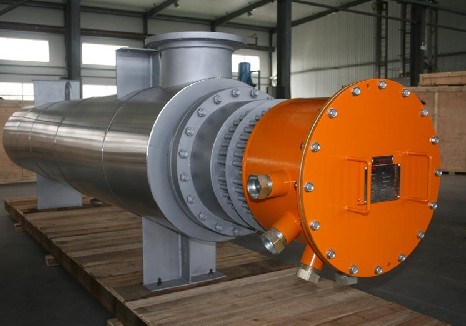
A chemical plant's heat transfer oil circulation system needs to heat No. 320 heat transfer oil from 180°C to 260°C. The original steam heat exchange scheme had problems such as unstable condensate discharge and local overheating and coking. After switching to a tubular electric heater directly immersed in the oil tank for heating, both temperature control response and thermal efficiency improved. For procurement personnel, clarifying the medium characteristics and installation conditions is the first step in selection.
Compared with steam heat exchange, tubular electric heaters do not require boilers and piping, making them suitable for heating points with small to medium power and decentralized layout, with fast startup and direct temperature control. Compared with electromagnetic heating, their structure is simple, the initial investment is relatively low, and there are no special requirements for the medium, but attention must be paid to matching the tube wall heat flux density with the medium flow rate. For heat transfer oil, it is recommended that the tube surface power density not exceed 2.5W/cm² to avoid local overheating and carbon deposition of the oil.
The working temperature determines the magnesium oxide powder grade (medium-temperature powder/high-temperature powder) and the resistance wire material. The radiant tube is made of ordinary low-carbon steel pipe, which is economical and practical and conducive to promotion and application in various industries. During procurement, the supplier should be consulted to confirm: voltage and power, tube diameter and developed length, wiring method (single-end or double-end), installation flange specifications, and whether an explosion-proof structure is required. The BGY6 model can be customized in length according to the oil tank size, adapting to heat transfer oil furnaces of different volumes.
This model is suitable for heating static or low-speed flowing liquids such as heat transfer oil furnaces, asphalt tanks, and reactor jackets. It is not suitable for media with forced rapid flow or containing abrasive particles. During installation, it is necessary to ensure that the heating zone is fully immersed and to set up an over-temperature protection circuit.

