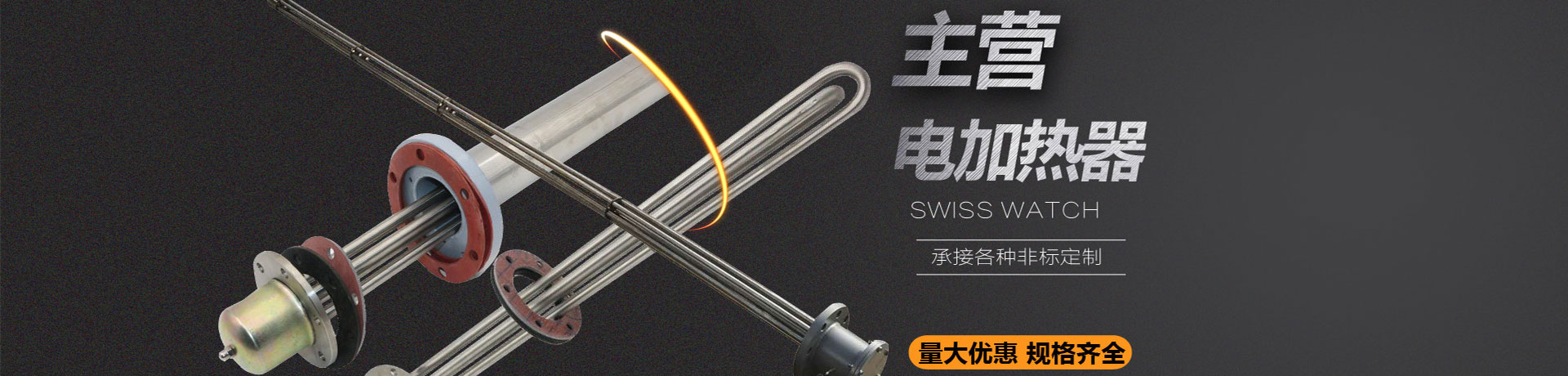
In heat transfer oil circulation pipelines, maintenance personnel often encounter the phenomenon that the outlet oil temperature does not meet the standard while the heater surface temperature is too high. During disassembly and inspection, it is found that the heating wire inside the sheath is locally overheated, the magnesium oxide powder is damp, or scorch marks appear at the wiring terminals. The FGR-320 tubular electric heater is designed for such on-site problems. It adopts an immersion structure and can be directly installed on the oil tank or pipeline flange interface, suitable for heating heat transfer oil, water and other permitted media.
Q: The heater suddenly stops heating. How can the cause be quickly determined? A: First disconnect the power supply and use a multimeter to measure the resistance across the lead wires. If the resistance is infinite, the heating wire is broken. Then measure the insulation resistance between the lead wires and the shell. If the resistance drops significantly, it is mostly due to damp magnesium oxide powder or mechanical damage to the sheath. Short-circuit faults are often accompanied by fuse operation, and it should be checked whether water has entered the wiring cavity or medium leakage has occurred.
Q: What parameters should be noted during replacement? A: Products of the same specifications should be selected according to the rated voltage, power, sheath material and mounting thread specifications of the original model, to avoid temperature control deviation or line overload caused by power mismatch. The lead wire length and wiring method also need to correspond to the on-site control cabinet.
Q: In what scenarios should the radiant tube be selected? A: The radiant tube is made of ordinary low-carbon steel pipe, which is economical and practical, and is suitable for air duct and oven heating occasions where cost is sensitive and medium corrosiveness is weak, which is conducive to promotion and application in various industries.
This model consists of a metal sheath tube, nickel-chromium heating wire, magnesium oxide insulating filler and lead wiring device, and is fixed by flange or thread. The commonly used rated voltage is 220V or 380V, and the power is configured according to the on-site heat load. The sheath material can be carbon steel or stainless steel. The specific parameters are subject to the ordering technical agreement.
Regularly measuring the insulation resistance and cleaning coking on the sheath surface can reduce faults such as open circuits and insulation degradation. When replacing components, use products of the same specifications and avoid mixing heating tubes of different powers.