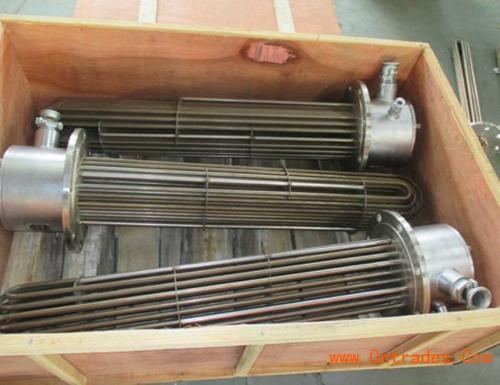
Explosion-proof electric heater
Explosion-proof electric heaters are electric heating devices specifically designed for hazardous environments containing explosive gases or vapors, such as chemical, petroleum, natural gas, and military industries. Through technical means such as flameproof enclosures and multiple safety protections, they ensure safe operation in flammable and explosive locations.
Explosion-proof principle
The core lies in the flameproof structure design: the junction box adopts a cast aluminum alloy (such as ZL102) flameproof enclosure, which can effectively isolate or eliminate internal sparks that may be generated, preventing ignition of flammable and explosive gases or dust in the external environment. Combined with temperature sensors and intelligent control systems, it achieves fully automated safe operation.
Explosion-proof classification and certification system
The explosion-proof classification of explosion-proof electric heaters strictly follows national standards and international specifications:
Applicable areas: Zone 1 and Zone 2 for explosive gas atmospheres; Zone 21 and Zone 22 for combustible dust atmospheres
Gas groups: Class IIA, IIB, IIC explosive gas atmospheres
Temperature classes: T1 to T6
Typical explosion-proof markings: Ex d IIB T4 Gb / Ex d IIC T4 Gb / Ex tD A21 IP66
Protection rating: IP66
Implementation standards: GB 3836 series (2024 edition), JB/T 7836.3-2026 (Explosion-proof finned tube electric heater, effective from September 1, 2026)
Key technical parameters
Table
Download as table
Export as image
Parameter Typical range
Rated voltage 220V / 380V / 460V / 660V
Rated power 1kW ~ 3000kW
Working temperature Up to 720°C, some models up to 850°C
Pressure resistance Up to 20MPa
Temperature control accuracy ±0.2°C ~ ±1°C
Thermal efficiency ≥95%, close to 100%
Protection rating IP66
Product types
According to structure and application scenarios, explosion-proof electric heaters are mainly divided into the following categories:
Immersion explosion-proof electric heater: directly inserted into oil tanks, water tanks, reaction towers, and other containers to heat liquid media, with flange connection, and the core can be replaced without draining the container
Circulation explosion-proof electric heater: the medium flows through the internal heat exchange channels of the heater under pressure through pipes, suitable for continuous process flows
Explosion-proof thermal oil heater: heating elements are inserted into thermal oil, and forced liquid-phase circulation heat transfer is achieved through a circulation pump, widely used in reactors, drying rooms, etc.
Explosion-proof space heater: wall-mounted installation, used for space insulation and anti-freezing in hazardous areas
PTC explosion-proof heater: uses PTC ceramic heating elements, with constant temperature self-limiting characteristics, no open flame, no red glow, and higher safety
Safety protection mechanisms
Explosion-proof electric heaters are usually equipped with multiple interlocking protections:
Over-temperature protection: immediately cuts off the power supply when the heating element overheats, preventing medium coking and carbonization
Low liquid level/dry burning protection: prevents dry burning damage to elements without medium
Overpressure alarm: monitors abnormal pipeline pressure
Flow monitoring: ensures normal medium flow
DCS interlock: can provide alarm signals such as operation, high temperature, and fault to the DCS system, enabling remote fully automatic control
Typical application scenarios
Petrochemical: heating of hydrocarbons such as crude oil, heavy oil, fuel oil, thermal oil, and paraffin
Chemical production: reactor jacket heating, material temperature rise, powder drying
Natural gas: nitrogen purge heating, pipeline heat tracing at pressure reduction stations
Marine and offshore: preheating of fuel oil/lubricating oil in engine rooms, oil tanks, and pump rooms, requiring certification from classification societies such as CCS and DNV
Military and aerospace: special fuel heating, propellant insulation
Mining areas: explosion-proof heating in underground coal mines
Selection key points
When selecting, special attention should be paid to:
Explosion-proof classification matching: select the corresponding explosion-proof marking according to the hazardous area classification (Zone 1/Zone 2) and gas group (IIA/IIB/IIC) at the site
Heating medium: water, oil, thermal oil, gas, and other media determine the sheath material and surface power density
Power calculation: calculate the required power comprehensively based on medium mass, specific heat capacity, target temperature rise, and heating time
Installation method: flange connection (storage tanks/reactors), threaded connection (small oil tanks), pipeline type (circulation systems)
Explosion-proof certificate: must ensure that the product has obtained the complete machine explosion-proof certificate and complies with the requirements of GB 3836.15-2024