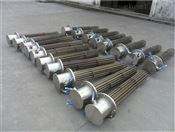
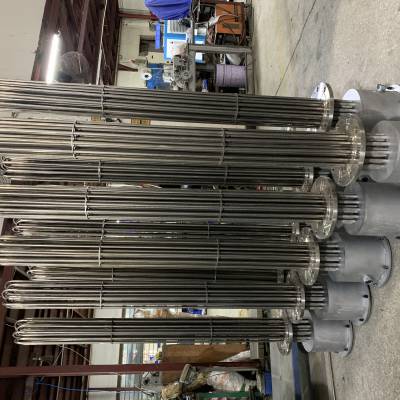
Explosion-proof Electric Heater
Explosion-proof electric heaters are industrial electric heating equipment specially designed for flammable and explosive hazardous environments such as chemical, petroleum, natural gas, marine, and military industries. Their core lies in completely isolating possible internal electrical sparks or high temperatures from external explosive gases/dust through special flameproof/increased safety structures, eliminating ignition hazards from the root.
Core Explosion-proof Principle
Explosion-proof electric heaters are not "incapable of exploding," but through structural design ensure that internal explosions will not propagate to the external environment:
Flameproof type (Ex d): The enclosure has sufficient mechanical strength to withstand pressure when an internal explosion occurs and does not transmit flame to the outside. It is the most widely used structure for chemical pipeline heating.
Increased safety type (Ex e): No electrical sparks or high temperatures are generated during normal operation, and the structure is additionally reinforced for safety.
Intrinsic safety type (Ex ia/ib): Circuit energy is strictly controlled at an extremely low level, so even a short circuit cannot ignite the medium. It is suitable for Zone 0 high-risk environments.
Core of Selection: Explosion-proof Grade Matching (Most Critical)
Selection must strictly follow the GB 3836 series standards and GB 50058-2014, matching level by level according to the following dimensions:
1. Hazardous Area Classification
Zone Degree of Hazard Permitted Explosion-proof Type
Zone 0 Explosive gas continuously/long-term present Only Ex ia intrinsic safety type, Ex ma encapsulated type
Zone 1 Explosive gas may occur during normal operation Ex d flameproof type, Ex e increased safety type, Ex ib intrinsic safety type, etc.
Zone 2 Explosive gas is unlikely to occur during normal operation Ex n non-sparking type and above are all acceptable
2. Gas Group (IIA/IIB/IIC)
Determined according to the minimum ignition energy of the medium. Explosion-proof capability IIC > IIB > IIA:
IIA: propane, gasoline, etc.
IIB: ethylene, coke oven gas, etc.
IIC: hydrogen, acetylene, etc. (highest requirement, can cover IIA/IIB)
Environments involving hydrogen and acetylene must use IIC-grade equipment. Lower-grade equipment must never be used in higher-grade environments.
3. Temperature Class (T1-T6)
The maximum surface temperature of the equipment must be lower than the ignition temperature of the medium:
Temperature Class Maximum Surface Temperature
T1 450℃
T2 300℃
T3 200℃
T4 135℃
T5 100℃
T6 85℃
For example, if the ignition temperature of the medium is 200℃, T3 or above must be selected, and T2 or below must never be selected.
Explosion-proof Marking Ex d IIB T4 Gb / Ex d IIC T6 Gb, etc.
Protection Rating IP54 (standard) / IP65~IP66 (outdoor/wet)
Rated Voltage 220V / 380V (multi-voltage customization supported)
Power Range 1kW~3000kW (single unit up to 3000kW)
Operating Temperature Conventional ≤300℃, high-temperature type up to 720~850℃
Operating Pressure ≤0.8MPa (conventional), high-pressure customization up to 20MPa
Temperature Control Accuracy ±0.2℃~±2℃ (PID intelligent temperature control)
Thermal Efficiency ≥95%, approaching 100%
Flange-type Explosion-proof Heater Flange connection, high power, easy installation and maintenance Reactors, storage tanks, heat transfer oil systems
Pipeline-type Explosion-proof Heater Medium flows through the heating chamber, high heat exchange efficiency Natural gas pressure regulating stations, process pipeline preheating
Immersion-type Explosion-proof Heater Directly inserted into liquid medium for heating Oil tanks, water tanks, molten salt tanks
Air duct-type Explosion-proof Heater Finned structure, increased heat dissipation area Clean workshop ventilation, drying ovens
Crawler-type/Flexible Explosion-proof Heater Bendable and fitting, portable and mobile Weld heat treatment of large storage tanks, field operations
Typical Application Scenarios and Selection Recommendations
Scenario 1: Petrochemical reactor/heat transfer oil heating
Requirements: Flammable and explosive medium, fast heating, accurate temperature control, long-term continuous operation
Selection: Flange-type explosion-proof electric heater, explosion-proof grade Ex d IIB T4 or higher, power density controlled below 2.0W/cm² (to prevent heat transfer oil coking), equipped with PID temperature control + over-temperature alarm + multiple interlock protection
Scenario 2: Natural gas pipeline preheating/pressure regulating station
Requirements: Fast gas flow rate, small heat capacity, short-time heating to target temperature, strict pressure drop requirements
Selection: Pipeline-type gas electric heater, power density 3~5W/cm² (must match wind speed), sealing performance of flameproof junction box is crucial
Scenario 3: Molten salt heating (solar thermal energy storage/chemical industry)
Requirements: Operating temperature 500~800℃, strong corrosiveness
Selection: Special explosion-proof heater for molten salt, heating tube material selected from Inconel 600/625 and other high-nickel-based alloys, flanges and sealing gaskets must be high-temperature resistant, power density strictly controlled to prevent local overheating
Scenario 4: IIC high-risk environments such as hydrogen/acetylene
Requirements: Extremely high explosion risk
Selection: Ex d IIC T6 grade products must be selected, such as the ultra-fine sheathed explosion-proof elements from the Electric Heating Appliance Factory of China Nuclear Power Research and Design Institute (minimum element diameter Φ3.2mm)
Qualification Verification Points (Must-check for Procurement)
Explosion-proof Certificate: Complete explosion-proof test report must be provided (not just the certificate cover). The nameplate must indicate Ex marking, explosion-proof type, EPL, temperature class, gas group, and other information.
CCC Certification: Explosion-proof electrical equipment is within the CCC catalog and requires a valid CCC certification certificate.
Pressure Vessel Qualification: Pressure-bearing vessels require a pressure vessel safety accessory manufacturing license.
Classification Society Certification: Ships/marine engineering require CCS, DNV, LR, and other classification society certifications.
Full-chain Explosion-proof: Cables, cable glands, sealing boxes, and terminal blocks must have a unified explosion-proof grade. A single ordinary accessory will cause the overall explosion-proof performance to fail.
Jiangsu Local Manufacturer Resource Tips
Based on past selection experience, Jiangsu (especially the Zhenjiang and Yangzhong area) is a core industrial belt for electric heating equipment in China, and the explosion-proof electric heater field also gathers a large number of qualified manufacturers:
Zhenjiang Dongfang Energy-saving Equipment Co., Ltd.: Crawler-type/flexible explosion-proof heaters, portable explosion-proof temperature control boxes (IP65), suitable for field mobile operations
Zhenjiang Hengshengda Chemical Technology Co., Ltd.: Flameproof type (Ex d IIB T4) pipeline-type and air damper dedicated explosion-proof heaters, modular structure facilitates on-site replacement of heating cores
Jiangsu Pengxingbo Industrial Co., Ltd.: Explosion-proof pipeline/air duct heaters and heat transfer oil furnace systems, providing complete machine explosion-proof control cabinet integration solutions, can be equipped with pressure/flow interlock logic
Zhenjiang Huiwu'er Electric Co., Ltd.: Reactor electric heaters, providing Hastelloy C276 heating tube options for corrosive media
Zhenjiang Huyang Electrical Complete Equipment Co., Ltd.: Forty years of experience, covering bolt, heat transfer oil, hot water, and hot air electric heaters, with flameproof dust large and small power explosion-proof certification
During procurement, prioritize connecting with the local industrial belt, which has significant advantages in non-standard customization, after-sales response, and logistics costs.
GB/T 3836.15-2024 Explosive atmospheres - Part 15: Electrical installations design, selection and erection Current (implemented on August 1, 2025)
GB/T 34663-2017 General technical requirements for resistance heaters for explosive gas atmospheres Current
JB/T 7836.1-2026 Electric heaters for motors - Part 1: General technical specifications Current (implemented on September 1, 2026)
JB/T 7836.3-2026 Electric heaters for motors - Part 3: Explosion-proof finned tube electric heaters Current (implemented on September 1, 2026)
GB/T 19518.1-2024 Explosive atmospheres - Resistance trace heating - Part 1: General and testing requirements Current
GB 50058-2014 Code for design of electrical installations in explosive hazardous environments Current