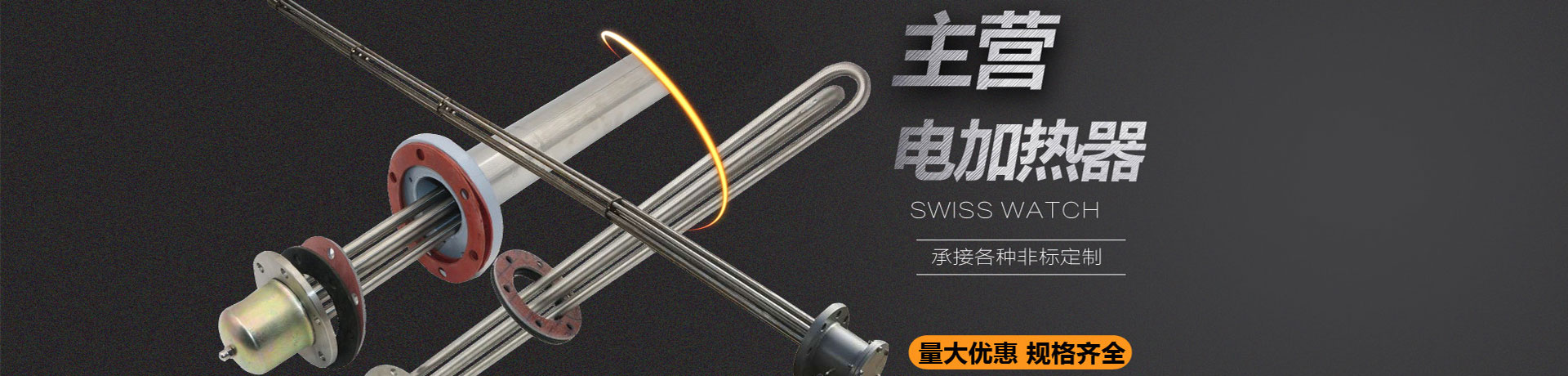
Before inserting into the bolt center hole, confirm that the outer diameter of the heating rod fits the hole with a clearance, generally recommended between 0.5 mm and 1 mm. Use a 500V megohmmeter to measure the cold insulation resistance, which should not be less than 1 MΩ. Check the heating zone for indentations or scratches, and whether the terminals are secure. If the bolt hole tolerance is large, a heating rod of the corresponding diameter must be custom-made to avoid difficulty in assembly and disassembly or local overheating due to insufficient clearance.
The heating rod itself has no temperature control element and must be used with a temperature control box or PLC. Temperature measurement points should be arranged on the bolt end face or on the side near the nut, avoiding direct contact with the heating section. The heating rate is recommended to be controlled within 5°C/min; excessive thermal shock will accelerate the shrinkage of magnesium oxide powder, leading to decreased insulation. For bolts of M36 and above, models with double-end leads or K-type thermocouples can be selected to achieve closed-loop temperature regulation.
After heating is completed, allow natural cooling to below 80°C before removal; forced pulling may damage the heating wire. For long-term storage, clean the surface of oil stains, place in a dry environment, and avoid terminal moisture. Re-measure the insulation resistance quarterly; if it is below 0.5 MΩ, bake at 200°C for 2 hours to restore. If the tube body is bent or the weld seam is cracked, it cannot be repaired and should be replaced directly.
If there is no heating after power-on, first check the circuit contactor and terminals. If the current is normal but heating is slow, it may be due to low voltage or power attenuation of the heating rod; use a clamp meter to verify the current. Black spots or bulges on the surface indicate local overheating; check the hole clearance fit and insertion depth. When the leakage circuit breaker trips, immediately cut off the power and measure the insulation resistance to eliminate moisture or insulation damage.