
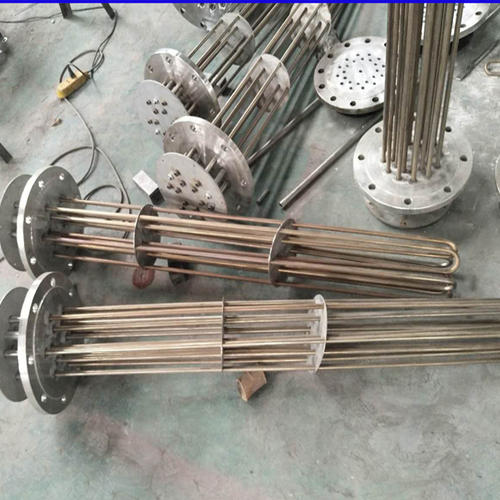
Taking a bolt with a center hole diameter of 22.6±0.2mm as an example, the standard DJ22 series sleeve lengths cover 255mm to 540mm, with corresponding heating lengths from 100mm to 350mm. When selecting, first measure the actual depth of the bolt center hole. After inserting the sleeve, the heating section should be entirely within the bolt area that needs heating, avoiding local overheating caused by exposed heating sections. If the bolt specifications are non-standard, the sleeve and heating length can be customized according to drawings.
Power selection is related to bolt specifications and heating time requirements. For example, using a 550W heating rod for M56×4 bolts and 900W to 2350W for M76×4 bolts, increasing power can shorten the time to reach the set temperature, but the power supply capacity and control cabinet output capability must also be confirmed. Bolt electric heating rods are usually used with DC adjustable control cabinets, controlling the heating rate by adjusting the output current to avoid excessive heating rate causing thermal stress concentration in the threaded section.
The preset temperature adjustment range has a lower limit of 25°C and an upper limit of 35°C, with a control accuracy of ±2°C. On engineering sites, the set value is usually maintained at around 30°C to ensure uniform heating of the bolt without exceeding the allowable temperature rise range of the material. The temperature sensor works with the controller to perform closed-loop adjustment of the heating process.
In working conditions with poor cooling water quality or contact with corrosive media, the sleeve material can be selected as 316L stainless steel or titanium alloy as needed to improve corrosion resistance. Under normal working conditions, standard stainless steel sleeves can meet the usage requirements. When selecting materials, comprehensive judgment should be made based on medium composition, working temperature, and maintenance cycle.

