Resistance Furnace Electric Heating Tube Furnace
The resistance furnace electric heating tube furnace (referred to as tube resistance furnace or tube muffle furnace) is a tubular high-temperature processing equipment with electric heating elements as the core heating components. Unlike ordinary box furnaces, its core feature is that the furnace chamber is tubular, which allows precise control of the internal gas atmosphere, widely used in material analysis experiments and industrial production in universities, research institutes, and industrial and mining enterprises.
Core Working Principle
The heating core of the tube furnace is based on the Joule heating effect. When current flows through a material with resistance (such as resistance wire, silicon carbide rods, etc.), electrical energy is converted into thermal energy. The heat generated by the heating elements is transferred to the sample inside the furnace tube through thermal radiation and conduction, achieving overall temperature rise. At the same time, the equipment adopts an intelligent PID closed-loop control system, which monitors the furnace temperature in real-time through thermocouples and feeds it back to the temperature controller, automatically adjusting the heating power, thereby achieving extremely high temperature control accuracy (usually up to ±1°C) and complex programmed heating curves.
Main Structure and Components
Heating and insulation system: The furnace tube is tightly wound with resistance wire (such as iron-chromium-aluminum alloy, nickel-chromium alloy), silicon carbide rods, or molybdenum disilicide rods as heating sources. The outer part is wrapped with high-efficiency insulation materials (such as alumina polycrystalline fiber, special ceramic fiber) to reduce heat loss and achieve energy saving.
Furnace tube (reaction chamber): It is the core space for sample placement and reaction. The material is selected based on temperature and atmosphere requirements, common ones include:
Quartz glass tube: High temperature resistance (about 1200°C), good light transmission, strong chemical inertness, but poor thermal shock resistance.
Corundum tube (alumina ceramic tube): High temperature resistance (up to 1600°C and above), high mechanical strength, good corrosion resistance.
Stainless steel tube: Suitable for lower temperatures (<1000°C) and inert/reducing atmospheres, lower cost.
Atmosphere and vacuum system: Both ends of the furnace tube are equipped with sealing flanges, connected to gas inlet and outlet. Inert gases (such as N₂, Ar), reducing gases (such as H₂) can be introduced, or vacuum operation can be performed to achieve atmosphere protection or vacuum sintering processes.
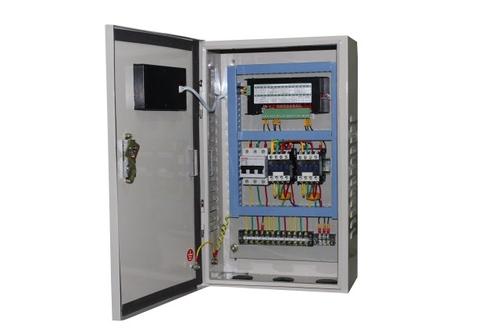
Temperature control system: Composed of thermocouples (such as K-type or S-type), temperature controllers, and solid-state relays, supporting multi-segment (such as 30-segment or 40-segment) program programming, precisely controlling heating, holding, and cooling processes.
Safety protection devices: Equipped with over-temperature alarm, broken thermocouple protection, leakage protection, overcurrent protection, and pressure relief valves, ensuring the equipment automatically cuts off power or releases pressure under abnormal conditions.
Product Performance Characteristics
Precisely controllable atmosphere: The biggest advantage is the ability to work under inert, reducing, oxidizing, vacuum, or mixed atmospheres, effectively preventing sample oxidation or participating in specific chemical reactions.
Good temperature uniformity: A well-designed tube furnace has high temperature uniformity in the central constant temperature zone, suitable for precision heat treatment.
Flexible structure: Supports horizontal (horizontal), vertical (vertical), or inclined angle (0° to 90° stepless adjustment) operation; some split tube furnaces can be opened left and right in half, facilitating furnace tube replacement and rapid air cooling.
Wide high-temperature range: Depending on the heating elements and furnace tube material, the working temperature range is usually between 1000°C and 1800°C.
Main Application Fields
Materials science and heat treatment: Sintering, annealing, quenching, tempering, carburizing, nitriding, etc., of materials under specific atmospheres.
New material synthesis and CVD: Synthesis of nanomaterials, ceramics, powder metallurgy materials; chemical vapor deposition (CVD) for preparing graphene, carbon nanotubes, and various functional films.
New energy and metallurgy: Coating and calcination of positive and negative electrode materials for lithium-ion batteries; pre-sintering and vacuum degassing of cemented carbide; reduction treatment of metal powders.
Catalysis and thermal analysis: Preparation, activation, reduction, and performance evaluation of catalysts (such as temperature-programmed reduction TPR); combined with thermogravimetric analyzer (TGA) to study thermal decomposition behavior of materials.
Common Classifications
By furnace tube direction: Horizontal tube furnace (convenient for loading and unloading samples), vertical tube furnace (suitable for powder materials or vapor deposition).
By structure: Conventional closed tube furnace, split tube furnace (clamshell type, for rapid cooling and maintenance), lifting tube furnace.
By number of temperature zones: Single temperature zone, dual temperature zone, multi-temperature zone tube furnaces (can independently control different heating zones for gradient heat treatment).
Safety Usage Specifications
Before use, check whether the furnace cover/flange is tightly closed and whether the vacuum degree or inflation pressure meets requirements.
It is strictly forbidden to introduce flammable or explosive gases into the furnace without safe replacement or without turning on the exhaust gas treatment device.
If abnormal conditions such as thermocouple breakage, over-temperature, water cutoff, or overpressure in the furnace occur, the equipment should automatically stop heating or release pressure.
After each use, it is recommended to clean the carbon residue or residues in the furnace chamber and furnace tube in time to avoid affecting the next use or causing pipeline blockage.