Electric heating coil
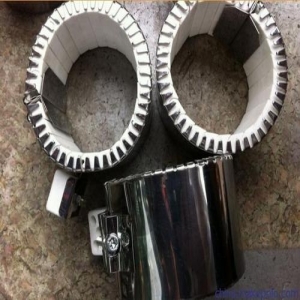
An electric heating coil (also known as electric heating ring or heating ring) is a ring-shaped electric heating element that uses electric heating alloy wire as the heating material, mica soft board or ceramic core as the insulating material, and is wrapped with a thin metal plate (aluminum plate, stainless steel plate, etc.) to convert electrical energy into heat energy to heat objects.
Main classifications
Electric heating coils can be divided into the following categories according to material and structure:
Tubular electric heating coil: compact structure, fast heating, low cost, easy replacement, typical working temperature 100–400°C, average lifespan about 8,000–12,000 hours.
Mica electric heating coil: uniform surface heating, good insulation, customizable special-shaped curved surfaces, typical working temperature 150–500°C, average lifespan about 6,000–10,000 hours.
Ceramic electric heating coil: strong corrosion resistance, good thermal shock resistance, stable surface temperature distribution, typical working temperature 300–700°C, average lifespan about 10,000–15,000 hours.
Cast aluminum/copper electric heating coil: tubular electric heating elements are cast into aluminum or copper plates, with good heat transfer effect; the maximum working temperature for cast aluminum is about 400°C, and for cast copper it can reach 650°C.
Spring heating coil: made of stainless steel, widely used in hot runner plastic molds, blow molding machines, extruders, and hot nozzles, with a power range of 115W–2000W.
Nano infrared energy-saving electric heating coil: a new generation product that uses far-infrared radiation heating, with heat transfer efficiency up to 99.8% or more, saving 30%–70% energy compared to traditional electric heating coils, with a surface temperature as low as 70°C and trouble-free operation of up to 20,000 hours or more.
Working principle
Electric heating coils mainly use the Joule effect of electric current to convert electrical energy into heat energy. There are two forms:
Direct resistance heating: the power supply voltage is directly applied to the heated object, and the object itself generates heat, with high thermal efficiency, but the heated object must be a conductor.
Indirect resistance heating: a dedicated heating element generates heat, which is transferred to the heated object through radiation, convection, and conduction; it is easy to operate, and the type of heated object is not limited.
Main uses
Electric heating coils have a very wide range of applications:
Plastic processing: heating of barrels in injection molding machines, extruders, film blowing machines, pelletizers, and other equipment is the most typical application scenario.
Household appliances: electric water boilers, rice cookers, electric irons, electric coffee pots, etc.
Industrial heat treatment: local or overall quenching, annealing, tempering, and through heating of metals.
Welding and smelting: brazing of metal products, smelting and casting of metals such as gold, silver, copper, iron, etc.
Other fields: semiconductor single crystal growth, bottle mouth heat sealing, powder coating, chemical reactor heating, etc.