Electric Heating Coil
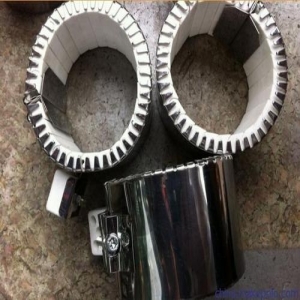
An electric heating coil, also known as an electric heating ring or heating band, is a ring-shaped heating element that efficiently converts electrical energy into thermal energy. It acts like a "smart thermal garment," tightly wrapped around the barrel or mold wall of equipment such as injection molding machines and extruders, providing a precise and stable temperature environment for the melting and processing of materials like plastics and rubber.
Working Principle and Core Advantages
The core working principle of an electric heating coil is resistance heating: when energized, the internal electric heating alloy wire generates Joule heat due to resistance, which is then conducted through the insulation layer and metal shell to the object being heated.
Compared with traditional fuel heating, it has significant advantages:
High Efficiency and Energy Saving: The electrical-to-thermal conversion rate typically exceeds 95%, with high thermal efficiency and fast heating speed.
Precise Temperature Control: It is easy to achieve automatic and remote temperature control, maintaining uniform temperature distribution on the heated object.
Clean and Environmentally Friendly: No exhaust gas, smoke, or other pollutants are generated during the heating process, keeping the heated object clean.
Flexible Application: It can achieve overall or partial heating according to process requirements, and is also suitable for vacuum or specific atmosphere environments.
Main Types and Selection Guide
Electric heating coils are not "one-size-fits-all"; different materials and structures determine their applicable scenarios. Below is a comparison of several mainstream types:
Table
Download as Table
Export as Image
Type Typical Working Temperature Core Advantages Applicable Scenarios
Tubular Electric Heating Coil 100–400°C Compact structure, fast heating, low cost, easy replacement Small and medium tonnage injection molding machines, packaging machinery, extrusion sections with non-stringent temperature requirements
Mica Electric Heating Coil 150–500°C Uniform surface heating, good insulation, customizable for irregular shapes Retrofitting old equipment, space-constrained situations, molds requiring large-area stable temperature
Ceramic Electric Heating Coil 300–700°C High temperature resistance, corrosion resistance, good thermal shock resistance, long lifespan Highly corrosive materials (e.g., PVC), high-temperature extrusion, food and pharmaceutical grade equipment
Cast Aluminum/Copper Coil ≤450°C / ≤600°C Fast thermal conduction, stable thermal response, easy installation Conventional injection molding machines, chemical reactors, precision temperature control production lines
Silicone Rubber Electric Heating Coil ≤250°C Good flexibility, bendable, excellent insulation performance Irregular cylindrical bodies, small laboratory equipment, medical devices
In addition, new energy-saving products such as nano far-infrared electric heating coils have emerged in the market. They use infrared unidirectional radiation heating, offering fast heating rates and low surface temperatures, achieving 35%-68% energy savings compared to traditional electric heating coils.
Selection Pitfall Avoidance Guide
When purchasing and using, please pay attention to the following points to avoid common mistakes:
Power ≠ Temperature: Do not blindly pursue high power. The key is whether the unit area power (W/cm²) matches the heat dissipation capacity of the equipment. Excessive power may cause local overheating, burning out the heating coil or barrel.
Dimensional Tolerance is a Hard Constraint: The inner diameter of the heating coil must fit tightly with the outer diameter of the equipment barrel (recommended error within ±0.5mm). Poor fit will significantly reduce heat transfer efficiency, and may even cause burnout due to heat accumulation.
Material Determines Lifespan: There is no "all-purpose" type, only "more suitable" ones. For example, mica coils are afraid of moisture and vibration; ceramic coils are high-temperature resistant but brittle; silicone coils are not resistant to oil and grease. Please choose based on actual working conditions (temperature, corrosiveness, vibration, etc.).
Temperature Control Interface Must Match: Confirm whether the heating coil comes with a built-in thermocouple, and whether the interface type (such as threaded hole positions, lead wire specifications) is compatible with your temperature control system (PLC, temperature control modules, etc.).
Emphasize Installation and Maintenance: After installation, regularly tighten to prevent loosening due to thermal expansion and contraction. Also, check whether the wiring terminals are oxidized, clean surface scale, and ensure the metal shell is reliably grounded to prevent electric leakage.