Electric heating coil
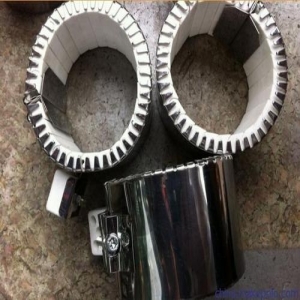
Electric heating coil, also called electric heating ring or heating ring, is a ring-shaped electric heating element. It is usually wrapped around the barrel or mold outer wall of injection molding machines, extruders, blow molding machines, and other equipment, efficiently converting electrical energy into heat to stably melt plastics, rubber, and other materials. It is a key "industrial consumable" on industrial production lines.
Core working principles
The heating principles of electric heating coils mainly include the following three types:
Resistance heating: This is the most mainstream method. When current passes through the internal electric heating alloy wire (such as nickel-chromium alloy), Joule heat is generated due to the resistance effect. The heat is then uniformly transferred to the heated barrel through insulation and heat-conducting materials such as mica, ceramics, or metal, via conduction, radiation, and other methods.
Electromagnetic induction heating: High-frequency alternating current passes through a coil to generate a magnetic field, causing eddy currents inside the magnetically conductive metal barrel, and the barrel itself heats up due to resistance. This method has high thermal conversion efficiency (up to 95%) and requires no physical contact.
Nano-infrared heating: This is an upgraded version of resistance heating, using nano-modified materials as the heating element. The electrothermal conversion rate is extremely high (up to 99.8%), and it directly acts on the barrel through far-infrared radiation. Combined with an external insulation layer, the energy-saving effect is significant.
Main features
Uniform heating: The ring structure combined with high thermal conductivity materials ensures consistent circumferential temperature of the barrel, avoiding local overheating or cold spots.
Precise temperature control: It can be used with thermocouples and PID controllers to achieve temperature control accuracy of ±1°C or even higher, meeting the requirements of precision injection molding and other processes.
High efficiency and energy saving: The electrothermal conversion efficiency is high, especially for nano-infrared and induction heating types, which can significantly reduce energy consumption and workshop ambient temperature.
Safe and reliable: Internally, insulation materials such as mica, ceramics, or magnesium oxide powder are used, and grounding protection is provided to prevent electric leakage.
Diverse forms: In addition to standard circular rings, various structures such as spring type, rectangular, and with temperature measurement holes can be customized to adapt to different installation spaces and process requirements.
Common types and specifications
There are many types of electric heating coils, which can be selected based on material, structure, and process requirements:
Table
Download as table
Export as image
Type Typical working temperature Core advantages Applicable scenarios
Ceramic heating coil 300–700°C High temperature resistance, corrosion resistance, thermal shock resistance, energy saving High-temperature extrusion, PVC and other corrosive materials, mainstream injection molding scenarios
Cast aluminum/cast copper heating coil 350–650°C Fast thermal conduction, uniform temperature, high mechanical strength, vibration resistance Applications requiring rapid heating, medium and low temperature precision injection molding, engineering plastic processing
Stainless steel heating coil 150–500°C Corrosion resistance, high mechanical strength, long lifespan Harsh working environments, equipment with high mechanical performance requirements
Mica heating coil 150–500°C Low cost, lightweight, uniform surface heating Old equipment, cost-sensitive applications (gradually being replaced by ceramic coils)
Spring heating coil Up to 650°C Elastic fit, automatic compensation for thermal expansion and contraction, high power density Hot runner systems, injection molding machine nozzles, irregular surfaces
Nano-infrared heating coil Long-term 550°C/instantaneous 750°C Extremely fast heating, energy saving 30%-70%, low surface temperature Precision injection molding with extremely high requirements for energy saving and temperature control, energy-saving retrofits
Examples of common specification parameters:
Rated voltage: Commonly AC220V or 380V domestically, some imported equipment uses 110V.
Dimensions: The inner diameter must closely match the outer diameter of the barrel (such as φ60mm, φ80mm, φ100mm, etc.), with corresponding width and thickness.
Power: Ranges from tens of watts to several kilowatts, calculated based on barrel size and process temperature to avoid excessive or insufficient power.
Wiring method: Single-end lead or double-end lead.
Main application fields
Plastic machinery: Heating of barrels and molds in injection molding machines, extruders, blow molding machines, pelletizers, and wire drawing machines.
Rubber and chemical industry: Rubber vulcanization, chemical pipeline insulation, reactor heating.
Packaging and light industry: Packaging machinery, cable machinery, heat sealing equipment.
Other industries: Mold heating, laboratory equipment, food machinery, etc.
Selection and usage recommendations
Precise matching:
Temperature: The withstand temperature of the selected heating coil must be higher than the maximum process temperature with a margin.
Dimensions: The inner diameter must fit tightly with the outer diameter of the barrel. Excessive gaps can reduce heat transfer efficiency by more than 30% and even burn out the heating coil.
Power: Power must match the barrel size, target temperature, and heating rate. Insufficient power leads to slow heating, while excessive power can cause unstable temperature control or scorching of materials.
Standard installation:
Before installation, be sure to remove old material, oil, and rust from the contact surfaces of the barrel and heating coil.
Use appropriate tools to tighten fixing screws evenly in a diagonal pattern to ensure full contact.
It is recommended to add an external insulation cover to reduce heat loss, save more than 20% energy, and extend the life of the heating coil.
Safety prohibitions:
No dry burning: It is strictly forbidden to run the heating coil for a long time without plastic material, as it can easily cause internal overheating and burnout.
Power off operation: Before replacement or maintenance, be sure to disconnect the main power supply.
Moisture and corrosion protection: Avoid using in humid or corrosive gas environments, and protect the wiring parts.
Troubleshooting:
No heating: Check power supply and wiring for looseness, and use a multimeter to measure whether the heating wire is open-circuited.
Slow heating: Check whether the power is matched, installation is snug, insulation cover is intact, and thermocouple is accurate.
Frequent burnout: Check whether insulation is good, voltage is stable, heat dissipation conditions are not too poor, and whether it is exposed to corrosive media.