Electric Heating Coil
An electric heating coil (also known as a heating coil or heating ring) is a heating element that converts electrical energy into thermal energy, widely used in industrial production and daily life. The following is a comprehensive introduction to electric heating coils:
Basic Structure
An electric heating coil usually consists of three parts:
Heating element: Electric heating alloy wire (such as nickel-chromium alloy, iron-aluminum alloy) as the core heating material
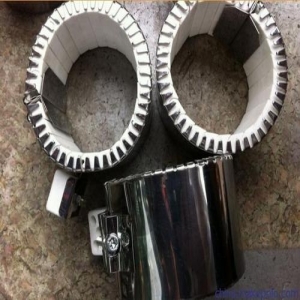
Insulation layer: Mica soft board or ceramic core, which plays a role in balancing insulation and thermal conductivity
Shell: Thin metal plate (stainless steel plate, aluminum plate, etc.), which protects and conducts heat
Working Principle and Classification
According to different ways of electrical energy conversion, electric heating coils are mainly divided into the following types:
Resistance heating coil: Based on the Joule effect of current (Q=I²Rt), current passes through the resistance wire to generate heat, which is then transferred to the heated object through conduction and radiation. This is the most common type.
Induction heating coil: Uses high-frequency alternating current through a coil to generate an alternating magnetic field, causing eddy currents inside the metal object to generate heat itself. The heat conversion rate is high, up to 95%.
Nano infrared heating coil: Uses nano-scale composite conductive medium, with an electro-thermal conversion rate of up to 99.8%. It acts directly on the heated object through infrared radiation, and cooperates with heat insulation devices to reduce heat loss.
Type Maximum Working Temperature Features
Stainless steel mica heating coil About 300℃ Flexible production, unlimited specifications, uniform heating
Stainless steel ceramic heating coil Up to 800℃ High temperature resistance, long service life, energy consumption reduced by about 30%
Cast aluminum heating coil About 400℃ Uniform heat distribution, can be air-cooled/water-cooled
Cast copper heating coil About 650℃ Excellent thermal conductivity, suitable for high-temperature working conditions
Cast iron heating coil 550~700℃ Corrosion resistant, good insulation performance, high mechanical strength
Nano infrared heating coil Depends on specific design Energy saving rate 30%~80%, fast heating
Main Uses
Industrial production: Barrel heating of plastic machinery such as injection molding machines, extruders, film blowing machines, pelletizers, etc.
Heat treatment: Local or overall quenching, annealing, tempering, and through heating of metals
Welding: Brazing of various metal products, welding of steel pipes and copper pipes, etc.
Metal melting: Melting and casting forming of metals such as gold, silver, copper, iron, aluminum, etc.
Civil appliances: Electric kettles, rice cookers, electric irons, electric coffee pots, etc.
How to Judge Good or Bad
Measure resistance with a multimeter: Set to the ohm range and measure the resistance between the two terminals. A reasonable resistance value indicates normal; displaying infinity (OL) indicates an internal open circuit; a resistance value close to 0 indicates a short circuit. The reasonable resistance value can be estimated by the formula R=U²/P.
Insulation test: Measure the resistance between the wiring terminal and the shell, which should normally be infinite; if the resistance is low or the buzzer conducts, it indicates insulation breakdown and it cannot be used.
Appearance inspection: Observe whether the surface has deformation, damage, or burning marks.
Power-on test: After power-on heating, use an infrared temperature gun to measure the surface temperature. Overheating or too low temperature are both abnormal.
Precautions for Use
The working voltage must not exceed 10% of the rated value
The shell must be reliably grounded
The heating area must fit tightly with the heated body, and dry burning is strictly prohibited
Avoid contact with corrosive, explosive media and moisture
If the insulation resistance is lower than 1MΩ after long-term storage, it can be restored by baking in an oven at about 200℃ for 5~6 hours