
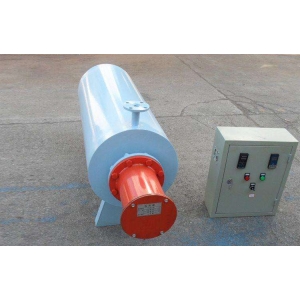
When purchasing a plate-and-frame heat exchanger, it is necessary to first verify whether the explosion-proof grade and temperature class of the associated heater are consistent with the on-site hazardous area classification, so as to avoid safety hazards caused by equipment grade mismatch. At the same time, it should be confirmed whether the temperature and pressure resistance ranges of the heat exchanger plates and gaskets cover the limit values of the actual working conditions. Common gasket materials include nitrile rubber, EPDM rubber, fluororubber, etc., and the applicable temperature ranges of different materials vary greatly. In addition, sufficient cleaning and maintenance space must be reserved at the installation location. Plate disassembly and assembly usually require a passage on one side equal to the plate length.
Plate materials can be selected from 304, 316L stainless steel, titanium, etc., according to the corrosiveness of the medium. The corrugation pattern affects heat transfer efficiency and pressure drop. Herringbone corrugations are suitable for most conventional working conditions, while combinations of deep and shallow corrugations can be used in situations where pressure drop is limited. The gasket replacement cycle is affected by temperature, medium, and start-stop frequency. During procurement, suppliers can be asked to provide material certificates and applicable working condition tables. If the medium contains particulate matter or is prone to scaling, wide-gap plates or additional filtration devices should be considered.
Connection directions are divided into same-side and opposite-side, and should be determined according to the piping layout. The nozzle flange standard must match the on-site piping, with common series including HG/T, GB/T, etc. After the equipment is in place, check whether the clamping dimension is within the calibrated range. Too large or too small may cause leakage or plate deformation. Before operation, a hydrostatic test must be carried out according to procedures, and the system can only be connected after confirming there is no leakage.
During daily operation, inlet and outlet temperature and pressure data should be recorded. A significant increase in pressure drop usually indicates scaling on the plate surface. Cleaning can be done by chemical cleaning or disassembly cleaning, depending on the nature of the scale layer. During shutdown, it is recommended to drain the medium to prevent low-temperature freezing cracking or medium crystallization blocking the flow channels. When purchasing spare parts, the plate model, corrugation pattern, and gasket material must be specified to ensure consistency with the original equipment.

