
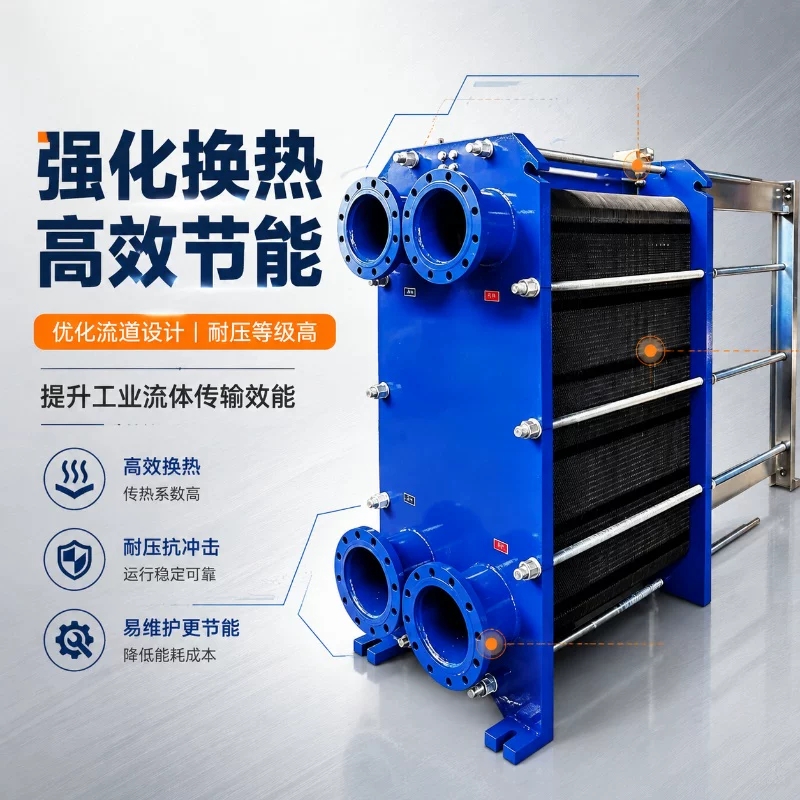
When configuring a plate-and-frame heat exchanger, if a technical engineer estimates only by conventional temperature difference and ignores medium characteristics, plate fouling may accelerate or gaskets may age prematurely. Common problems include: mismatch between plate material and medium corrosiveness, selection of a gasket with too low a temperature resistance rating, and flow arrangement not adjusted according to actual pressure drop.
Plate materials can be selected from 304, 316L stainless steel, titanium, etc., according to medium corrosiveness. For media containing chloride ions, titanium or high-molybdenum stainless steel should be used; for general industrial water or neutral fluids, 304 or 316L can meet most operating conditions. During selection, the effects of medium concentration, temperature, and flow velocity on corrosion rate must be checked.
If the medium ignition temperature is 200°C, group T3 or above should be selected, and T2 or below must not be selected. Gasket materials also need to balance temperature resistance and chemical resistance. Common ones include nitrile, EPDM, and fluororubber, which must be matched according to medium type and operating temperature.
The BR-50 type can use single-pass or multi-pass arrangements. When the heat load is large, increasing the number of plates or using multiple passes can increase flow velocity, but the allowable pressure drop must be calculated. It is recommended to use actual flow rate, inlet and outlet temperatures, and allowable pressure drop as inputs, and determine the number of plates and passes through heat transfer calculations.
This type of heat exchanger is suitable for HVAC, district heating, chemical cooling water systems, and general industrial liquid heat exchange. Before operation, confirm that the plate and gasket materials meet the medium requirements, and conduct a pressure test according to the design parameters.

