
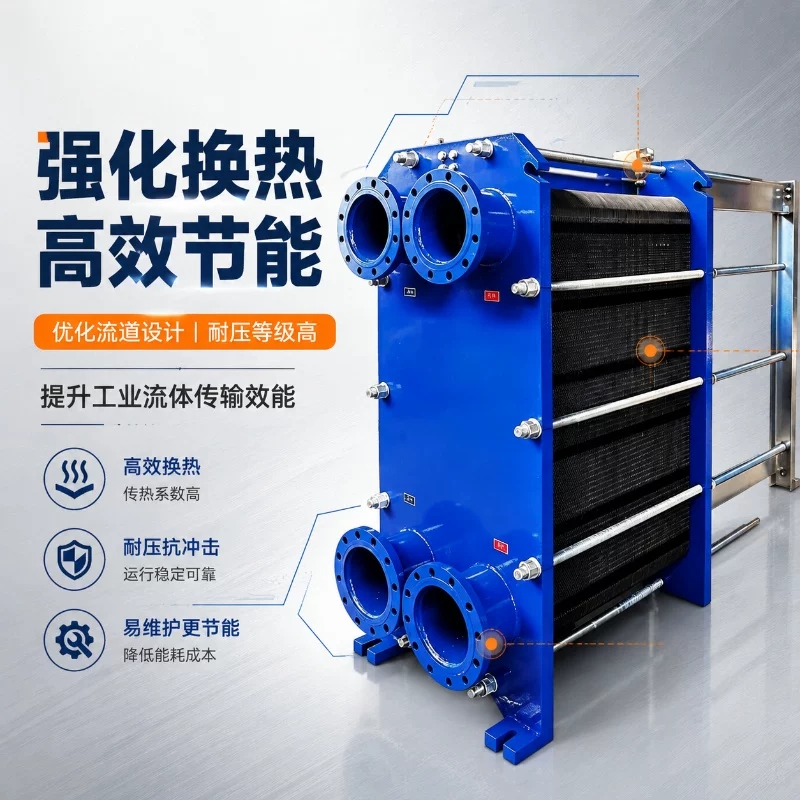
In chemical plant renovation projects, when replacing old equipment with the BRF-55 plate-frame fin heat exchanger, maintenance personnel must first verify the nameplate information. The nameplate should clearly indicate the design pressure of 1.6 MPa, design temperature of 200°C, heat exchange area, and medium flow direction, to facilitate comparison with operating parameters during routine inspections and prevent overpressure and overtemperature.
During inspections, observe whether there are signs of leakage between the plates, focusing on whether the sealing gaskets are aged or deformed. If an abnormal increase in pressure drop is found, it may be due to fouling in the fin channels, and cleaning should be arranged. Avoid using sharp tools to scrape the plate surfaces during cleaning; a soft brush with a neutral cleaning agent is recommended.
Regularly calibrate pressure gauges and thermometers to ensure accurate readings. If operating under medium-temperature conditions for a long time, it is recommended to check the pre-tightening force of the clamping bolts every six months. If loose, tighten them evenly in a diagonal sequence to prevent gasket displacement.
During shutdown maintenance, first close the inlet and outlet valves and release the pressure. After the medium is drained, disassemble the unit. The removed plates should be placed flat to avoid deformation of the fins under pressure. When replacing sealing gaskets, confirm that the material is compatible with the medium, and apply a small amount of glycerin before installation to facilitate positioning.
If the equipment is to be out of service for a long time, drain all residual liquid and dry it to prevent corrosion. Before restarting, conduct a hydrostatic test at 1.25 times the design pressure and hold the pressure for 30 minutes. It can be put back into use only if there is no leakage.

