
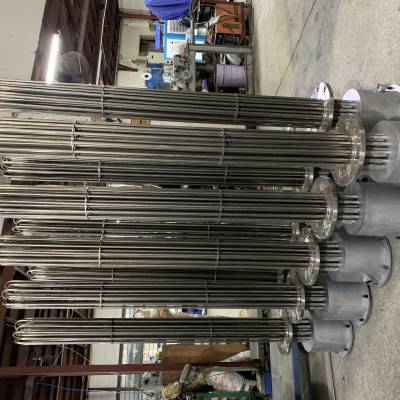
In chemical, HVAC, or waste heat recovery sites, the BRF-80 plate-frame fin heat exchanger usually operates continuously. Technical engineers should regularly record inlet and outlet temperatures, pressures, and flow rates. If the pressure drop rises abnormally, it may indicate scaling or foreign matter blockage in the flow channels between plates; if the outlet temperature drops, internal leakage or bypass valve leakage should be investigated. This model's nameplate specifies a design pressure of 1.6 MPa and a design temperature of 200°C. Comparing with operating parameters can prevent overpressure and overtemperature.
When heat exchange efficiency significantly decreases, pressure drop continuously rises and exceeds the initial value by more than 30%, cleaning should be scheduled. Before disassembling the plate-frame fin heat exchanger, confirm that the system has been depressurized and cooled, and loosen the clamping bolts in a diagonal sequence to avoid plate deformation. If the sealing gasket shows hardening, cracking, or permanent compression deformation, it should be replaced as a complete set. Material selection directly affects equipment life and maintenance cycles. Nitrile rubber is commonly used for water-water conditions, while EPDM rubber has better temperature resistance and corrosion resistance.
For short-term shutdown, drain the internal medium to prevent low-temperature freezing cracking or medium crystallization blocking the fin channels. For long-term shutdown, it is recommended to disassemble the plates, clean them, and store them dry to avoid the sealing gasket losing elasticity due to long-term compression. Before restarting, an air tightness test should be conducted according to the design pressure, gradually increasing the pressure to 1.6 MPa and holding it for inspection.
When the outlet temperature is abnormally low, first check whether the heat source flow rate and inlet temperature are normal, then confirm whether the bypass valve is fully closed. A sudden increase in pressure drop is often caused by filter screen damage allowing impurities to enter the flow channels. The filter screen should be cleaned and replaced promptly. If leakage between plates is found, do not tighten the bolts under pressure. The equipment should be shut down, disassembled, and the sealing gasket or plates inspected.

