
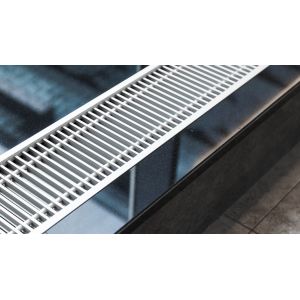
According to the relevant requirements of GB/T 151 and NB/T 47004, for finned tube heat exchangers operating under dust-laden flue gas conditions, the flow velocity on the fin side should be controlled at 8–12 m/s. During procurement, it is essential to confirm the cleanliness of the medium and the maintenance access. Compared with plate-and-frame heat exchangers, this model has a larger fin spacing, which facilitates compressed air blowing; however, the fin side is not suitable for liquid media prone to scaling, otherwise the cleaning frequency will increase significantly. Compared with shell-and-tube solutions, the heat transfer area per unit volume is somewhat higher, but space must be reserved for withdrawing the tube bundle.
Check the dust accumulation between fins and the pressure drop changes weekly. When the pressure drop exceeds 1.5 times the initial value, blowing should be scheduled. Record the inlet and outlet temperature difference monthly. If it deviates from the design value by more than 10%, investigate internal leakage of the bypass valve or fin blockage. Inspect the tube sheet welds and flange seals quarterly, and handle any leakage promptly.
Mechanical rapping for ash removal is suitable for dry dust, but may cause fatigue at the fin roots; online compressed air blowing has less impact on production and is recommended as a routine measure. If the flue gas has a high moisture content, a pre-dehydration device should be considered to avoid condensation and fouling between fins. During procurement, priority should be given to structures with individually replaceable fins to reduce long-term maintenance costs.

